
Exterior problems
Peeling exterior paint in Indianapolis: what to do first
Peeling is not a paint problem so much as a water or prep problem that shows up as paint. Fix the cause first, or the new coat peels the same way.
- Written for Indianapolis homes
- Updated September 2026
Quick answer
When exterior paint peels in Indianapolis, start by finding where it peels: at sills, fascia and the bottom laps of siding it is usually water; across whole sunny walls it is usually old paint failing or poor prep. Probe the wood for softness, look for gutter overflow or missing caulk, then scrape, repair and prime before any new coat.
By Opal Waverly, Painting and Window Treatment Guides Editor. Updated September 2026
Read the pattern before you scrape
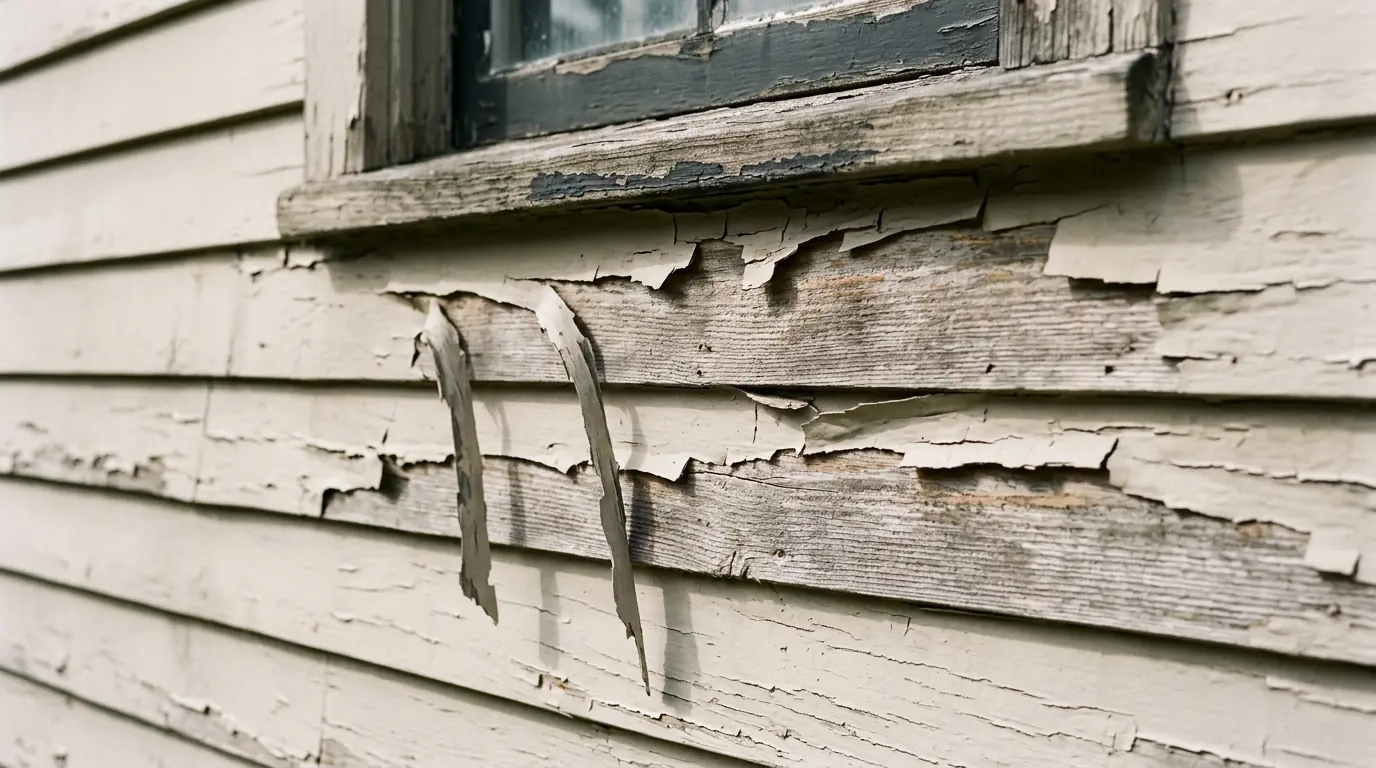
Where the paint peels tells you why. Peeling concentrated under windows, at the bottom of siding laps, behind gutters and at porch post bases points to water getting into the wood. Peeling in large sheets across a whole wall, often the sunny one, points to layers of old paint losing their bond, or to paint applied over dirt, chalk or mildew.
Peeling down to bare wood is different from peeling between layers. Bare wood showing means the bottom coat never bonded or the wood has been wet. Paint peeling off paint means an earlier coat went on over a glossy or chalky surface.
Check for water first
Walk the house after a rain. Look at gutters for overflow and at joints for drips, check that downspouts carry water away from the walls, and look for missing or cracked caulk at windows, doors and corner boards. Inside, a bathroom or kitchen wall with peeling on its outside face often means moisture from indoors pushing out through the wall.
Then probe the wood where the paint is worst. If a screwdriver sinks in, the wood is rotted and has to be cut out, not painted; see wood rot repair. In a climate with rain in every month and more than a hundred freezing nights a year, wet wood never gets a long dry season to recover on its own.
What to do first, in order
Fix the water source: gutters, downspouts, caulk joints, bathroom venting. Replace any soft wood. Then wash the surface to remove chalk, dirt and mildew, let it dry, and scrape every loose edge back to paint that is firmly bonded. Feather the edges with sandpaper so the new coat does not show ridges.
Prime all bare wood the same day it is exposed with an exterior primer, then apply two coats of a quality exterior acrylic. Washing is covered on our power washing page and the full sequence on exterior house painting.
Want someone to read the pattern and tell you what it means?
Call (317) 680-1946What not to do
Do not paint over peeling paint. It will lift with the loose layer beneath it. Do not seal the bottom edges of lap siding with caulk to stop water, because those gaps let the wall dry out. Do not pressure-wash at close range to strip paint, since it drives water into the wood and can gouge it.
And do not assume the whole house needs repainting. Often the trim and a few problem areas are failing while most of the siding is sound, and a targeted repair buys years.
Older houses and lead paint
Many houses in older neighborhoods were painted long before lead was removed from residential paint in 1978, and scraping or sanding that paint creates dust that is hazardous, especially to children. If your house was built before 1978, have the old paint tested before anyone scrapes it, including you.
Federal rules set lead-safe work practices for paid renovation and repainting in pre-1978 housing, so ask any contractor how they contain and clean up paint debris on an older house. Wet scraping, plastic sheeting under the work area and careful cleanup are the basics to expect.
When it is a trim job, not a full repaint
If peeling is limited to fascia, sills and window trim, a trim-only job with rot repair often solves it for a fraction of a full repaint. If it is across whole walls, the siding needs the full prep and paint sequence.
Either way, the order does not change: stop the water, replace the rot, clean, scrape, prime, paint. Skipping a step is what brings the peeling back next spring.
FAQ
Questions this guide gets asked
Water is getting into the sill and casing, usually from missing caulk or a sill that does not shed water.
No. Scrape to sound paint and prime bare wood first.
Not always. Probe it; soft wood is rot and must be replaced.
Old layers lose their bond or new paint went on over chalk or dirt.
Often not. Trim and problem areas may be the only failures.
Related
Services this guide relates to
Exterior House Painting
Wood siding and more.
Exterior House PaintingWood Rot Repair Before Painting
Window sill replacement and more.
see our wood rot repair before painting pagePower Washing
Soft wash for siding and more.
learn about power washingMore guides
Ready when you are
Have us read the peeling and quote the fix
Describe where the paint is peeling and we will book a walk-around on the call, any hour.
Faber Paint & Blinds service office
3053 Stillcrest Ln, Indianapolis, IN 46217