
Interior Painting in Indianapolis
Ceiling painting in Indianapolis, flat and clean
A yellow ring from an old leak, a gray kitchen ceiling, or a vaulted room nobody wants to climb to. Ceilings are the hardest surface to paint evenly, which is why they show every shortcut.
- Phones answered 24/7
- Stains sealed before paint
- No lap marks on the finish
Paint lines and window treatment brands we work with
Quick answer
Ceiling painting in Indianapolis means sealing stains with a stain-blocking primer, taping or patching cracks, then rolling a flat ceiling paint in one continuous direction so the finish shows no lap lines under raking light. A standard bedroom ceiling is a few hours of work; vaulted and two-story ceilings are staged and take longer.
What the job involves
Why a ceiling shows mistakes a wall hides
Updated September 2026
Light hits a ceiling at a low angle from windows and fixtures, so every roller lap, patch and sheen change shows. We use a true flat ceiling paint from Benjamin Moore, Sherwin-Williams or PPG, roll the whole field wet-edge in one direction, and cut a clean line where the ceiling meets the wall so neither color bleeds into the other.
Stains are sealed first with shellac or an oil primer, because water-based paint alone lets them bleed back through within days. If the ceiling is part of a full-room job it is painted before the walls; see interior house painting for the walls and popcorn ceiling removal if the texture is going first.

What moves the price
What sets the price of a ceiling repaint
Ceilings are priced by area and access. Market figures put interior painting that includes walls, trim and ceilings at about $4.70 per square foot, and a ceiling-only job depends mostly on height and prep.
- Ceiling area Measured flat area, plus the extra surface of slopes in vaulted rooms.
- Height and staging Standard ceilings roll from the floor; vaulted and stairwell ceilings need planks or scaffold.
- Stains and repairs Each stain gets shellac primer; cracked tape joints get re-taped and mudded.
- Texture Knockdown and stipple take more paint and a slower roller; failing texture adds a sealing coat.
- Color change Going from a colored ceiling back to white can need a primer coat.
- Fixtures and fans Fans, fixtures and smoke detectors are removed or wrapped and reinstalled.
- Furniture below A full room needs complete coverage because ceiling spatter falls wide.
Ranges are published market figures for planning only, not a quote from us; your price depends on the factors above.
Variations of this job
The ceiling painting jobs we get called for
Flat white ceiling repaint
Most ceiling calls are simply dingy ceilings that have yellowed from cooking, candles or years of sunlight. The fix is a wash where there is grease, a spot-prime over any marks, and two coats of flat ceiling white rolled in the same direction as the main light source so the roller texture falls into shadow. A ceiling that has been painted with wall paint in eggshell gets a light scuff first; flat paint over sheen can flash. We cut in by brush at the wall line rather than taping, which leaves a straighter edge on textured corners.
Water-stain sealing and repaint
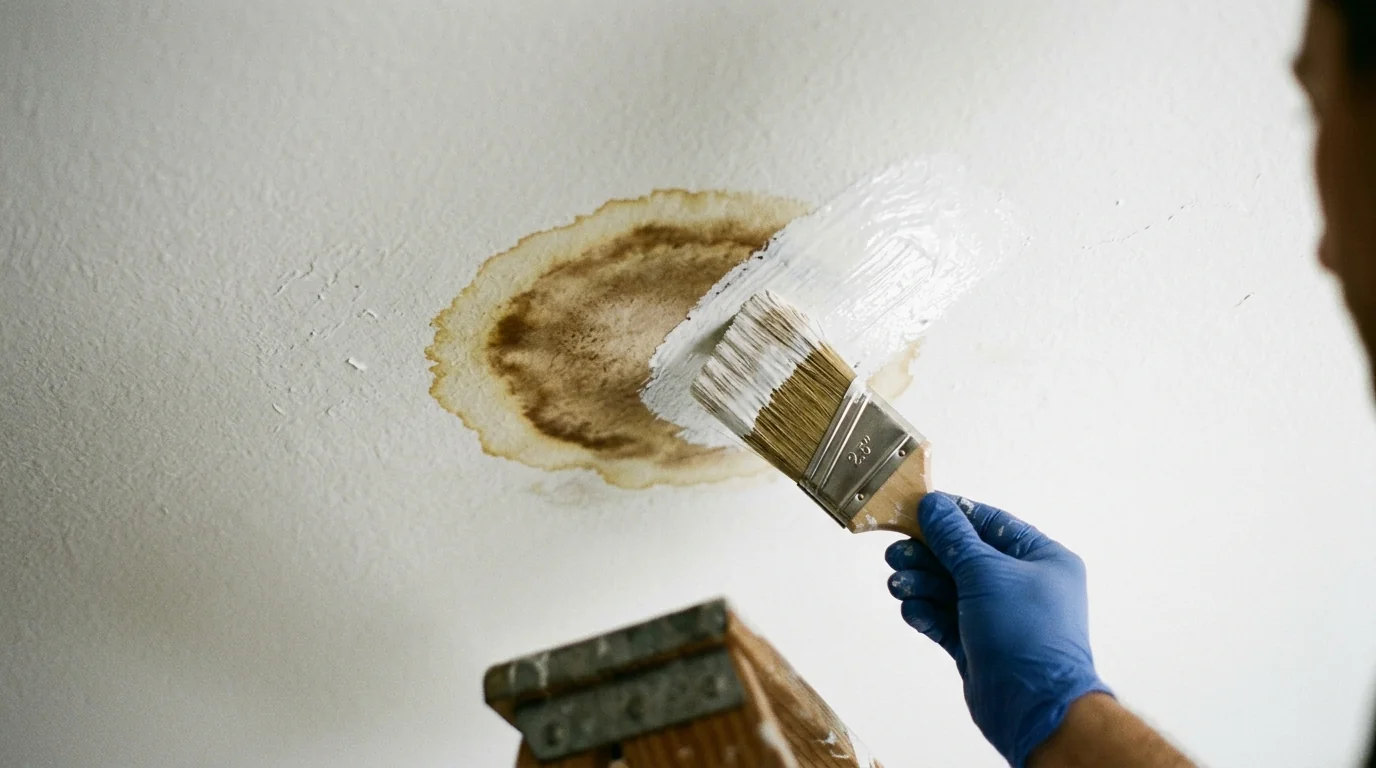
A brown ring on a ceiling means water got through at some point, and the first question is whether it still does. We check that the source, a roof flashing, a bath drain or an upstairs toilet, has been repaired before sealing. Then the stain gets a shellac-based stain blocker, which is the only primer that reliably stops the tannin and mineral bleed, and the whole ceiling plane is repainted so the patch does not show as a brighter square. If the drywall has softened or sagged, it is cut out and patched before any primer goes on.
Vaulted and cathedral ceilings
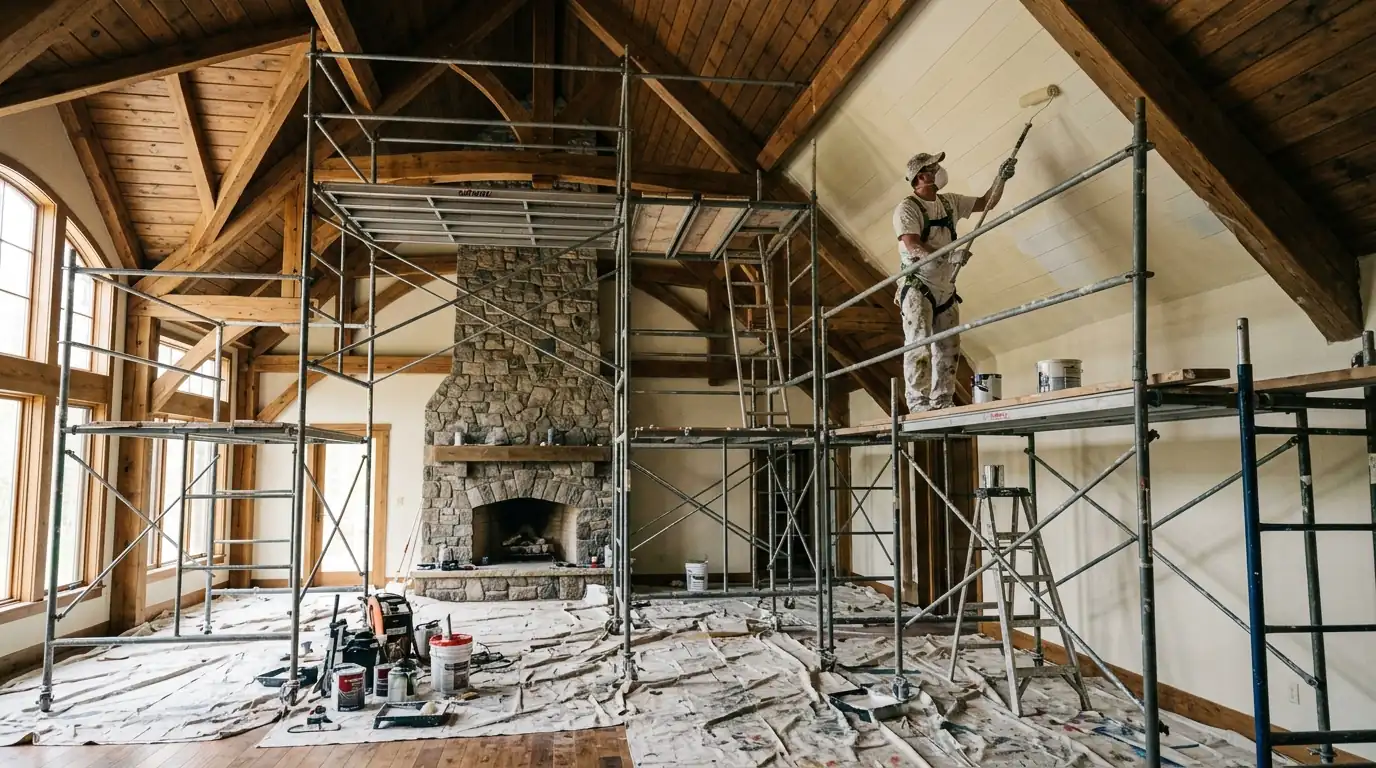
Vaulted and cathedral ceilings are mostly an access job. We stage them with extension planks or an interior scaffold rather than a leaning extension ladder, protect the floor and furniture below with full coverage, and roll each sloped plane in one pass so there is no lap line partway up. Ceiling fans get removed or wrapped, and beams are cut in by brush if they are painted or taped off if they are stained. The height changes the paint math too: a vaulted room can have twice the ceiling area its floor suggests.
Textured ceiling painting
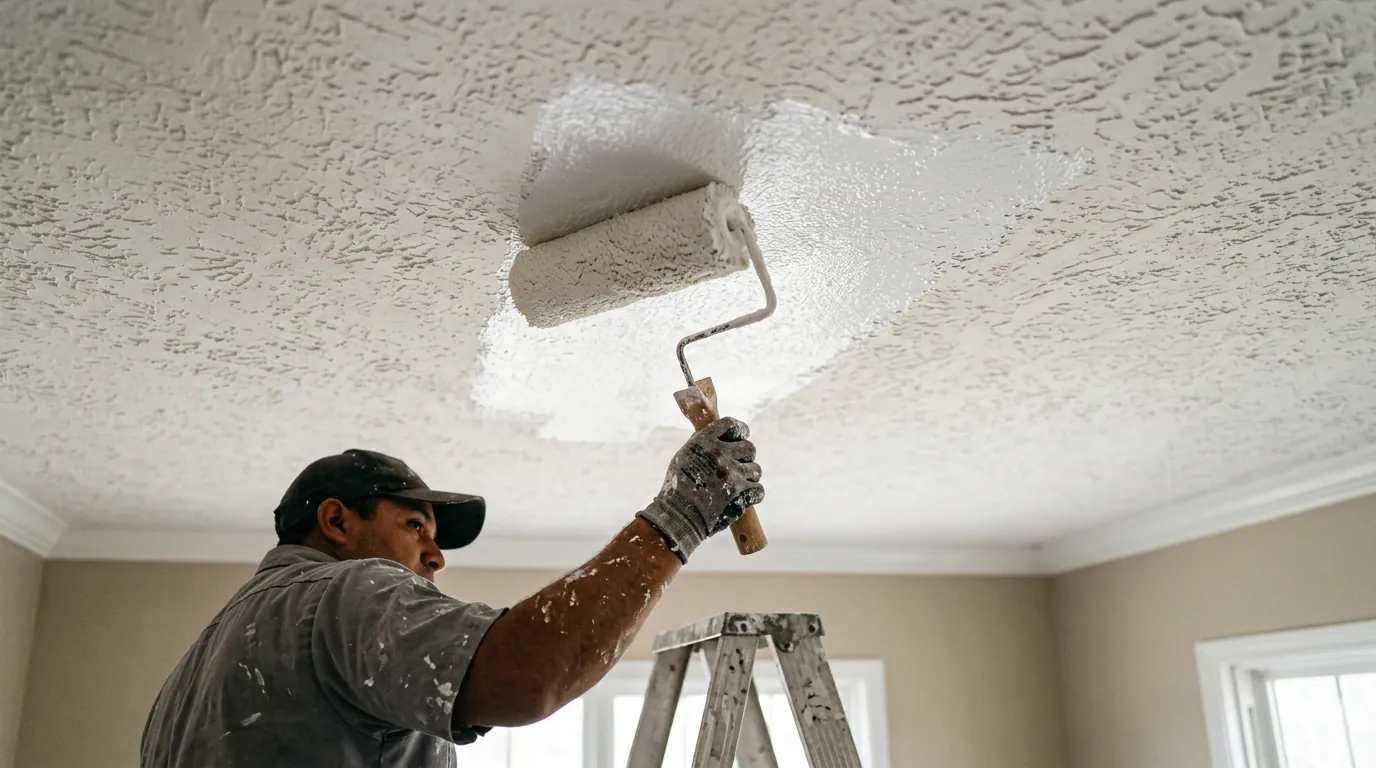
Knockdown, orange peel and stipple ceilings take more paint than smooth ones and must be rolled with a thicker nap so the paint reaches into the texture without flattening it. We test a small area first to make sure old texture is sound, because texture that was never primed can soften and let go under a wet roller. If it does, the fix is either a sealing primer sprayed first or removing the texture entirely. Painted popcorn is a different case, covered on its own page, since it cannot be rolled at all.
Local context
How this work runs around Indianapolis
Central Indiana averages about 43 inches of precipitation a year, spread across every month, with 25 inches of that as snow, so the ceiling stains we seal most often trace back to ice dams and flashing at chimneys and roof valleys rather than one bad storm. On the east side around Warren Park, where most houses went up between 1950 and 1970, ceilings are often original plaster or early drywall with dozens of coats on them, and we check adhesion before rolling a new one on top.
From your call to the final walk-through
How a ceiling job runs
- 01
Call and describe the ceiling
Room, rough size, height, and whether there is a stain or crack.
- 02
Visit and moisture check
We look at stains, check they are dry, and test old paint and texture.
- 03
Written scope
Area, repairs, primer, ceiling product and how fixtures are handled.
- 04
Protect the room
Floor fully covered, furniture wrapped, fixtures removed or bagged.
- 05
Seal and repair
Shellac on stains, tape on cracks, patches sanded and spot-primed.
- 06
Cut and roll
Clean brush line at the walls, field rolled wet-edge in one direction, two coats.
- 07
Reinstall and inspect
Fixtures back up; you check the ceiling with the lights on and off.
Doing it yourself vs. calling us
Rolling a ceiling yourself versus calling us
| Step | Doing it yourself | When we do it |
|---|---|---|
| Stain sealing | Wall primer from the shelf | Shellac stain blocker that actually stops bleed-through |
| Wet edge | Stops to move the ladder | Rolled continuously from planks or poles |
| Cut line | Tape, then touch-ups | Freehand brush line at the wall |
A flat bedroom ceiling is fair DIY; stains, vaults and texture are where it goes wrong.
FAQ
Questions we hear on this job
Yes, so spatter and cut-line touch-ups land on walls still to be painted.
Flat paint hides roller texture and patches under low-angle light.
Rarely well. Two coats give an even film; one coat over a stain or a color change almost always shows.
Only after the leak is fixed and the spot is dry, and only over a shellac stain blocker.
We use a mildew-resistant product; peeling bath ceilings are mostly a ventilation problem.
Painting popcorn softens and pulls it down. Removal is the better fix; see popcorn ceiling removal.
Related services
Other interior painting work we handle
Wood Trim & Door Staining
Stained interior trim, clear-coat refresh on stained woodwork and more.
Wood Trim & Door StainingStaircase & Railing Painting
Painted balusters with stained handrail, metal railing repaint and more.
learn about staircase & railing paintingBasement Painting
Concrete block walls, concrete floor paint and more.
see our basement painting pageInterior House Painting
Whole-home repaint, open-concept and two-story walls and more.
see our interior house painting pageReady when you are
Describe the ceiling and we will set the visit
Tell us the room, the height and whether there is a stain, and we will book the estimate visit on the call, any hour, any day.
Faber Paint & Blinds service office
3053 Stillcrest Ln, Indianapolis, IN 46217