
Interior Painting in Indianapolis
Popcorn ceiling removal for Indianapolis homes
Acoustic texture from the 1960s through the 1980s collects dust, shows every water stain and dates a room instantly. Taking it down is messy work that we contain, then we skim the ceiling smooth and paint it.
- Phones answered 24/7
- Sample tested before scraping
- Room sealed in plastic
Quick answer
Popcorn ceiling removal in Indianapolis starts with a lab test of a small sample, because acoustic texture installed before the 1980s can contain asbestos. When the test is clear we seal the room in plastic, wet and scrape the texture, skim the ceiling smooth, prime and paint it. When it is not clear, the ceiling is covered rather than scraped.
What the job involves
What removal involves beyond the scraping
Updated September 2026
Scraping popcorn off is the quick part. The work is in what comes after: most ceilings underneath were never finished to paint grade, so the tape joints and screw heads show once the texture is gone. We skim coat the whole ceiling, sand it, prime it and paint it flat so the finished ceiling looks like it was always smooth.
Before any scraping, a small sample goes to a lab. If it comes back positive, disturbing it is a job for an abatement contractor, and our route is to cover the ceiling rather than scrape it. For the painting that follows, see ceiling painting; for walls finished the same way, skim coating.
Choosing between the options
Scrape, skim over or cover
| Consider | Scrape and skim | Skim over | New drywall layer |
|---|---|---|---|
| Best for | Unpainted texture that tests clear | Painted texture that tests clear | Positive tests, cracked or stained ceilings |
| Mess | Most dust, fully contained | Moderate sanding dust | Least dust |
| Result | Original ceiling, smooth | Slightly thicker, smooth | New ceiling surface |
| Relative cost | Lowest | Middle | Highest |
The test result and whether the texture was painted decide the route more than preference does.
What moves the price
What moves the price of popcorn removal
No sourced market figure is quoted here, because removal prices swing widely with the test result and which of the three routes the ceiling needs. These are the factors that set it.
- Test result A clear sample allows scraping; a positive one moves the job to covering.
- Painted or unpainted Unpainted texture scrapes wet; painted texture needs a bonding primer and skim coats.
- Ceiling area and height Measured square footage, with stairwells and vaults needing staging.
- Finish level A full skim to a smooth paint-grade surface is most of the labor.
- Room contents An empty room seals faster than one full of furniture.
- Fixtures and vents Fans, lights and registers are removed and reset, with box extenders when covering.
- Paint afterward Primer and two coats of flat ceiling white are included on every route.
Variations of this job
The popcorn ceiling removal jobs we get called for
Scrape and skim to smooth
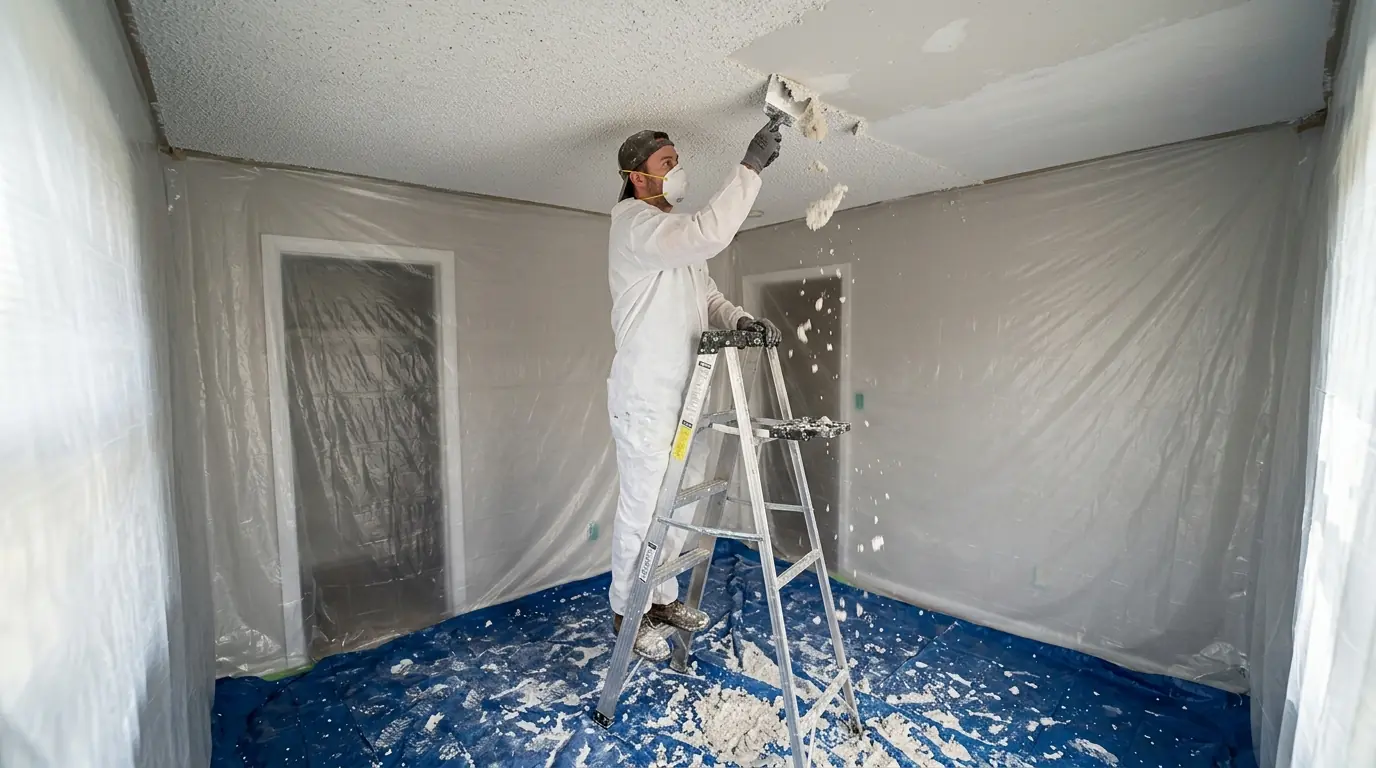
This is the standard route for unpainted popcorn that tests clear. We seal the room floor to ceiling in plastic, cover vents, lightly mist a section with water so the texture softens, and scrape it into a tarp rather than onto the floor. Once the ceiling is bare, joints and fastener heads get fresh compound, and the whole ceiling gets a thin skim coat so it reads as one flat plane. It is sanded with dust control, primed with a drywall primer, and finished in two coats of flat ceiling white.
Skim over painted popcorn
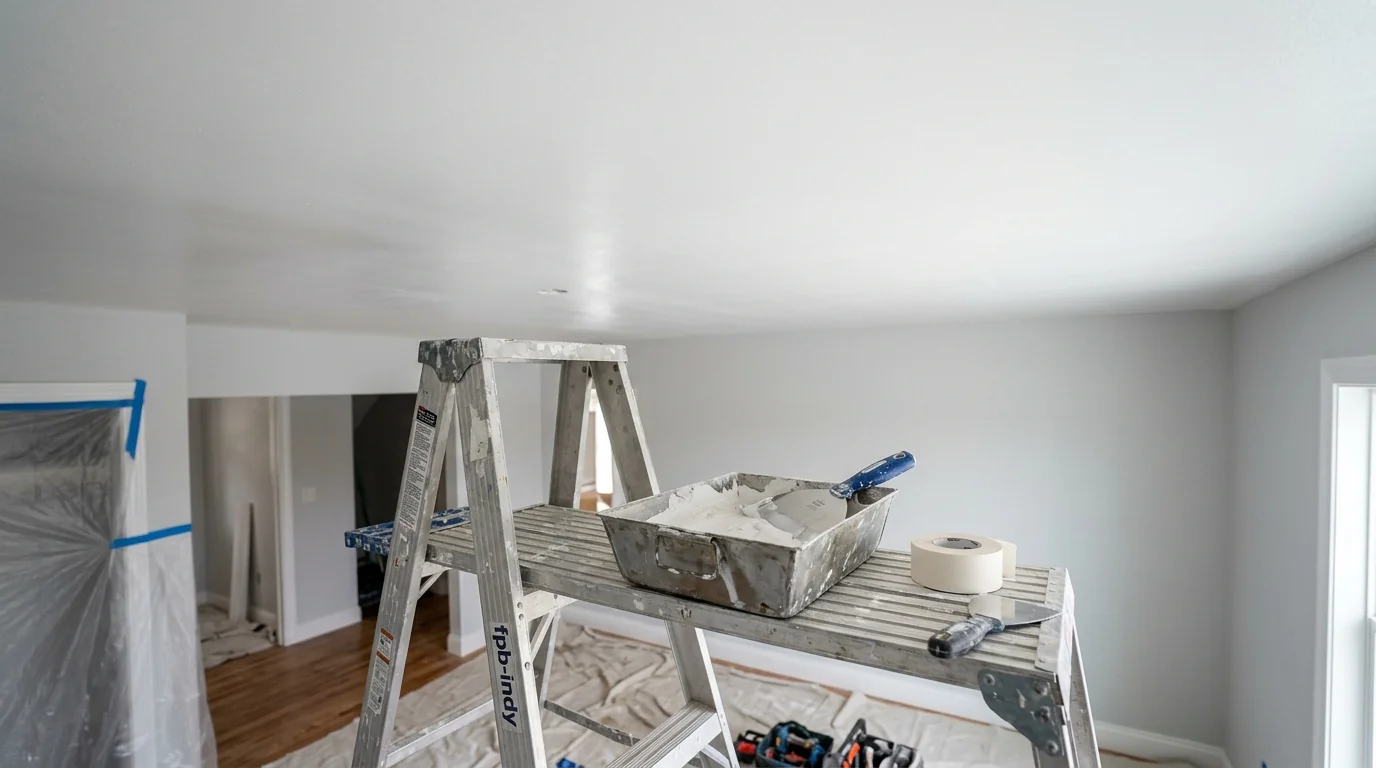
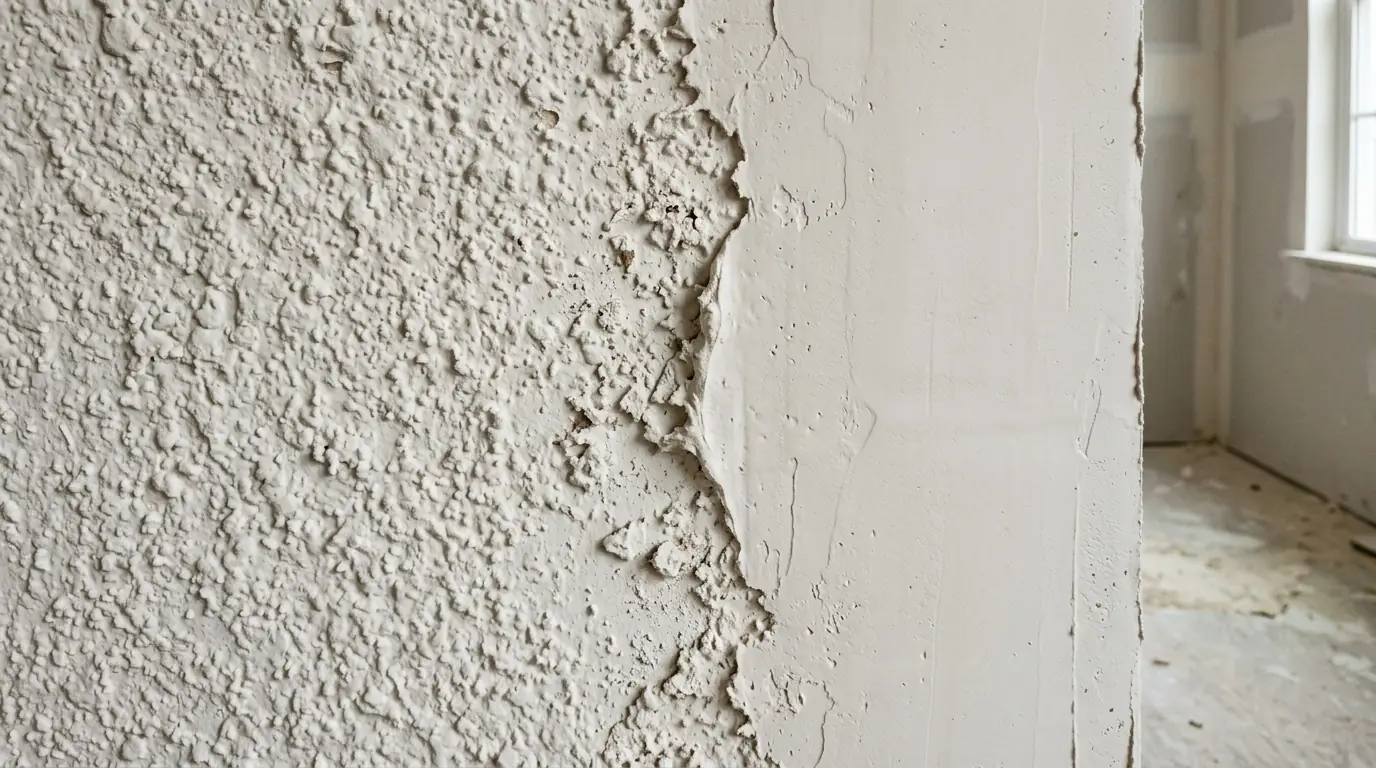
Popcorn that has been painted will not soften with water, because the paint seals it. Scraping it dry tears the paper face of the drywall underneath. On those ceilings we knock the high points down, apply a bonding primer so the compound holds, and build up two or three skim coats until the texture is buried and the ceiling is flat. It takes longer than scraping and adds a small amount of thickness, which nobody notices once it is painted. Crown molding is sometimes needed afterward to hide the old texture line at the walls.
Cover with a new drywall layer
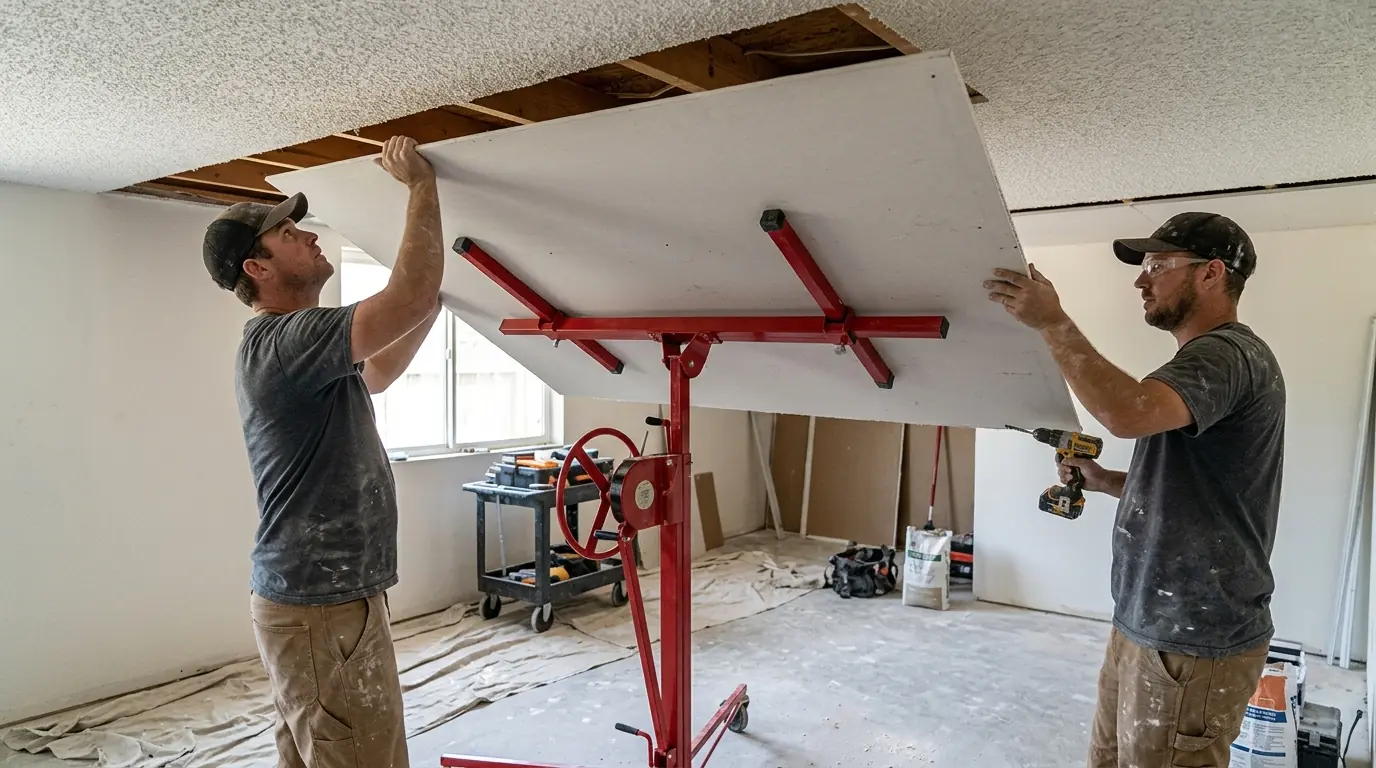
When a sample tests positive for asbestos, or the ceiling is badly cracked or water-damaged, covering beats removing. A layer of lightweight quarter-inch or three-eighths drywall is screwed through the old ceiling into the joists, taped, finished and painted, and the original texture stays sealed in place undisturbed. Light fixtures and fans get box extenders so they sit flush with the new surface. It is more material cost than scraping, but no dust and no abatement, and the result is a brand-new ceiling.
Local context
How this work runs around Indianapolis
Popcorn is the ceiling we find most in houses from the 1950s through the 1980s, and that describes a large share of Indianapolis: the median house here was built around 1974. On the south side near our service office, Homecroft grew fastest in the 1960s, and those ceilings are often painted popcorn, which rules out wet scraping and means a skim-over. We tell you which route your ceiling needs after the test, not before.
Timeline
How long a room is out of use
A typical bedroom runs about three to four days: a sealing and scraping day, one or two days of skim coats with drying time between them, then sanding, primer and paint. Humid summer weeks slow compound drying, so we build that into the schedule. Covering with new drywall usually takes a similar total time with far less cleanup.
From your call to the final walk-through
How a popcorn removal runs
- 01
Call and describe the rooms
Which ceilings, roughly how big, and whether they have been painted.
- 02
Visit and sample
We take a small sample for lab testing and check for stains and cracks.
- 03
Route and scope
Scrape, skim over or cover, decided by the result, in writing.
- 04
Seal the room
Plastic on walls and floors, vents covered, furniture out or wrapped.
- 05
Remove or cover
Wet scrape, bonding primer and skim, or new drywall layer.
- 06
Skim, sand, prime
Ceiling built up to a flat paint-grade surface with dust control.
- 07
Paint and clean up
Two coats of flat white, plastic down, room vacuumed and reset.
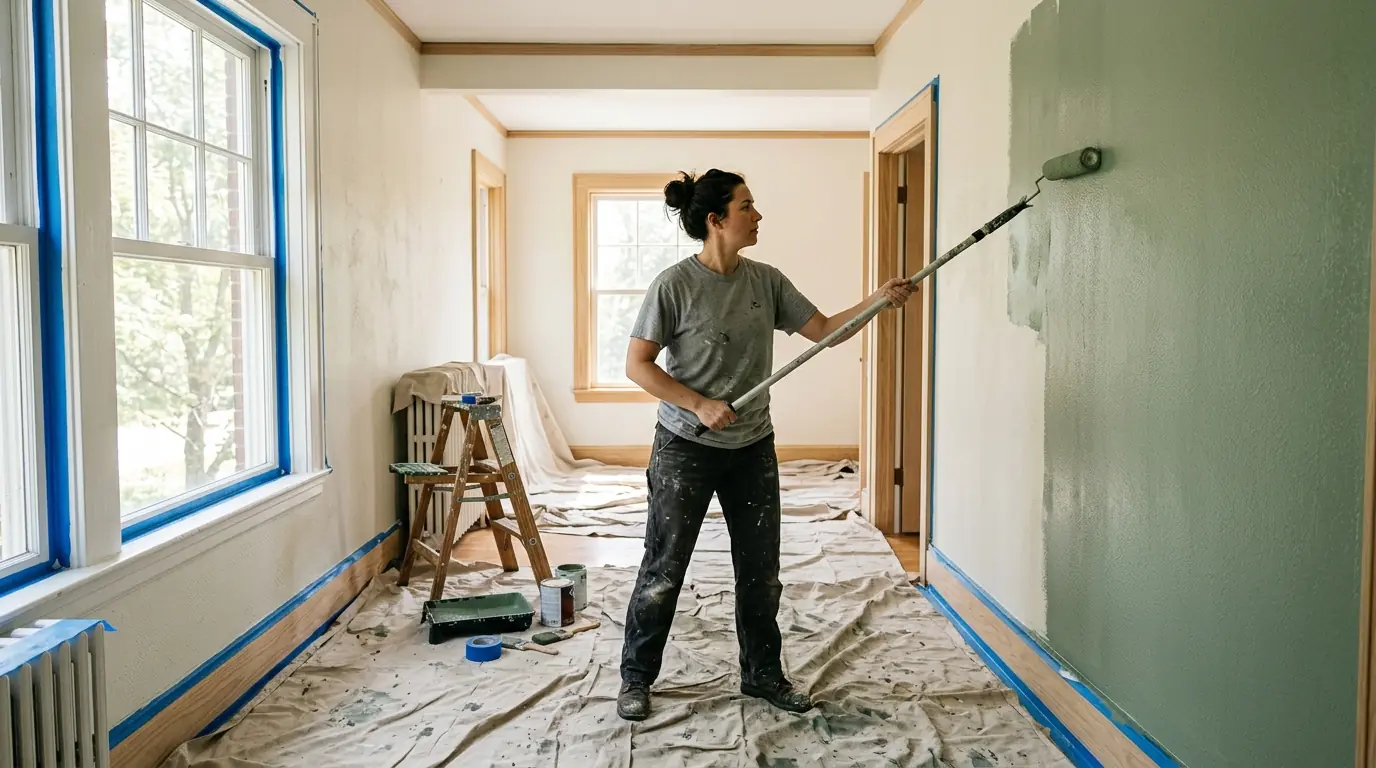
Popcorn tested, removed and skimmed smooth, room by room
Call (317) 680-1946FAQ
Questions we hear on this job
Some texture applied before the 1980s does. A lab test of a small sample is the only way to know, so we test before any scraping.
We do not scrape it. Covering with a new drywall layer seals it in place, or a licensed abatement contractor removes it first.
Not by wet scraping. We prime it and skim over it until it is buried, which gives the same smooth result.
Scraping is messy, which is why the room is sealed floor to ceiling. Skim-over and covering produce much less debris.
It will read as smooth under normal light. Old ceilings that sag between joists are straightened only by covering.
Yes. Primer and two coats of flat ceiling white are part of every route.
Related services
Other interior painting work we handle
Cabinet Refinishing & Staining
Strip and re-stain, glaze and toner touch-up and more.
Cabinet Refinishing & StainingWood Trim & Door Staining
Stained interior trim, clear-coat refresh on stained woodwork and more.
Wood Trim & Door StainingSmoke & Water Damage Repainting
Smoke and soot sealing, insurance claim repaints and more.
Smoke & Water Damage RepaintingBasement Painting
Concrete block walls, concrete floor paint and more.
see our basement painting pageReady when you are
Tell us which ceilings and we will set the test visit
Describe the rooms and whether the texture has been painted, and we will book the visit and sample on the call, any hour.
Faber Paint & Blinds service office
3053 Stillcrest Ln, Indianapolis, IN 46217