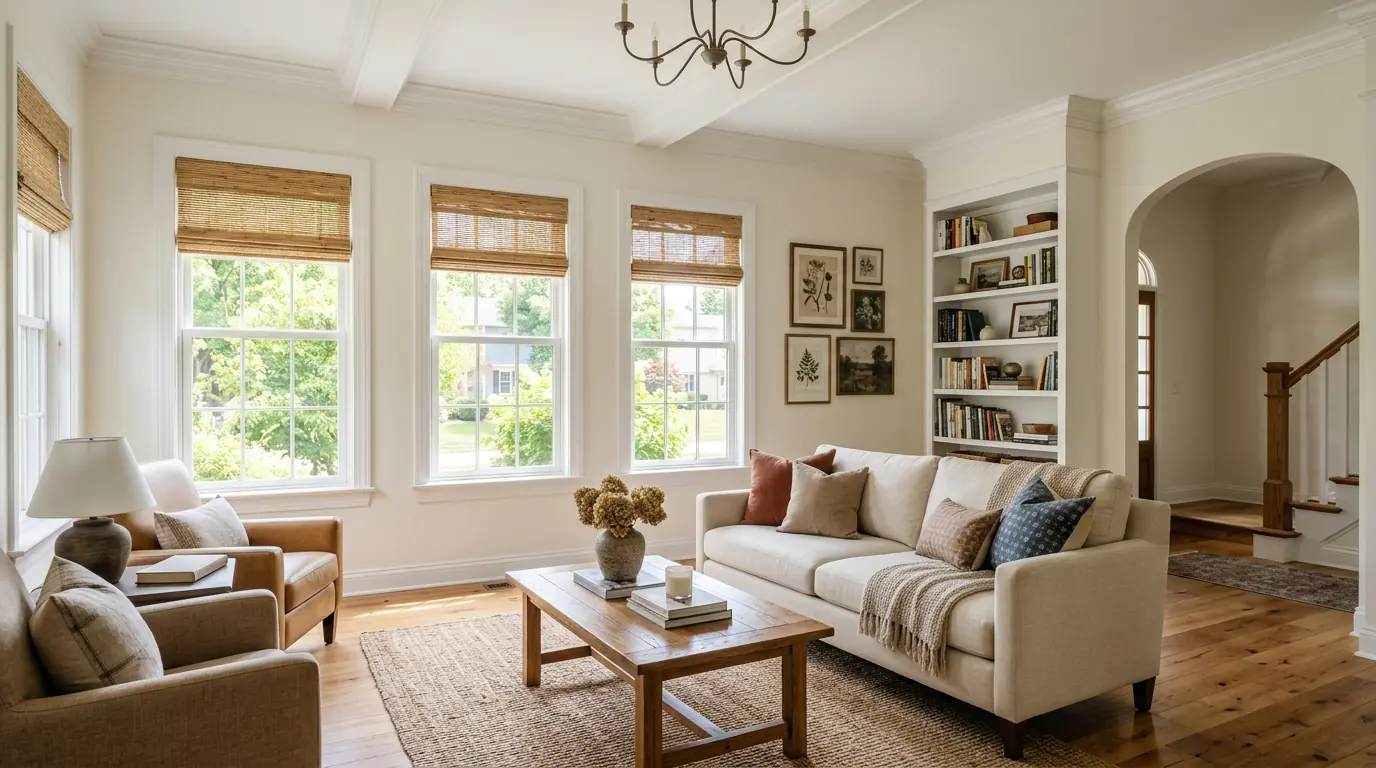
Interior Painting in Indianapolis
Trim, baseboard and door painting in Indianapolis
Chipped baseboards, yellowed oil trim, or dark stained doors in a house you want lighter. Trim is small in area and large in impact, and it takes more hand work per foot than any wall.
- Phones answered 24/7
- Hard enamel on every trim surface
- Oil-to-latex conversions done right
Paint lines and window treatment brands we work with
Quick answer
Trim painting in Indianapolis covers baseboards, door and window casings, crown molding and interior doors, finished in a hard semi-gloss or satin enamel. Every joint is caulked, every nail hole filled, and glossy or oil-painted trim is sanded and primed first. A typical room's trim is a day; doors are usually taken down and sprayed.
What the job involves
Why trim takes longer than the walls around it
Updated September 2026
Trim gets kicked, wiped and bumped, so it needs a harder enamel than walls, and it needs to be bonded properly. Much older trim in this area was painted with oil, and latex rolled straight over oil peels like tape. We test the existing finish with alcohol, and where it is oil we scuff and prime with a bonding primer before the enamel goes on.
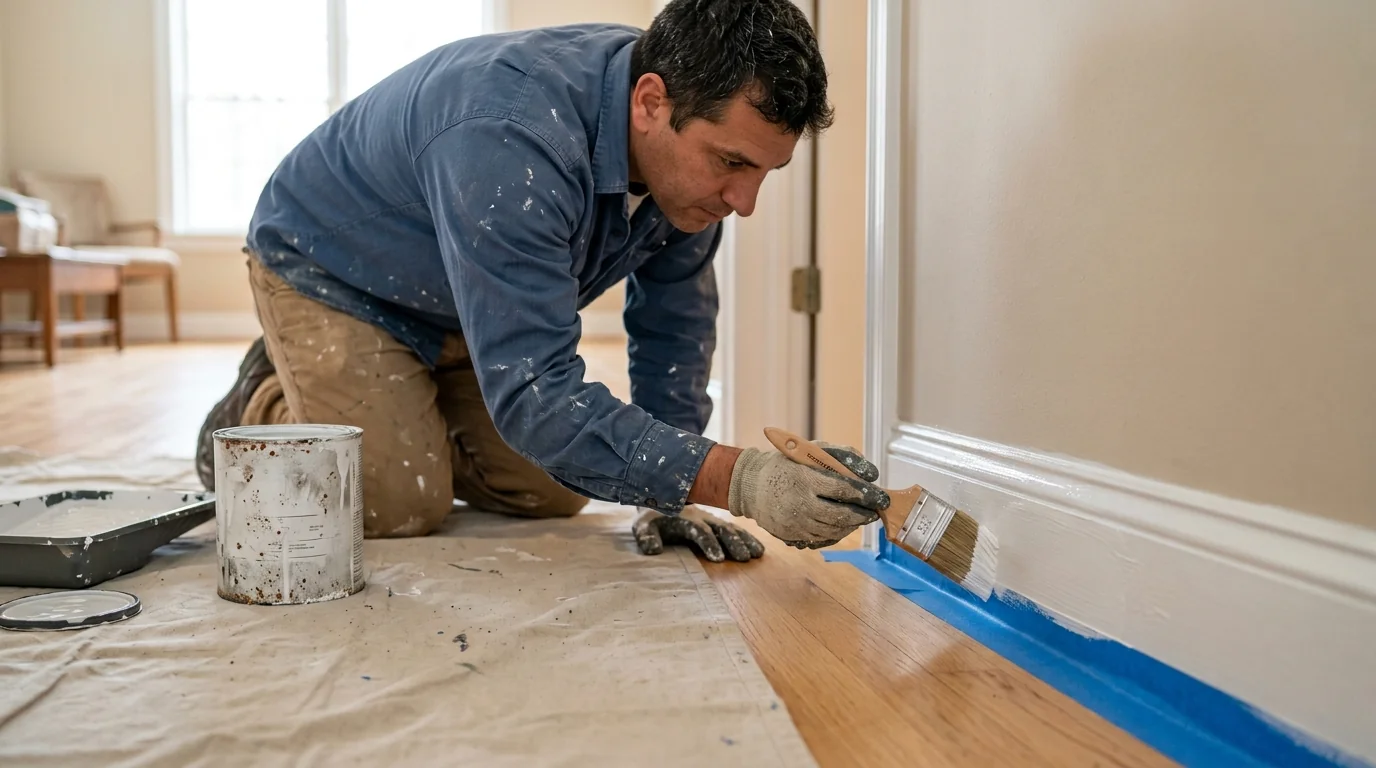
We use the trim enamels from Benjamin Moore, Sherwin-Williams and PPG, brushed with a Purdy or Wooster sash brush on casings and baseboards, and sprayed on doors when they come off the hinges. If the walls are being painted too, trim is done after them so the cut line lands on the finished wall; see interior house painting.
What is included
What our trim painting includes
- Existing finish tested for oil paint before any coating
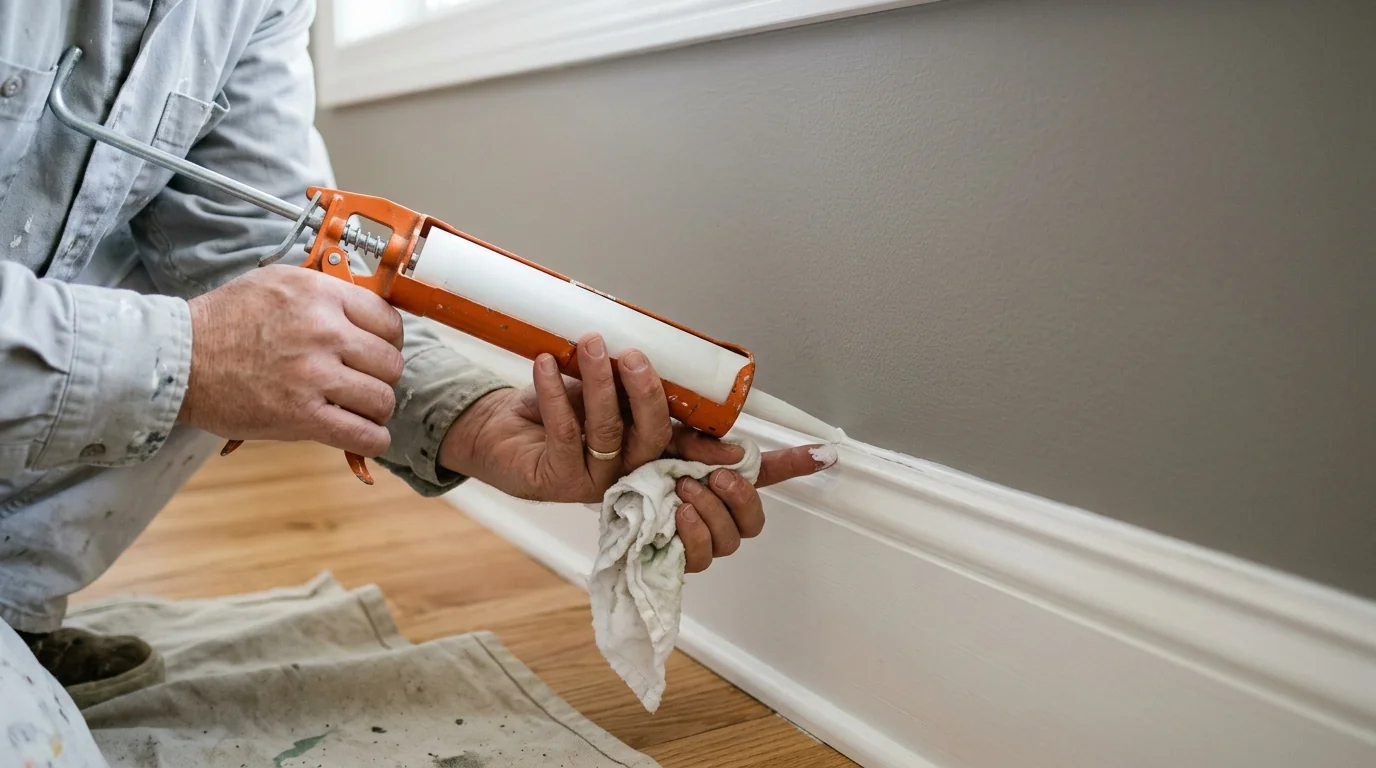
- Nail holes filled and every joint and top edge caulked
- Scuff sanding and bonding primer where the old finish needs it
- Two coats of trim enamel in the sheen you choose
- Doors removed and sprayed on both faces and all edges
- Hardware removed and refitted rather than taped
- Window sashes cycled so they do not dry shut
Choosing between the options
Semi-gloss, satin or a switch to waterborne alkyd
| Consider | Semi-gloss enamel | Satin enamel | Waterborne alkyd |
|---|---|---|---|
| Look | Bright, classic trim contrast | Softer, modern | Hard, smooth, furniture-like |
| Durability | Very washable | Washable | Hardest, levels brush marks |
| Shows flaws | Most | Less | Less, but slower to cure |
| Best for | Baseboards and doors in busy homes | Craftsman and modern trim | Doors, cabinets-style trim, high-touch areas |
Most homes suit semi-gloss on doors and baseboards; we recommend waterborne alkyd where trim gets heavy handling.
What moves the price
What moves the price of trim and doors
Trim is priced by the linear foot and doors by the piece, adjusted for prep. Market figures put interior painting that includes walls, trim and ceilings at about $4.70 per square foot of floor area.
- Linear footage Baseboard, casing and crown are measured by the foot.
- Door count Each door is priced by the piece, both faces and edges.
- Oil or latex underneath Oil trim needs scuffing and a bonding primer before latex enamel.
- Stained wood going white Stain-blocking primer and an extra coat to stop tannin bleed.
- Condition Chips, open miters and failed caulk add fill and sanding time.
- Profile detail Deep crown and paneled doors take more brush work than flat stock.
- Windows Sashes, sills and muntins are the slowest trim per foot.
Ranges are published market figures for planning only, not a quote from us; your price depends on the factors above.
Variations of this job
The trim, baseboard & door painting jobs we get called for
Baseboards and casings
Baseboards take the most abuse in a house and show it first: scuffs from vacuums, chips at corners, caulk that has pulled away from the wall. We clean them, fill nail holes, re-caulk the top edge and the corners, sand, spot-prime bare wood and brush two coats of enamel. Door and window casings get the same treatment with extra attention at the miter joints, which open and close with the seasons. The floor edge is taped with a thin film and the carpet is tucked back with a guard so no enamel reaches the flooring.
Interior doors
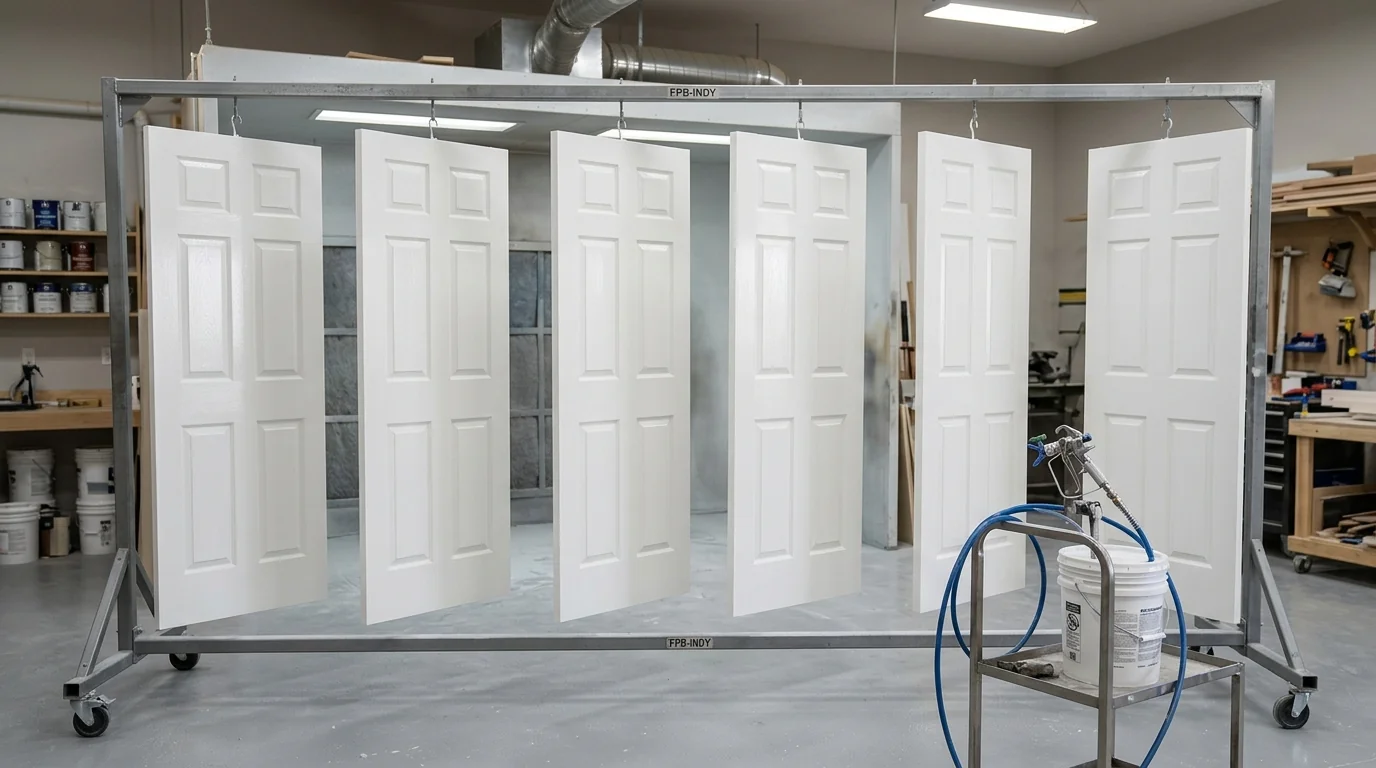
Doors look best sprayed, so we take them off the hinges, lay them flat or hang them on a rack, and spray both faces and all four edges in thin coats. Six-panel doors that are brushed in place always show brush marks in the panel corners; sprayed, they look factory-finished. Hinges and knobs are removed rather than taped over. Stained wood doors going white need a stain-blocking primer because tannin from oak and pine will bleed through light enamel otherwise.
Crown molding
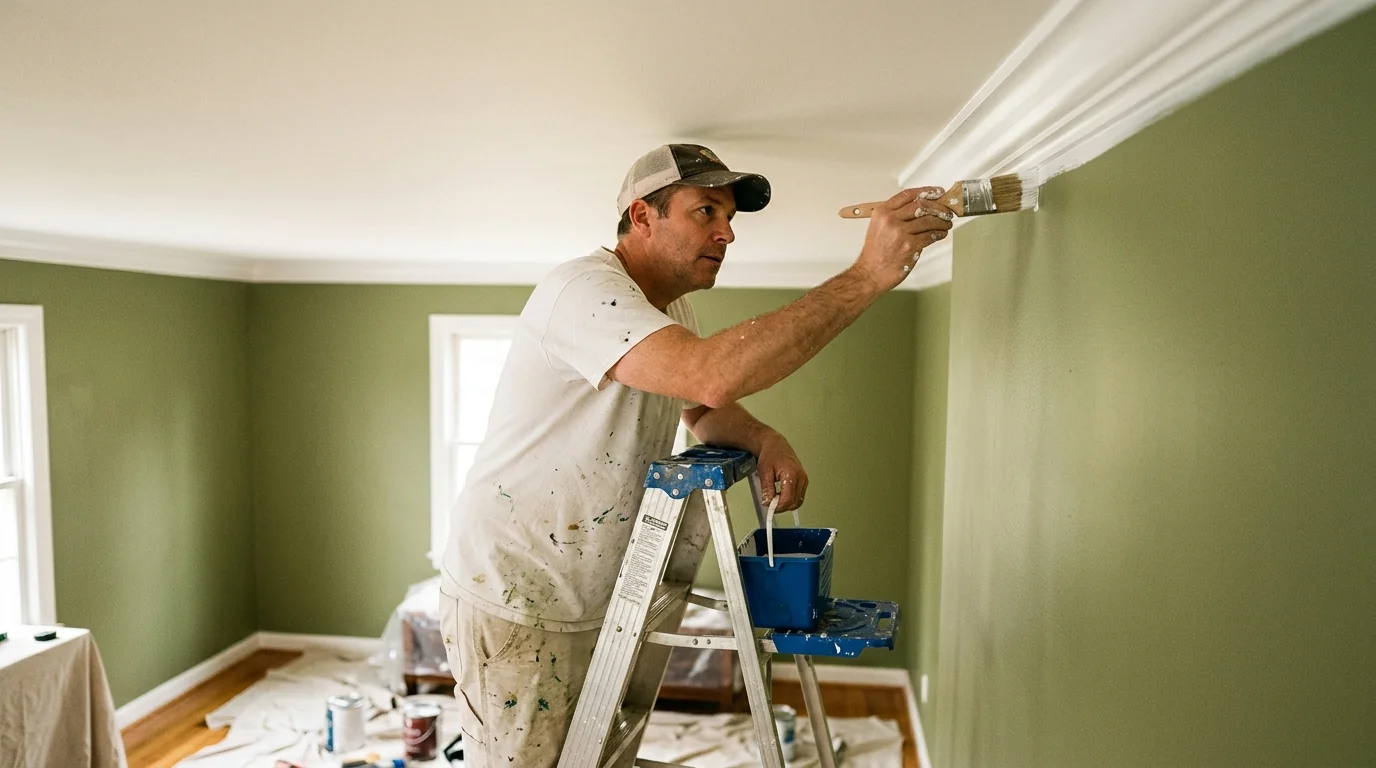
Crown is the trim piece where cut lines matter most, because the ceiling above and the wall below are both visible. We caulk the gaps where crown meets an uneven ceiling, which is common in older plaster rooms, and cut both edges freehand rather than taping. Where crown was stained and is going painted, it gets a bonding primer first. If a ceiling was just skimmed or popcorn removed, adding or repainting crown is also the cleanest way to hide the old texture line.
Window sashes and sills
Window sashes and sills are the trim that sees sun and condensation, so sills especially crack and peel. We scrape and sand loose paint, check the sill wood for softness, fill and prime, and paint the sash without sealing it shut: the sash is cycled while the paint is still soft so it slides freely once dry. Glass is cleaned with a razor after painting rather than taped, which leaves a small paint seal onto the glass that keeps water out of the glazing.
Local context
How this work runs around Indianapolis
Irvington's Craftsman bungalows and American Foursquares, most of them built between the 1870s and the 1950s, carry wide casings, tall baseboards and original wood doors, often under many coats of old oil paint, so trim there is mostly a bonding and prep job before it is a painting job. Across the post-war ranches and 1970s subdivisions that make up much of the rest of Indianapolis, the trim is narrower colonial or ranch profile, usually builder latex that only needs scuffing and caulk.
From your call to the final walk-through
How a trim job runs
- 01
Call and list the trim
Rooms, doors and whether windows or crown are included.
- 02
Visit and finish test
We check for oil paint, count doors and look at joints and chips.
- 03
Written scope
Footage, door count, primer, enamel and sheen.
- 04
Protect and remove
Floors guarded, doors taken down, hardware bagged and labeled.
- 05
Prep
Clean, fill, caulk, sand, prime bare wood and any oil finish.
- 06
Enamel
Two coats, brushed on trim, sprayed on doors off the hinges.
- 07
Rehang and touch up
Doors back on, hardware refitted, windows cycled, glass cleaned.
FAQ
Questions we hear on this job
Yes, after scuff sanding and a bonding primer. Latex straight over oil peels.
Usually, so they can be sprayed on a rack. Doors are rehung the same or the next day.
Semi-gloss is the classic choice for durability; satin looks softer and suits Craftsman and modern trim.
Yes, with a stain-blocking primer so tannin does not bleed yellow through the enamel.
No. Sashes are cycled while the paint is soft so they slide once dry.
Often. Walls go first so the trim line lands on finished paint; see interior painting.
Related services
Other interior painting work we handle
Kitchen Cabinet Painting
Oak and grained cabinets, bathroom vanities and more.
see our kitchen cabinet painting pageCabinet Refinishing & Staining
Strip and re-stain, glaze and toner touch-up and more.
Cabinet Refinishing & StainingWood Trim & Door Staining
Stained interior trim, clear-coat refresh on stained woodwork and more.
Wood Trim & Door StainingInterior House Painting
Whole-home repaint, open-concept and two-story walls and more.
see our interior house painting pageReady when you are
Count the doors and we will set the visit
Tell us the rooms and how many doors, and we will book the estimate visit on the call, any hour, any day.
Faber Paint & Blinds service office
3053 Stillcrest Ln, Indianapolis, IN 46217