Interior Painting in Indianapolis
Kitchen cabinet painting in Indianapolis
Honey oak from the 1990s, a dated island, or a vanity you cannot stand. A sprayed cabinet enamel gets most of the look of new cabinets for a fraction of the cost, if the prep is done properly.
- Phones answered 24/7
- Doors sprayed off-site
- Cabinet enamel, not wall paint
Paint lines and window treatment brands we work with
Quick answer
Cabinet painting in Indianapolis takes about a week from the day the doors come off to the day they go back. Doors and drawer fronts are sprayed off-site in a dust-controlled space while the boxes are finished in the kitchen. Published market figures put a typical kitchen at $900 to $3,500 depending on door count, wood species and finish.
What the job involves
Why cabinets fail when they are painted like walls
Updated September 2026
Cabinet doors get touched, wiped and bumped hundreds of times a week, and wall paint on them peels at the handles within a year. The job lasts only with a cabinet-grade enamel over a bonding primer on a surface that has been degreased, deglossed and sanded. We never skip degreasing on a kitchen that looks clean; cooking film is invisible and it is the usual cause of failure.
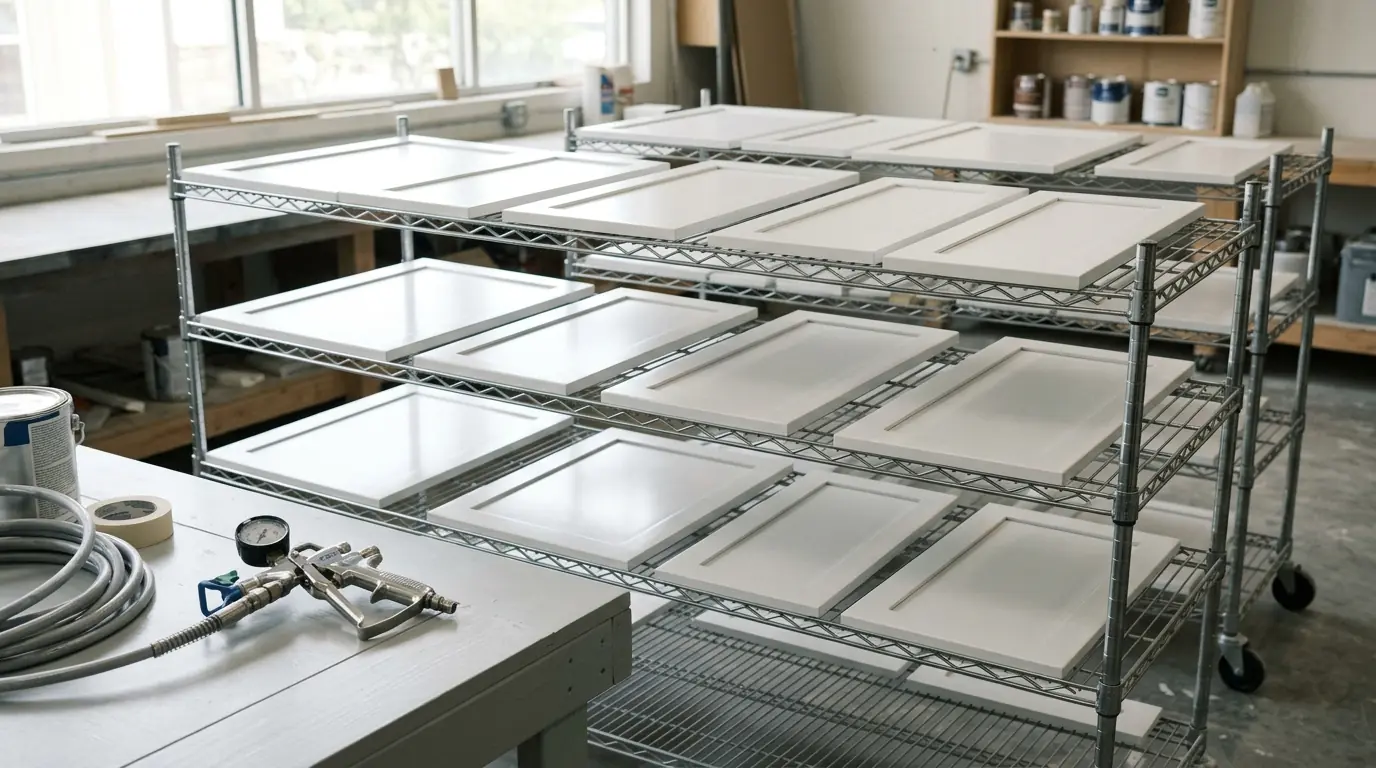
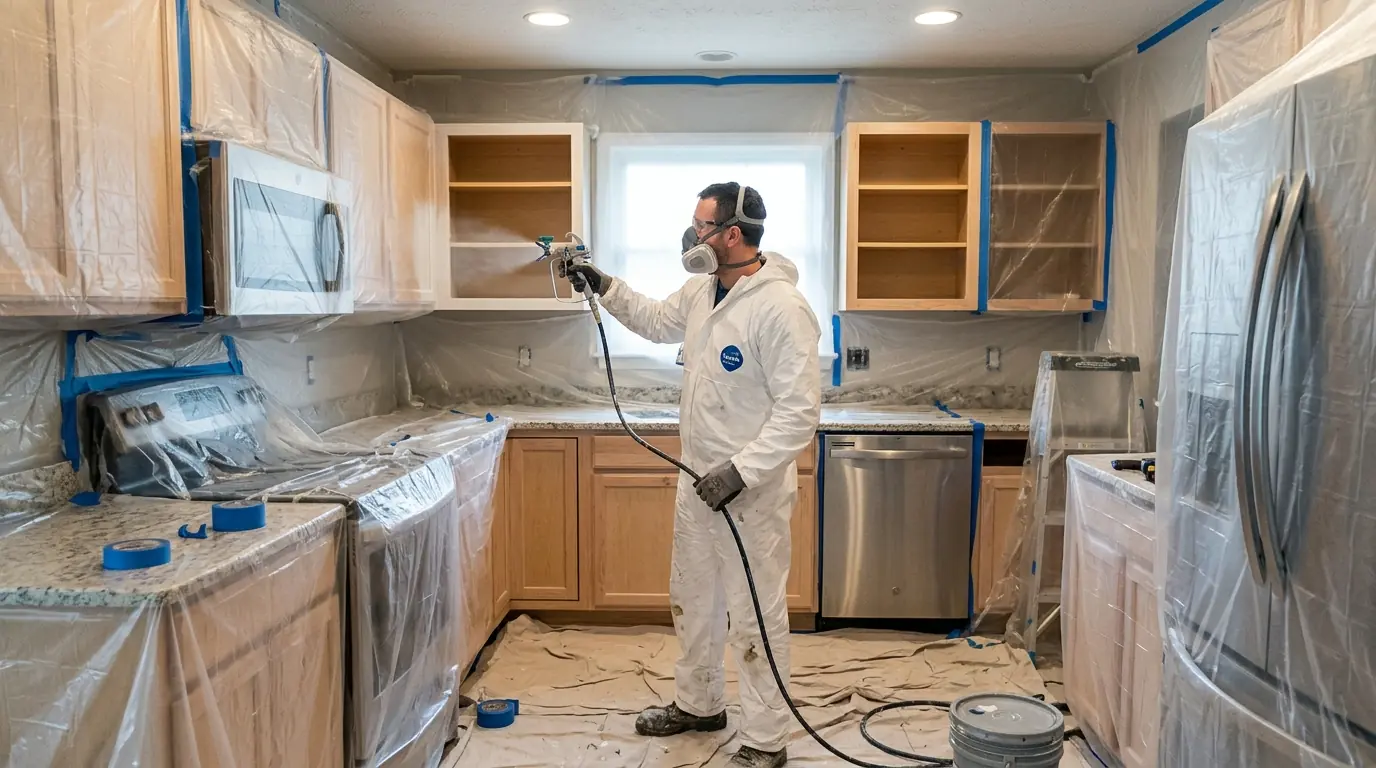
Doors and drawer fronts come off, get numbered and leave for spraying. Boxes, face frames and end panels are done in the masked kitchen. We use the cabinet enamel lines from Benjamin Moore, Sherwin-Williams and PPG, and we say plainly when a good hardwood door is better refinished and re-stained than painted. Cabinets are finished before any wall paint so the masking is pulled once.
What is included
What is in a cabinet painting job
- Doors, drawer fronts and removable panels taken off, numbered and sprayed off-site
- Degreasing and deglossing of every surface before sanding
- Grain filler on open-grain oak when a smooth finish is chosen
- Stain-blocking or bonding primer matched to the existing finish
- Cabinet-grade enamel in multiple thin sprayed coats
- Face frames, boxes and end panels finished in place with the kitchen masked
- Reinstallation, hinge adjustment and hardware fitting
What moves the price
What moves the price of painted cabinets
Priced by the door and drawer front, adjusted for the surface. Market figures for a typical kitchen run $900 to $3,500, with a 30-cabinet kitchen commonly $1,500 to $3,000.
- Door and drawer count Every removable piece is prepped and sprayed on both sides, so the count matters more than the footprint.
- Wood species and grain Open-grain oak wanted smooth adds a grain-fill day; maple and previously painted cabinets skip it.
- Existing finish Factory conversion varnish needs more scuffing than builder lacquer; peeling thermofoil needs new doors.
- Color change Dark cabinets going white need extra primer and coats.
- Hardware changes New pulls with different hole spacing mean filling and re-drilling before primer.
- Interior of the boxes Painting shelves and box interiors is optional and adds real time.
- Glass, inserts and crown Glass doors get masked or de-glazed; crown and light rail add linear feet of cut-in.
Ranges are published market figures for planning only, not a quote from us; your price depends on the factors above.
Variations of this job
The kitchen cabinet painting jobs we get called for
Oak and grained cabinets
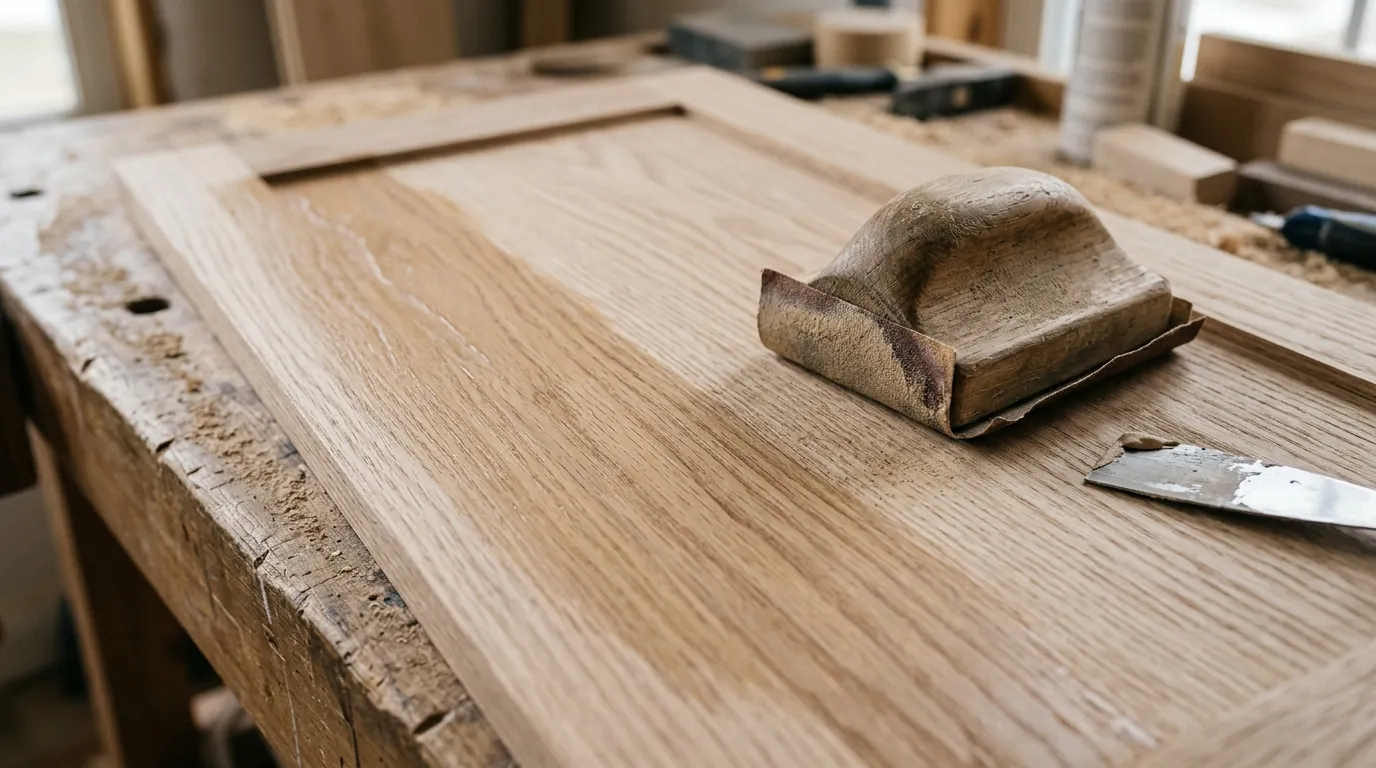
Oak is the most common cabinet in Indianapolis kitchens from the 1980s and 1990s, and its open grain shows through paint unless it is filled. Some people like a faint grain under white enamel; most want it smooth, which means grain filler applied, dried and sanded before primer, adding a day. Oak also bleeds tannin through light colors, so the primer must block stains. Done that way, painted oak looks like painted maple; skipped, yellow spots show by the second summer.
Laminate and thermofoil doors
Laminate and thermofoil doors can be painted, but they are the most likely to be a poor candidate. Thermofoil already peeling near the dishwasher or oven keeps peeling under any paint, so those doors are replaced with paint-grade doors and the rest painted to match. Sound laminate takes a bonding primer made for slick surfaces after a careful scuff, since it cannot be sanded hard without cutting through the skin. We test adhesion on the inside of one door before quoting the whole kitchen.
Island-only color change
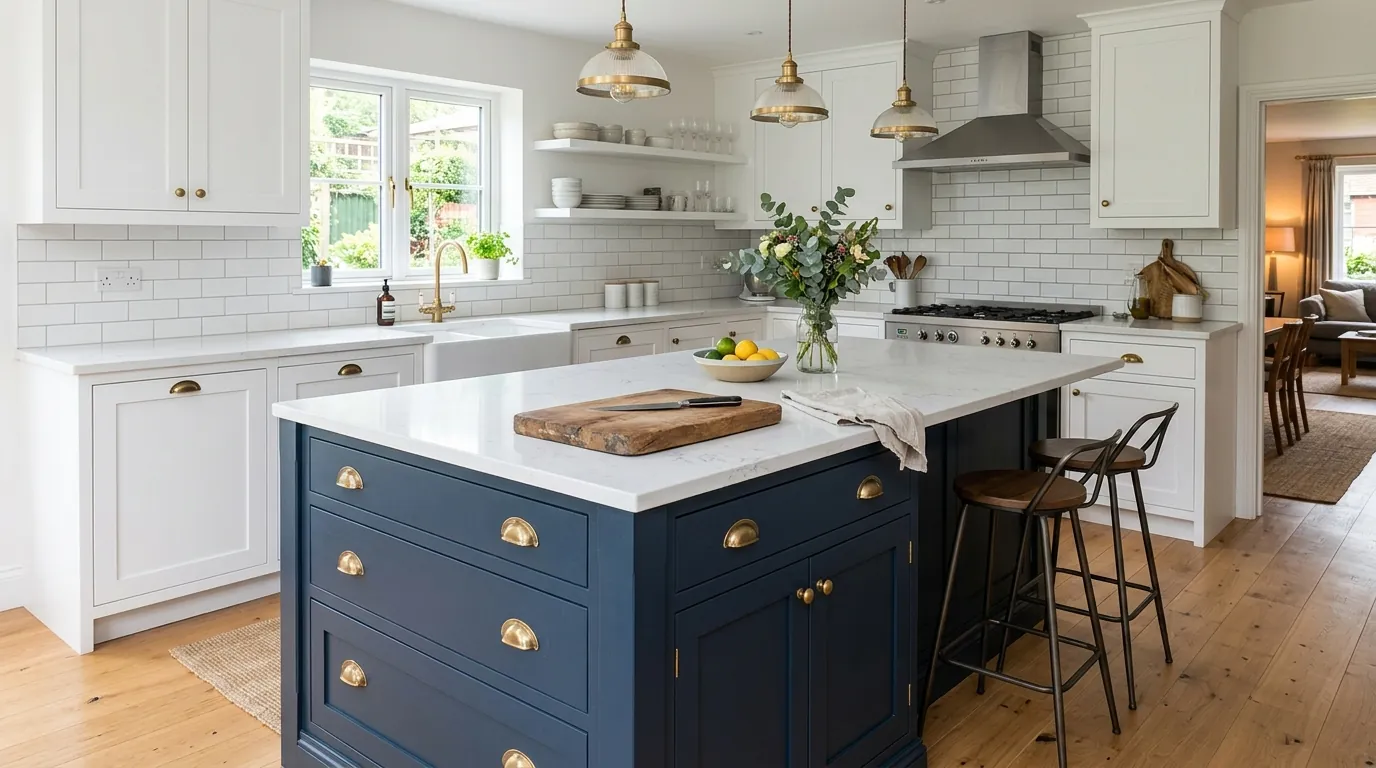
The island alone is the most requested small cabinet job and the best value for a kitchen with decent perimeter cabinets. A navy, green or charcoal island under a light countertop reads as a designed kitchen rather than a repainted one. The work is the same as a full kitchen on a dozen doors and one set of end panels, so it is usually done within a few days. Because the island gets kicked and scrubbed more than any other cabinet, it gets the same hard enamel and full cure before the drawers go back.
Bathroom vanities
A vanity is a small job with two complications: moisture and the sink. Doors come off and get sprayed like kitchen doors, but the box sits under a connected sink, so it is finished in place with the plumbing and countertop masked. Bathroom humidity slows the cure, so we ask that the fan run and the shower sit idle for a day. A toe kick already swollen with water gets repaired before paint; enamel over swollen particleboard does not last.
Local context
How this work runs around Indianapolis
Indianapolis kitchens follow the housing stock: pre-war houses close to the core often have painted site-built cabinets carrying dozens of old coats that need stripping or heavy sanding before a new enamel, while the post-war ranches and 1970s and 1980s subdivisions that make up most of the county carry factory oak and later thermofoil. That is why the estimate visit opens a door, looks at the edge profile and checks for a factory label before any number is written, and why two kitchens of the same size can land at very different prices.
Timeline
How long the kitchen is out of action
Plan on about a week. Doors leave on day one, the boxes are finished over the next day or two, and the doors return once the enamel can be handled. Cooking continues with counters uncovered each evening, but the cabinets stay empty until the doors are rehung.
From your call to the final walk-through
How a cabinet job runs
- 01
Call and count
Roughly how many doors and drawers, and what they are made of. We book the visit on the call.
- 02
Visit and adhesion test
We open doors, check edges and labels, test the finish inside a door and talk color and sheen.
- 03
Written scope
Door count, prep steps, primer and enamel line, hardware plan, and the days doors leave and return.
- 04
Doors off, kitchen masked
Every piece numbered, hinges bagged, counters, appliances and floors sealed.
- 05
Degrease, degloss, sand, fill
The slow part. Grain fill on oak, hole fill for new hardware, then the right primer.
- 06
Spray and cure
Doors sprayed off-site in thin coats; boxes finished in place; enamel given its cure time.
- 07
Rehang and adjust
Doors back on their numbered spots, hinges adjusted, hardware fitted, masking pulled.
FAQ
Questions we hear on this job
A properly primed and sprayed enamel holds up to normal use; chips come from skipped prep or wall paint used as cabinet paint.
Yes, as a separate line item. Most people paint fronts, frames and exposed ends only.
Whites and off-whites are still the majority; green, navy and charcoal islands are the usual contrast. We check samples against your counter and floor.
We reinstall yours or fit new hardware. Different hole spacing is filled and re-drilled before priming.
Substantially. Market figures put a painted kitchen at a small fraction of a replacement.
Yes. Vanities are a common small job and get the same off-site door spraying and in-place box finishing.
Related services
Other interior painting work we handle
Popcorn Ceiling Removal
Scrape and skim to smooth, cover with a new drywall layer and more.
Popcorn Ceiling RemovalCeiling Painting
Flat white ceiling repaint, textured ceiling painting and more.
learn about ceiling paintingTrim, Baseboard & Door Painting
Baseboards and casings, window sashes and sills and more.
see our trim, baseboard & door painting pageInterior House Painting
Whole-home repaint, open-concept and two-story walls and more.
see our interior house painting pageReady when you are
Send a photo of the kitchen and we will start the count
Call with a rough door count or just a description; the estimate visit does the rest, any hour, seven days a week.
Faber Paint & Blinds service office
3053 Stillcrest Ln, Indianapolis, IN 46217