
Decks, Fences & Coatings in Indianapolis
Fence staining and painting in Indianapolis
A privacy fence gone silver-gray, a picket fence peeling at every post, or a new fence that needs sealing before its first winter. Fences are long runs of rough wood, which is why most are sprayed and back-brushed.
- Phones answered 24/7
- Sprayed and back-brushed
- One side or both
Paint lines and window treatment brands we work with
Quick answer
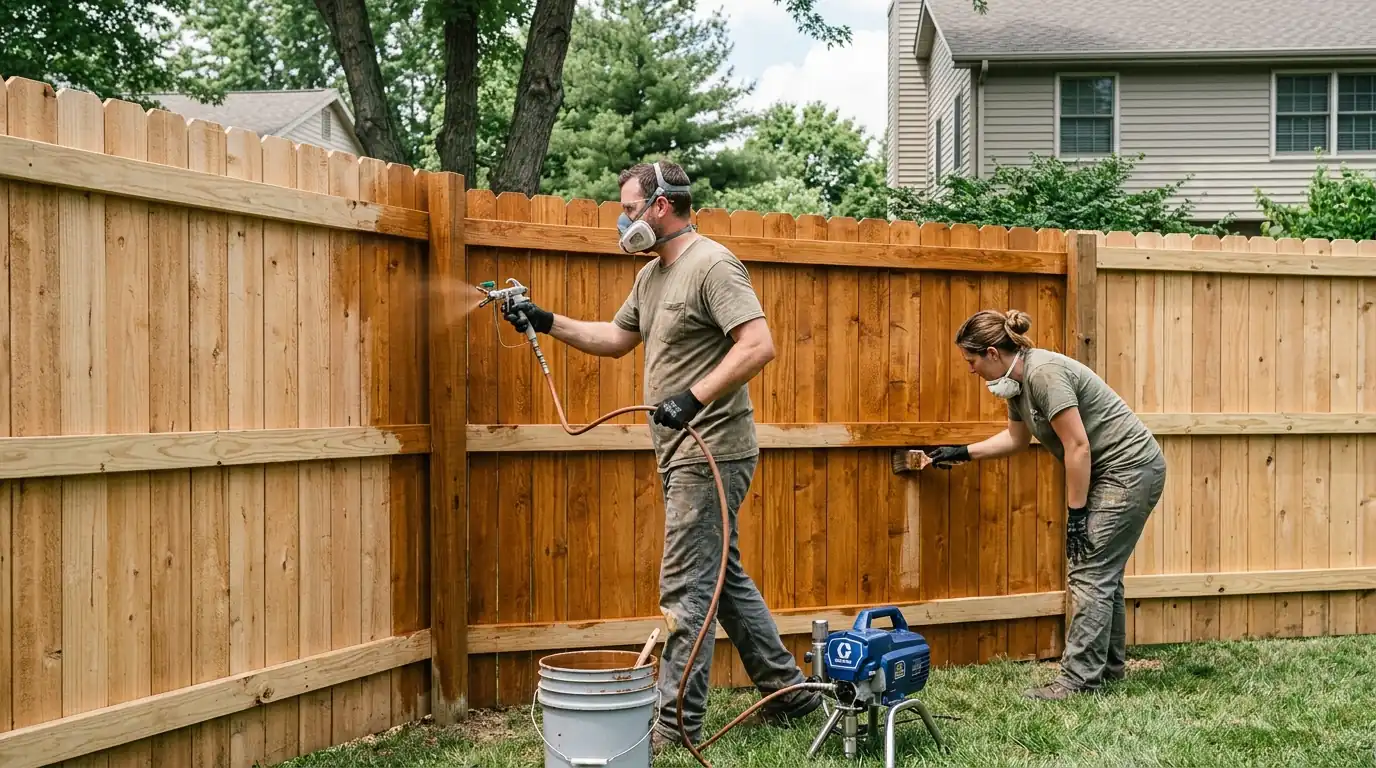
Fence staining in Indianapolis starts with a wash to remove gray fibers and mildew, then a penetrating or solid stain sprayed and back-brushed into the rough-sawn boards and posts. Most residential fences take one to two days. Picket fences with paint are scraped and repainted instead, and new fences are sealed after they have dried out.
What the job involves
Why fences are finished differently from decks
Updated September 2026
Fence boards are vertical, rough-sawn and often only a half inch thick, so they absorb stain quickly and dry fast. They are also long runs with plants, lawns and a neighbor's property on the other side. We spray to cover the run efficiently and back-brush every section so the stain works into the rough surface and the gaps between boards, and we shield plants and the neighbor's side as we go.
We use fence and deck stains from Behr, Sherwin-Williams and PPG. Gray or mildewed fences are washed first, as on our power washing page, and fences with thick peeling finish may need the same stripping used in deck restoration.
What moves the price
What moves the price of fence staining
No sourced figure is quoted here; fences are priced by length, height and sides.
- Length and height Linear feet of fence at its height.
- One side or both Both sides nearly doubles the surface.
- Fence style Shadowbox and lattice-top fences have more surfaces than flat privacy fences.
- Condition Gray or mildewed wood needs washing; peeling finish needs stripping.
- Stain or paint Picket paint is brush work; privacy stain is sprayed and back-brushed.
- Landscaping Beds and shrubs along the fence need shielding.
- Repairs Loose posts and broken boards are fixed before finishing.
Variations of this job
The fence staining & painting jobs we get called for
Cedar privacy fence
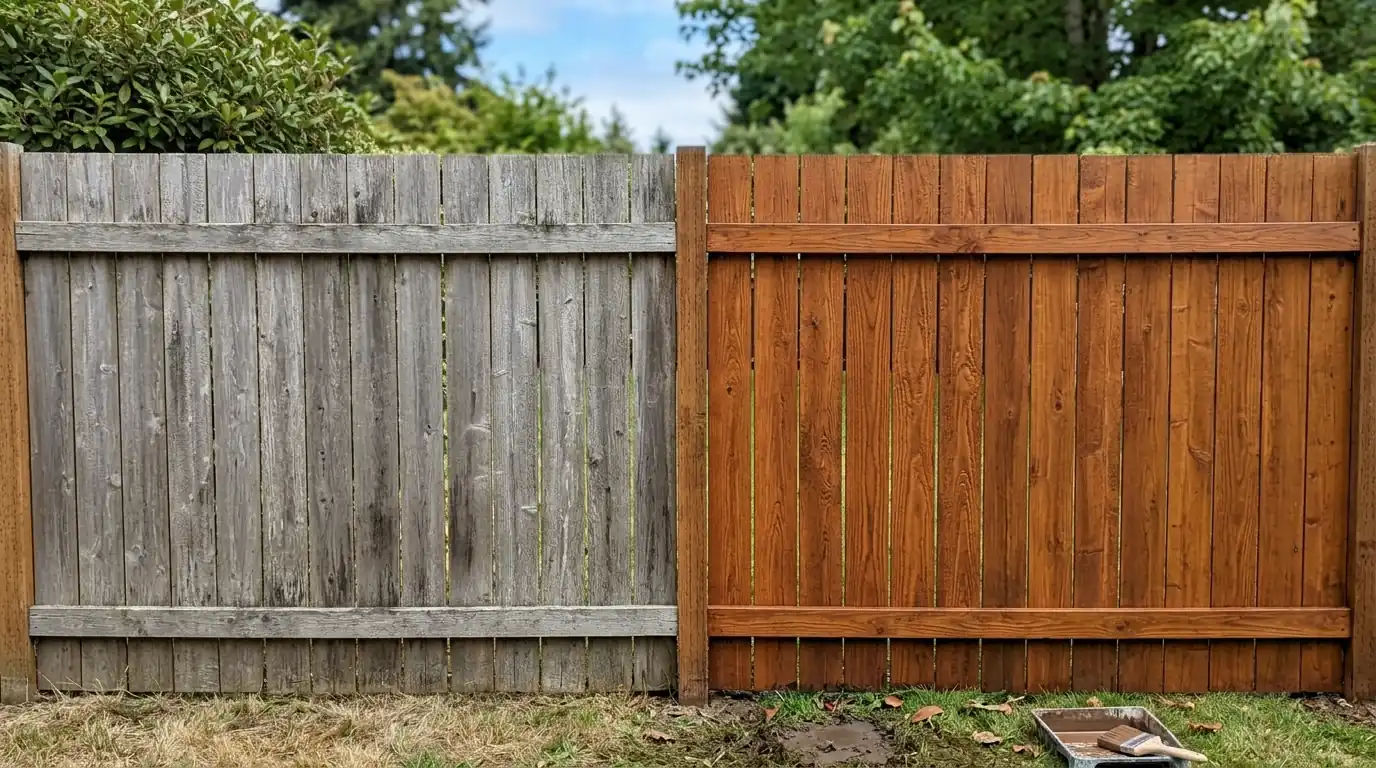
Cedar has natural oils and color that most owners want to keep, so we usually use a semi-transparent oil-based or hybrid stain tinted close to cedar. The fence is washed and brightened first so the new stain does not sit on gray fibers, then sprayed and back-brushed, including the tops of the boards and the rails where water sits. Posts get extra stain at the base where they meet the soil. A cedar-toned stain slows graying and keeps the fence looking like wood for several years.
Pressure-treated fence
New pressure-treated lumber is wet from the treatment and needs time to dry before it will take stain; a water drop test on the boards tells us when it is ready. Once dry, pressure-treated pine takes a semi-transparent or solid stain well. Solid stain hides the green tint and knots completely, and it is a good choice when a fence mixes new replacement boards with older ones. We check posts for cracks and loosening, which are common on treated lumber after a few seasons.
Picket fence paint
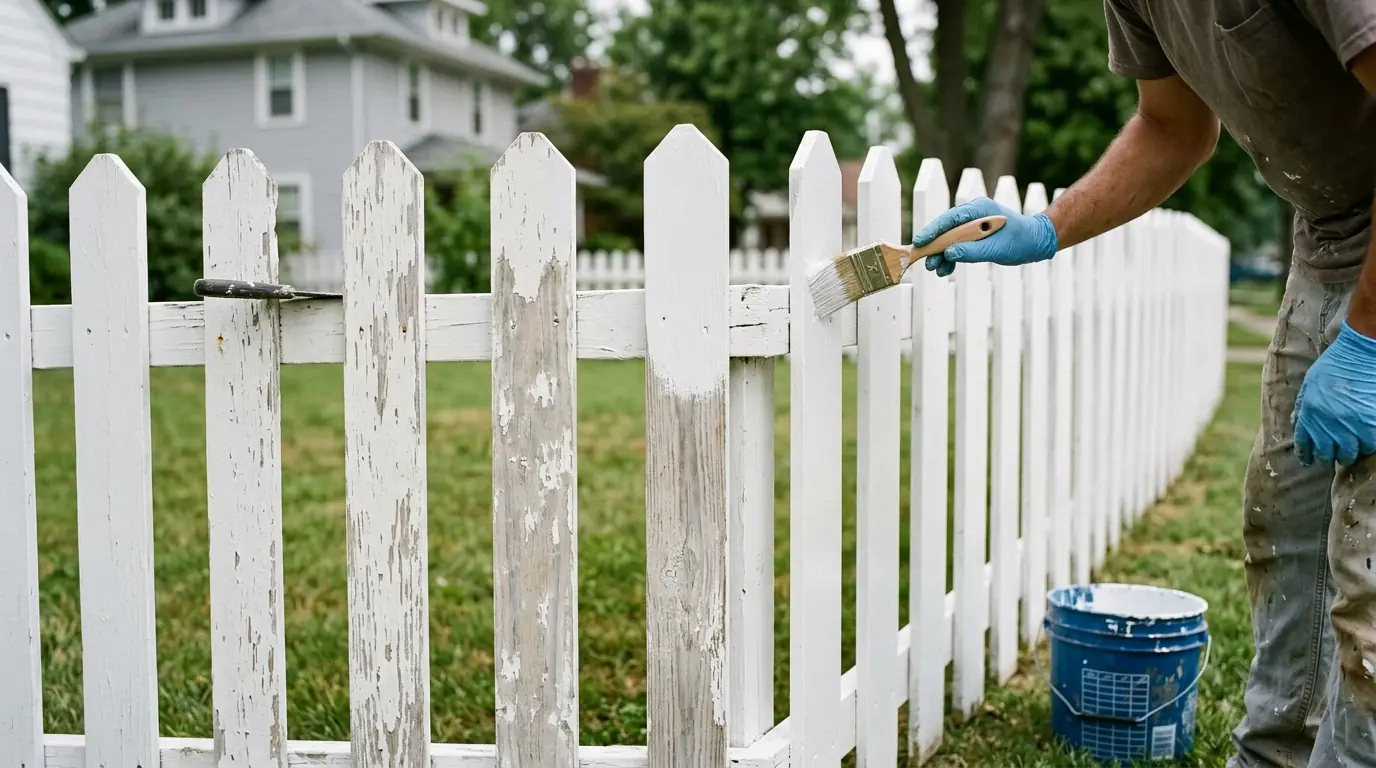
Picket fences are usually painted rather than stained, and like any painted wood outdoors they peel at the tops of the pickets and the bottoms of the posts. We scrape and sand loose paint, prime bare wood, and brush or spray two coats of exterior enamel, working each picket on all faces. Where a picket has rotted at the top, it is replaced rather than filled. White remains the most requested color, and it shows every bit of prep, which is why the scraping step matters.
Sprayed stain on long runs
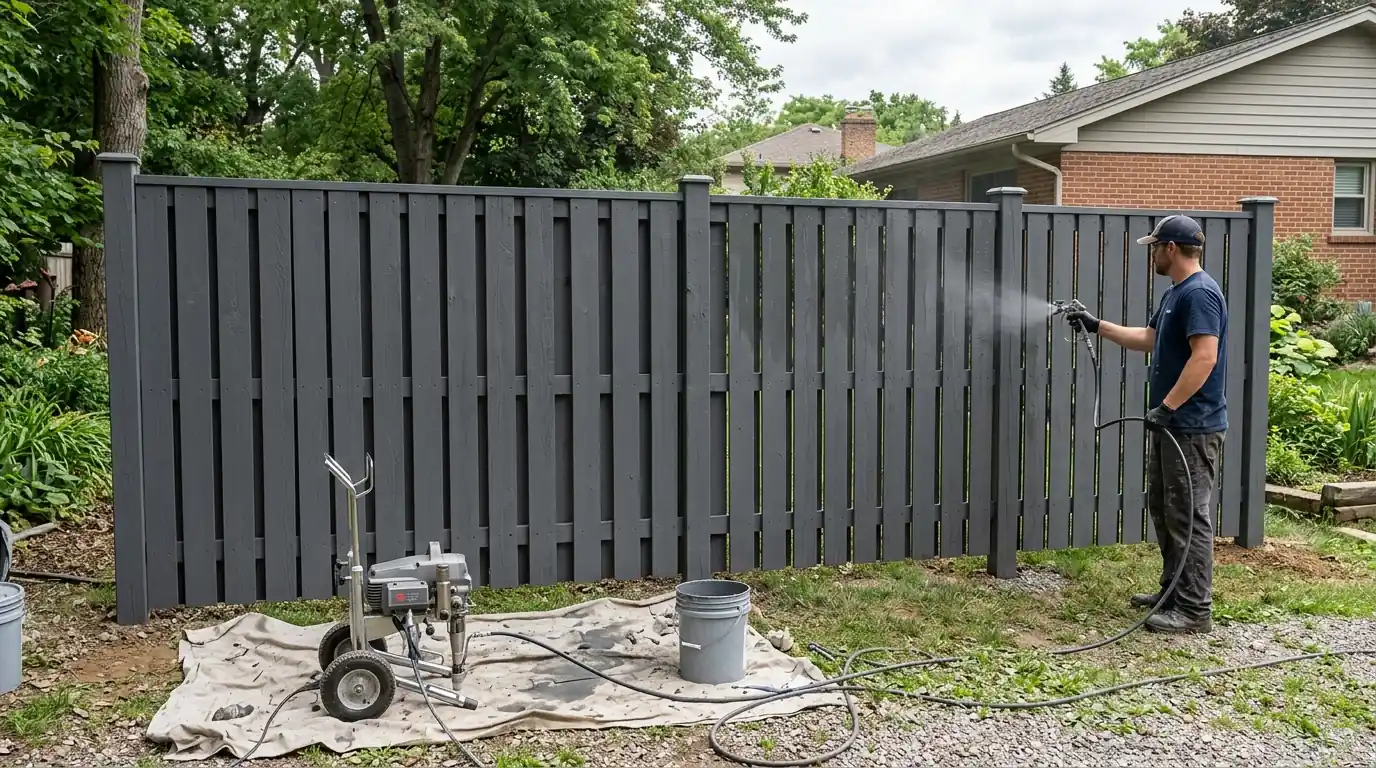
Long privacy and shadowbox fences along a lot line are where spraying saves the most time, and where overspray control matters most. We work on calm days, use shields and drop cloths along plants and the neighbor's side, and back-brush behind the sprayer so the finish is even and worked into the wood. If you want both sides finished, we ask you to arrange access with your neighbor; if only your side, we keep the stain on your side and tell you where it shows through.
Local context
How this work runs around Indianapolis
Indianapolis averages several days a year with more than an inch and a quarter of rain, mostly from spring and summer thunderstorms, and roughly a hundred summer days in the 80s or warmer. That mix of heavy soakings and strong sun is hard on thin fence boards and the bottoms of posts, so we treat the rails and post bases as the priority areas and time the work for a dry spell after a storm has passed.
Timeline
How long a fence takes
Most residential fences are washed one day and stained the next, once the wood has dried. Longer runs and both-sides jobs take longer. Stain is dry to the touch within hours, so pets and kids can use the yard the same evening in most cases.
From your call to the final walk-through
How a fence job runs
- 01
Call and describe the fence
Length, height, wood type and which sides.
- 02
Walk the fence
We check boards, posts and plants along the run.
- 03
Written scope
Wash, repairs, stain or paint, color and sides.
- 04
Wash and dry
Gray fibers and mildew removed; wood dries.
- 05
Protect
Plants, ground and the neighbor's side shielded.
- 06
Spray and back-brush
Even coverage worked into the boards, posts and rails.
- 07
Walk-through
We walk the run with you and touch up any misses.
Doing it yourself vs. calling us
Staining a fence yourself versus calling us
| Step | Doing it yourself | When we do it |
|---|---|---|
| Coverage | Roller on rough boards, missed gaps | Sprayed and back-brushed into every gap |
| Overspray | Stain on plants, cars and the neighbor's side | Shields and calm-day scheduling |
| Time | Several weekends | One to two days |
A short run of picket fence is a fair DIY project. Long privacy fences and sprayed stain are where overspray and uneven color become a problem.
FAQ
Questions we hear on this job
Once the wood passes a water drop test, often a few months after installation.
Stain for privacy fences; paint for picket fences that are already painted.
Yes, with access arranged to the neighbor's side.
Every few years, sooner on the sunny side.
We shield beds and spray on calm days to prevent it.
Yes. Loose posts and broken boards are addressed before finishing.
Related services
Other decks, fences & coatings work we handle
Shed, Barn & Outbuilding Painting
Backyard sheds and garden buildings, playhouses, pergolas and pool houses and more.
shed, barn & outbuilding painting serviceDeck Staining & Sealing
Semi-transparent stain, railings and balusters and more.
Deck Staining & Sealing in IndianapolisConcrete Staining & Sealing
Patio and walkway sealing, porch steps and stoops and more.
learn about concrete staining & sealingGarage Floor Epoxy
Full-flake epoxy, basement floor coating and more.
Garage Floor EpoxyReady when you are
Tell us the length and we will set the visit
Describe the fence and which sides you want finished, and we will book the visit on the call, any hour.
Faber Paint & Blinds service office
3053 Stillcrest Ln, Indianapolis, IN 46217