
Interior Painting in Indianapolis
Cabinet refinishing and re-staining in Indianapolis
Solid cherry, maple or oak doors with a worn, orange or peeling finish. If the wood is good, re-staining keeps what you paid for and fixes what went wrong with the finish.
- Phones answered 24/7
- Wood grain kept, not painted over
- Catalyzed clear topcoat
Paint lines and window treatment brands we work with
Quick answer
Cabinet refinishing in Indianapolis keeps the wood grain visible: doors come off, the old finish is stripped or sanded, the wood is re-stained or toned, and a hard clear topcoat goes on. Published market figures put cabinet refinishing at $800 to $2,500, usually below the cost of painting the same kitchen.
What the job involves
When refinishing beats paint
Updated September 2026
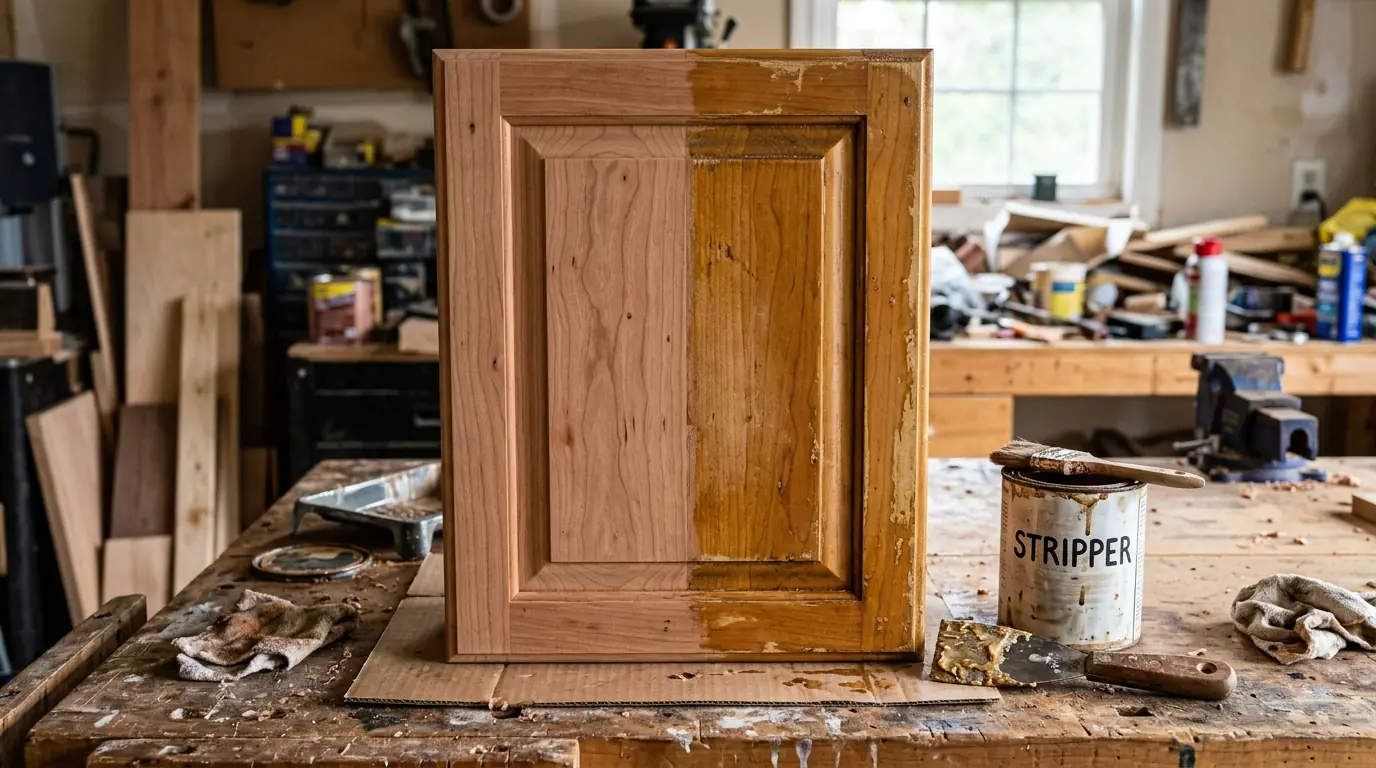
Refinishing only makes sense when the wood underneath is worth seeing. Solid hardwood doors with a worn, cloudy or amber-shifted finish are the ideal case. Veneer can be refinished lightly, but it cannot be sanded hard, and laminate or thermofoil cannot be stained at all; those go to cabinet painting instead.
We match stain in the shop on the back of a door before touching a visible face, using Benjamin Moore, Sherwin-Williams or PPG wood finishing lines, and topcoat with a clear that stands up to kitchen use.
Choosing between the options
Refinish, tone or paint
| Consider | Strip and re-stain | Tone or clear refresh | Paint |
|---|---|---|---|
| Keeps the grain | Yes | Yes | No |
| Color change | Lighter or darker | Small shift | Any color |
| Works on laminate | No | No | Yes, with a bonding primer |
| Relative time | Longest | Shortest | About a week |
Good hardwood with a tired finish should be refinished; laminate, thermofoil and dated door styles are better painted.
What moves the price
What moves the price of refinishing
Market figures put cabinet refinishing at $800 to $2,500, depending mostly on how much of the old finish has to come off.
- Refresh or full strip A clear-coat refresh is a fraction of the labor of a full strip.
- Door and drawer count Each piece is handled on both faces and all edges.
- Wood species Oak and cherry take stain predictably; maple and birch can blotch without a conditioner.
- Color change Going lighter needs a full strip; going darker can often be toned.
- Profile detail Raised panels and beaded frames take more stripping and glaze work.
- Built-ins in place Cabinets that cannot come out are stripped on site with more masking.
- Topcoat A catalyzed clear costs more than a wiping varnish and lasts far longer in a kitchen.
Ranges are published market figures for planning only, not a quote from us; your price depends on the factors above.
Variations of this job
The cabinet refinishing & staining jobs we get called for
Strip and re-stain
A full strip is for finishes that are peeling, sticky or too dark. Doors and drawer fronts come off and go to the shop, the old finish is removed with a chemical stripper and scraped, the wood is sanded evenly so the new stain takes the same way on every door, and the boxes are stripped and sanded in place with the kitchen masked. Stain goes on in the color you approved on the sample door, followed by a sanding sealer and two coats of clear. It is the most thorough route and the one that changes color the most.
Clear-coat refresh
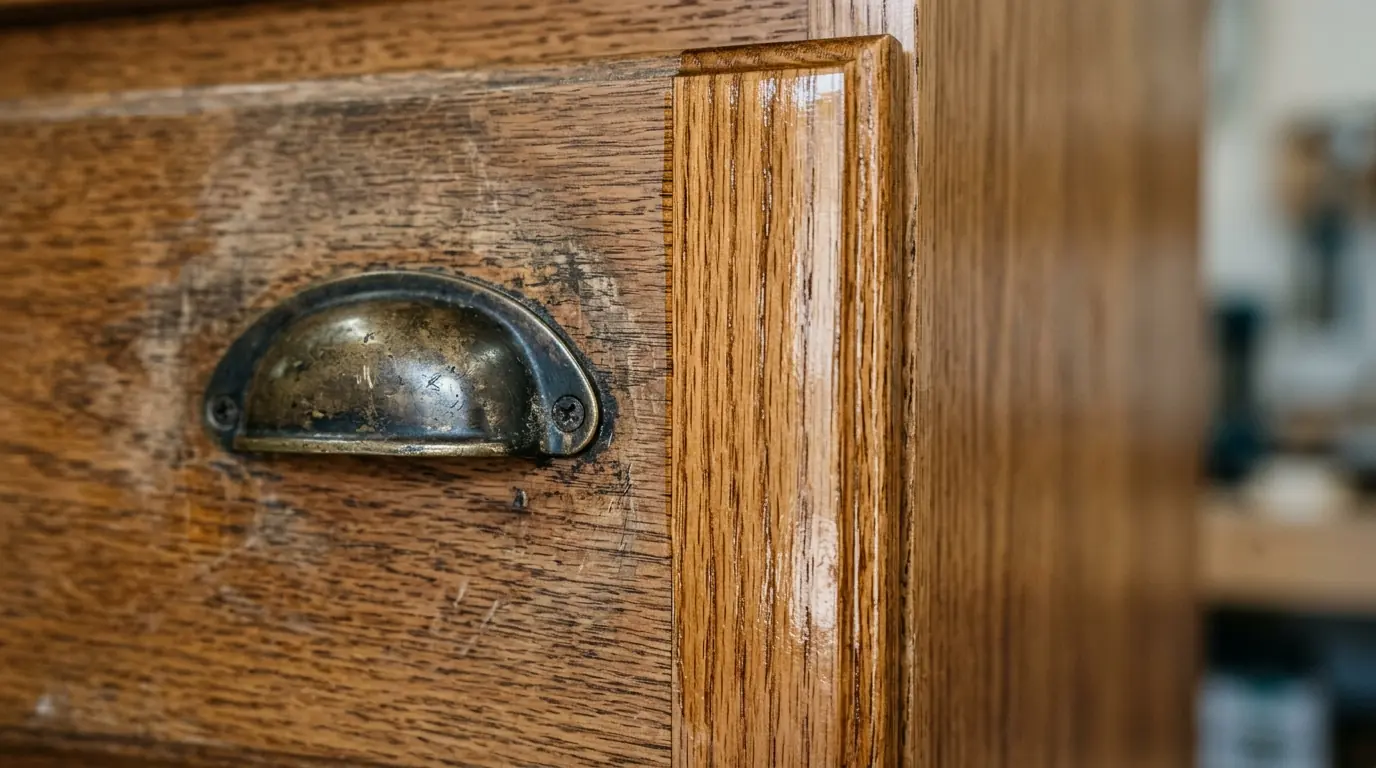
When the stain color is fine but the clear finish has gone dull, worn through at the handles or hazy near the stove, a refresh is enough. We degrease thoroughly, scuff-sand the existing finish without cutting into the stain, touch up worn spots with a matching toner, and apply two coats of a new clear. The doors look close to new in a fraction of the time of a strip. It works only if the old finish is still bonded; a finish that flakes under tape has to be stripped instead.
Glaze and toner touch-up
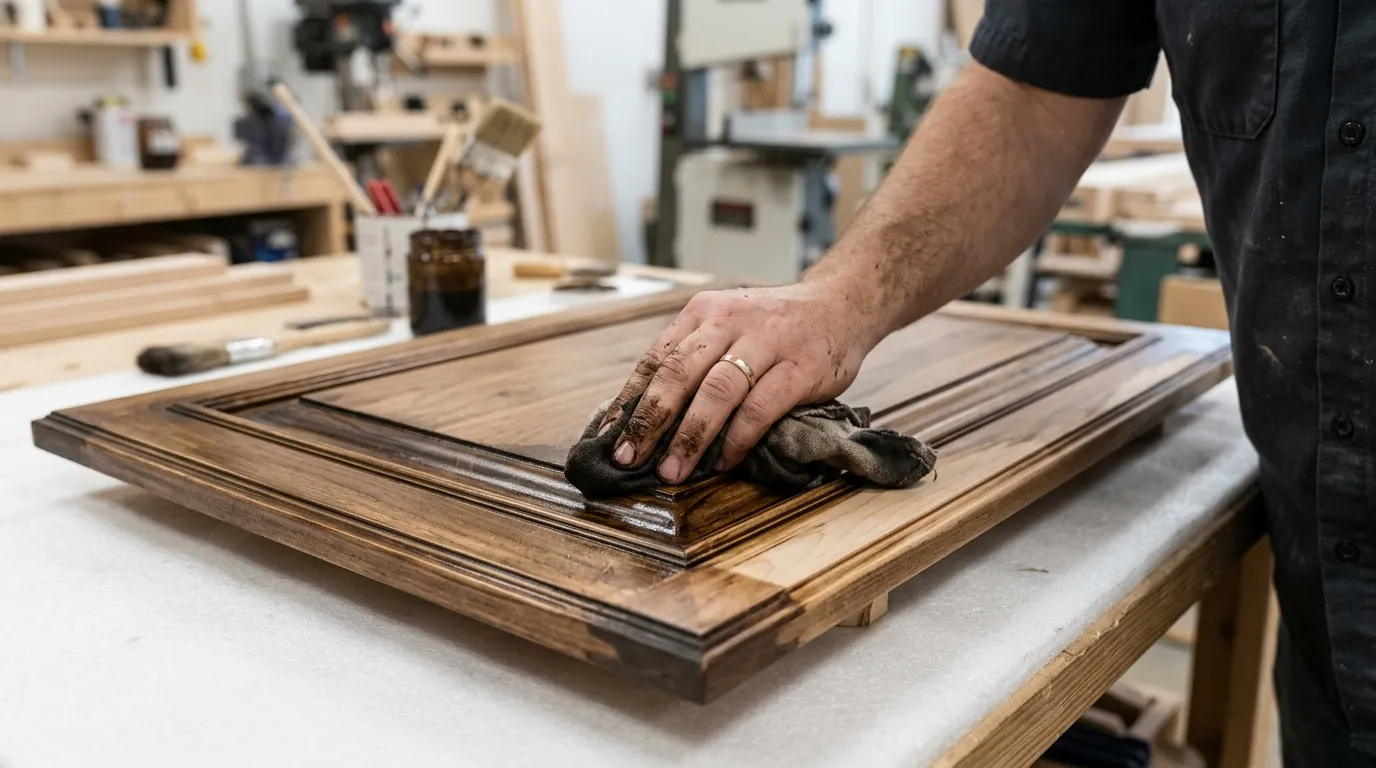
Toners and glazes shift color without a full strip. A tinted clear can warm up a pale maple or pull the orange out of aged oak, and a glaze worked into the profile of a raised-panel door adds depth in the corners. Both go on over a sanded, sealed surface and are locked in with clear. It is a good middle route when the kitchen needs a different tone rather than a different color, and it keeps the doors in service for most of the week.
Local context
How this work runs around Indianapolis
The large early-20th-century houses in Meridian-Kessler and along the North Meridian Street district into Butler-Tarkington were built with Revival and Prairie-style interiors, and many still have original built-in hardwood cabinetry in butler's pantries and dining rooms. Those are pieces nobody should paint. We strip and re-stain them in place when they cannot come out, working around the plaster walls rather than through them.
From your call to the final walk-through
How a refinishing job runs
- 01
Call and describe the cabinets
Wood type if you know it, and what is wrong with the finish.
- 02
Visit and sample
We test the finish, check for veneer, and stain a sample on a door back.
- 03
Written scope
Refresh, strip or tone; color approved on the sample.
- 04
Doors to the shop
Pieces numbered, kitchen masked, boxes prepped in place.
- 05
Strip or scuff
Old finish removed or scuffed, wood sanded evenly.
- 06
Stain and seal
Approved color, sanding sealer, two clear coats.
- 07
Rehang and adjust
Doors back on their spots, hinges adjusted, hardware refitted.
Doing it yourself vs. calling us
Refinishing yourself versus calling us
| Step | Doing it yourself | When we do it |
|---|---|---|
| Stripping | Stripper in a kitchen, fumes and residue | Doors stripped off-site, boxes masked |
| Stain match | Guess on the front of a door | Sampled on a door back first |
| Topcoat | Brushed polyurethane | Sprayed catalyzed clear |
A single vanity is a fair weekend project. A whole kitchen of stripped doors usually ends with uneven color from door to door.
FAQ
Questions we hear on this job
Only with a full strip. Stain cannot lighten wood that already has a darker color in it.
Lightly. Veneer is thin, so we scuff and tone rather than sand hard.
Old oil-based finishes amber with age. Stripping or a tinted toner corrects it.
A catalyzed clear holds up for years of normal kitchen use.
Usually. Market figures put refinishing below painting for the same kitchen.
Yes, on site, with the room masked and the finish applied in place.
Related services
Other interior painting work we handle
Interior House Painting
Whole-home repaint, open-concept and two-story walls and more.
see our interior house painting pageBasement Painting
Concrete block walls, concrete floor paint and more.
see our basement painting pageSmoke & Water Damage Repainting
Smoke and soot sealing, insurance claim repaints and more.
Smoke & Water Damage RepaintingCeiling Painting
Flat white ceiling repaint, textured ceiling painting and more.
learn about ceiling paintingReady when you are
Tell us about the wood and we will set the visit
Describe the cabinets and the finish problem, and we will book the sample visit on the call, any hour.
Faber Paint & Blinds service office
3053 Stillcrest Ln, Indianapolis, IN 46217