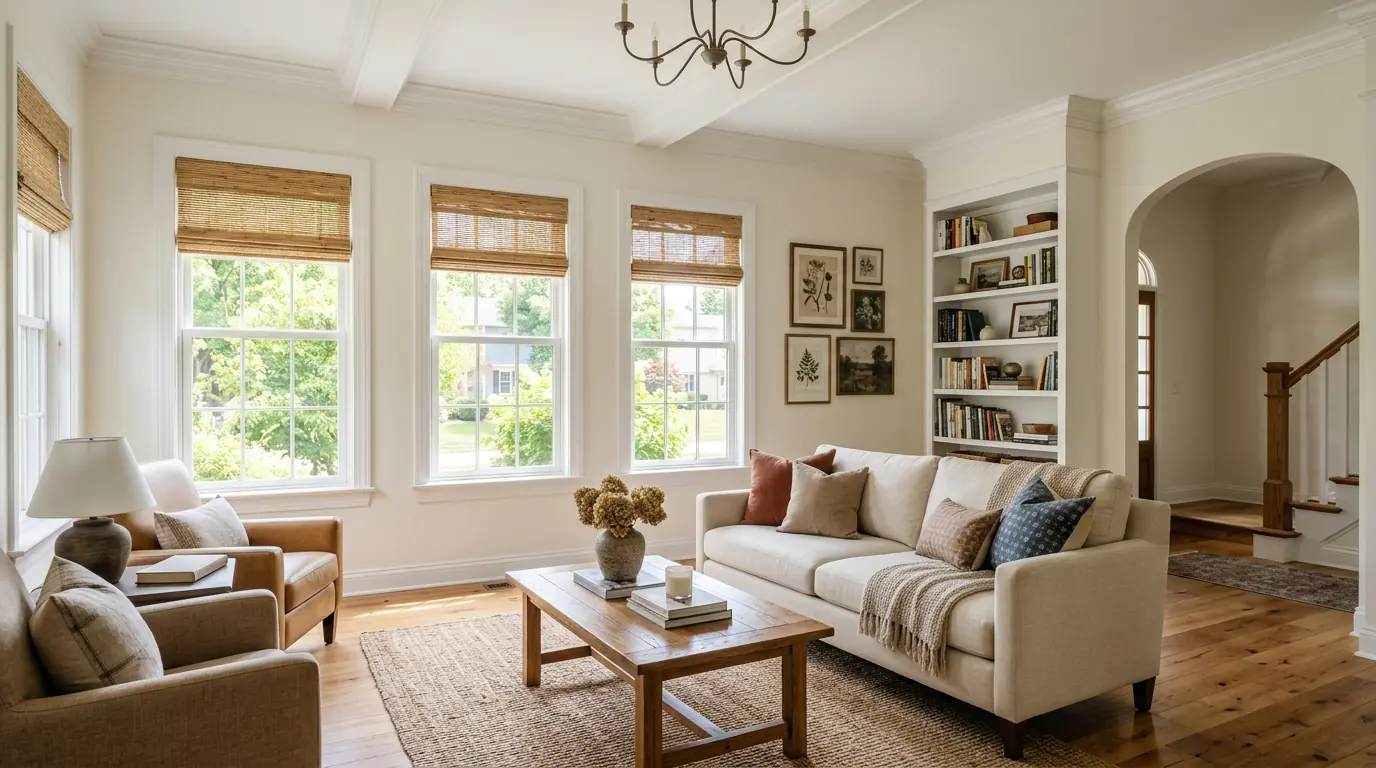
Interior Painting in Indianapolis
Interior painters for Indianapolis homes
Scuffed hallways, a nursery that needs a color, or every wall in a house you just closed on. We patch first, cut the edges by brush, and give the rooms back the same evening.
- Phones answered 24/7
- Two full coats standard
- Furniture wrapped, floors papered
Paint lines and window treatment brands we work with
Quick answer
Interior painting in Indianapolis starts with patching and sanding, not with color. We cover floors and furniture, spot-prime repairs, then cut in by brush and roll two coats of the line named in your written scope. A single room is finished and put back the same day; a full floor takes several days depending on prep.
What the job involves
Why the finish depends on what happens before the roller
Updated September 2026
Most interior calls in Indianapolis come after a move, a sale or a leak, and the paint is the last step. Before it, nail pops get set and filled, cracks get taped or caulked depending on what caused them, and glossy trim gets scuffed so the new coat bites. Skipped prep shows under the first low morning light.
We work in Benjamin Moore, Sherwin-Williams and PPG lines and name the sheen room by room: flat on ceilings and formal walls, eggshell or satin where walls get washed. Rooms go in an order that keeps the house livable, bedrooms first and the kitchen last. Trim and doors are covered on the trim and door painting page, and the patching that comes first on drywall repair.
What is included
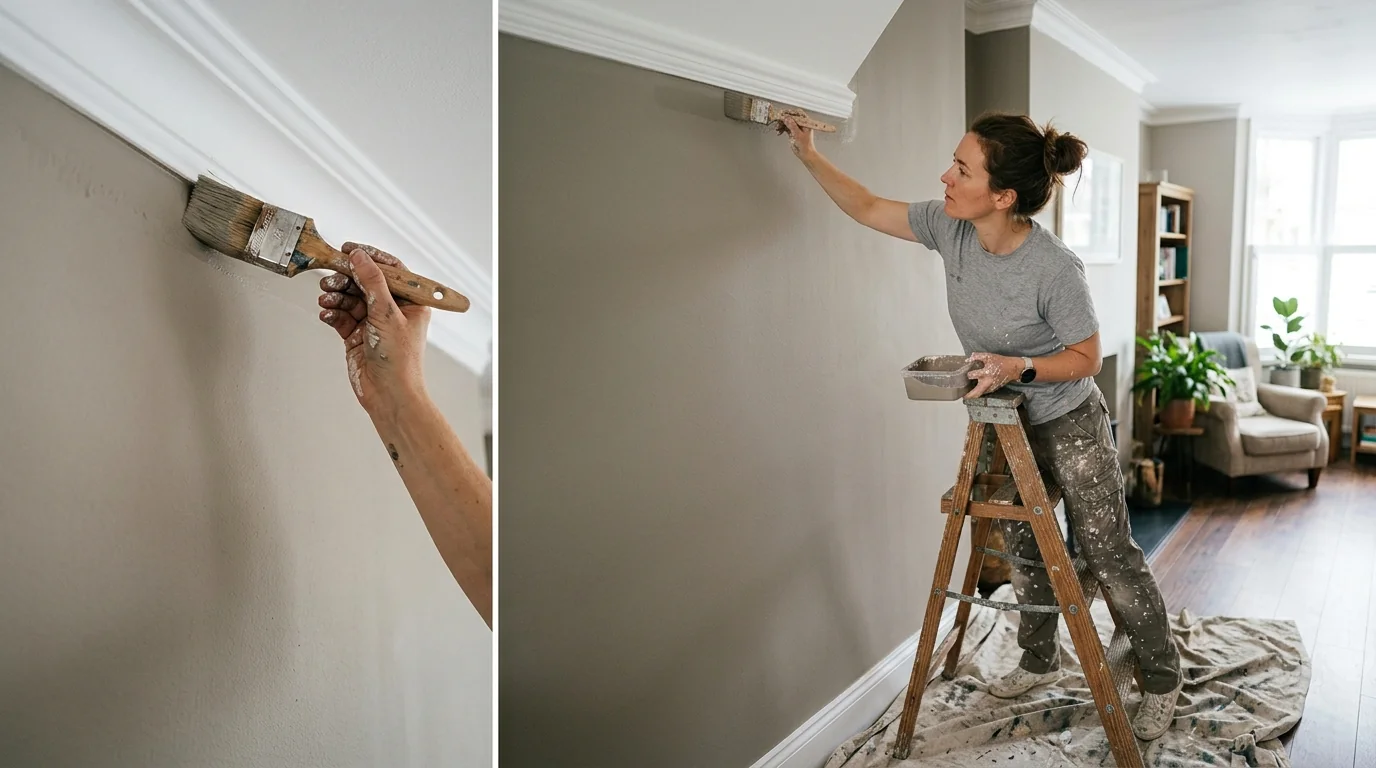
What a full interior repaint includes
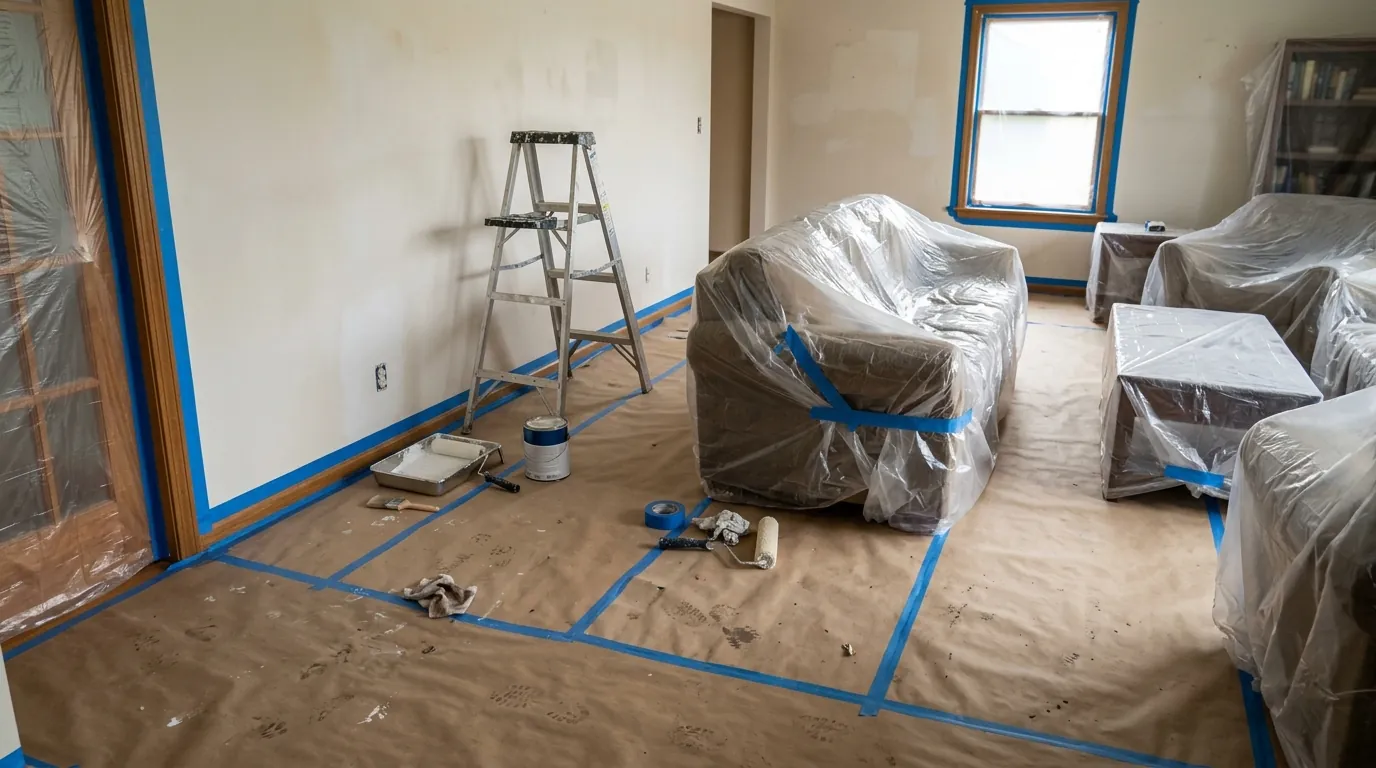
- Floors papered and furniture moved to the center and wrapped
- Switch plates, covers and hardware removed and reinstalled
- Nail pops set, cracks caulked or taped, patches sanded flush and spot-primed
- Glossy trim scuff-sanded for adhesion
- Two full coats of the named product and sheen on every listed surface
- Edges cut by brush, never sprayed, in occupied homes
- Daily cleanup and a final walk-through in daylight
What moves the price
What sets the price of an interior repaint
Priced on the surface, not the room count. Market figures run $2 to $6 per square foot for walls, or about $4.70 per square foot with trim and ceilings.
- Square footage and ceiling height Floor area drives paint and labor; nine-foot ceilings add wall area and ladder time.
- Wall condition Nail pops are quick; stains, loose texture or old patches add a prep day.
- Trim, doors and ceilings Adding baseboards, casings, doors and ceilings roughly doubles the brush work.
- Color change Dark to light, or light to saturated, usually adds a tinted primer coat.
- Sheen and product line A premium scrubbable satin costs more per gallon than a builder flat.
- Furniture and access Empty rooms go faster; a full house adds wrapping and moving time.
- Number of colors Every extra color means another cut line and more drying time.
Ranges are published market figures for planning only, not a quote from us; your price depends on the factors above.
Variations of this job
The interior house painting jobs we get called for
Whole-home repaint
A whole-home repaint is scheduled by floor and priced on square footage, which is why the estimate visit measures. Every wall gets the same prep, but the product changes by room: scrubbable satin in the kitchen and hall, flat in formal rooms, a mildew-resistant paint in a bath with a weak fan. Color drift between gallon batches is the usual mistake on a big job, so we box each color first. Market figures put a whole interior around $2 to $6 per square foot of floor area.
Single-room painting
A single room is our most common interior job, and it gets the full prep sequence at a faster pace. We move what has to move, wrap the rest, take the plates and covers off rather than taping around them, and pull rods and blinds so the wall behind them is done properly. A normal room is finished in a day, second coat after lunch. Bathrooms and kitchens take longer per square foot because of the cut-in around tile and cabinets. Published figures put a single room at $350 to $850.
Accent walls
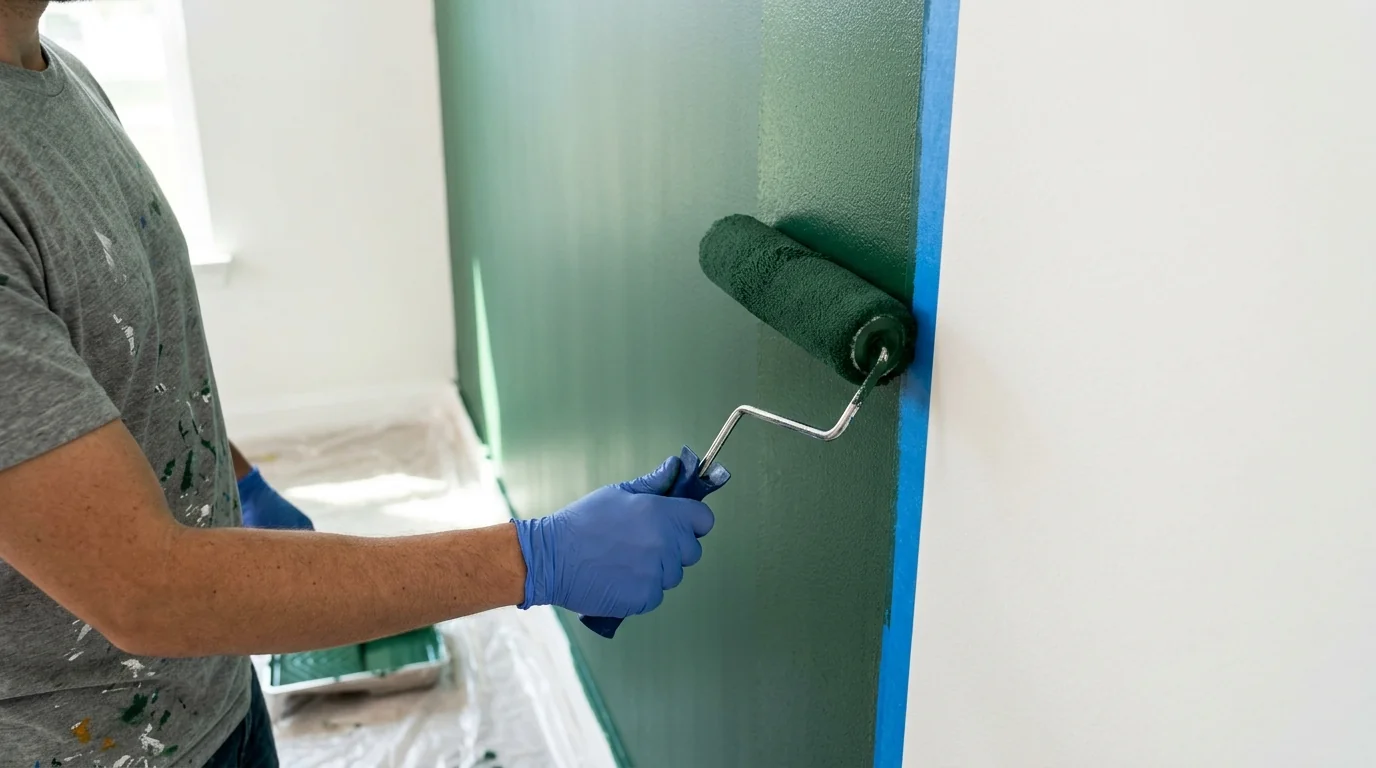
An accent wall is quick and easy to get wrong. The line where it meets the adjacent walls has to be dead straight, so an out-of-square corner gets caulked first, and a deep color needs a tinted primer to cover in two coats instead of four. Navy, forest green and near-black are the most requested, and they are the most sensitive to sheen: satin in a strong color shows every roller mark, so we favor matte unless the wall will be scrubbed. Expect the accent to add roughly 20% to 30% to that room's budget.
Open-concept and two-story walls
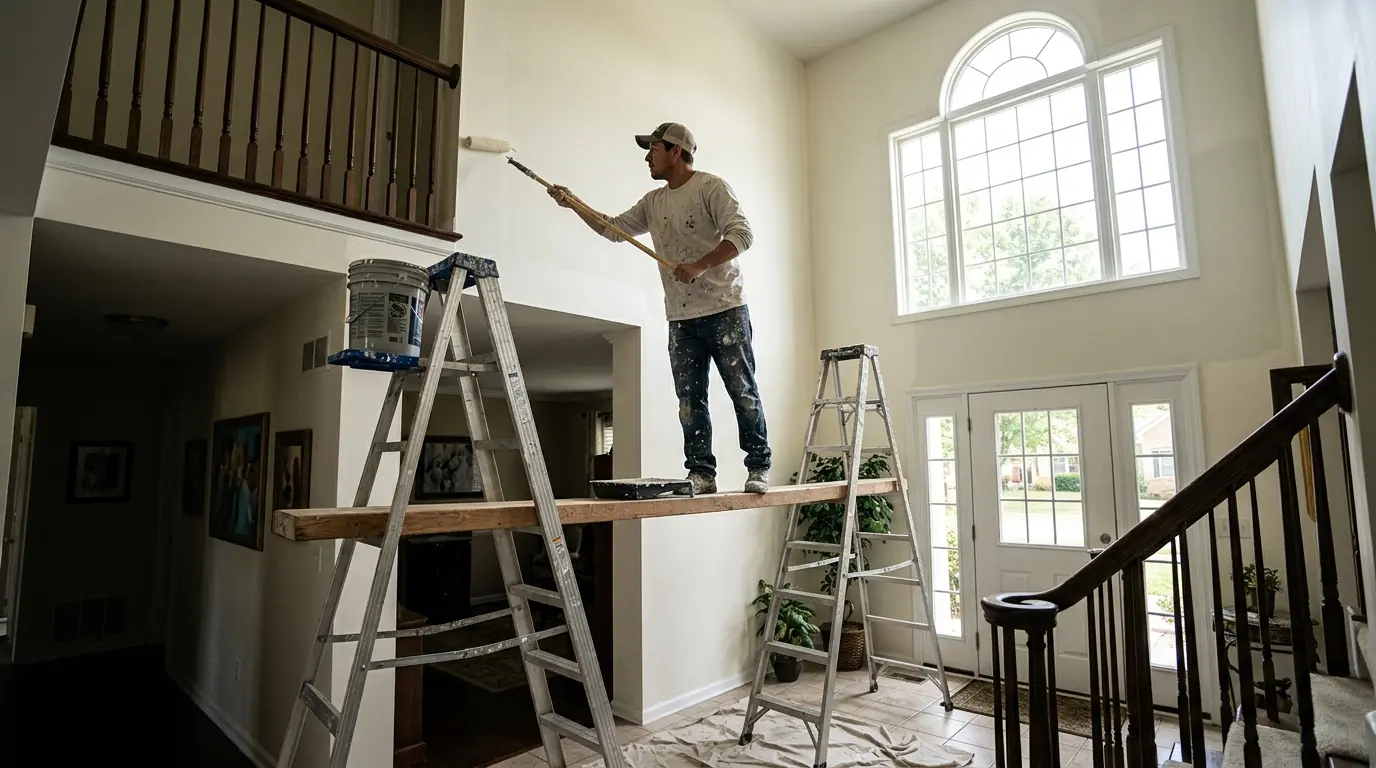
Two-story foyers, open stairwells and vaulted great rooms are the walls people put off longest because a stepladder does not reach. We stage them with plank-and-ladder setups or a small interior scaffold and paint the whole run in one pass so there is no lap line partway up. Color matters most here: one wall may be lit by a tall window on one side and a hallway ceiling light on the other, so we sample at both heights before committing. The room below is fully wrapped because drips travel farther from a high wall.
Local context
How this work runs around Indianapolis
The typical Indianapolis house was built around 1974, and the drywall in those 1970s and 1980s ranches and split-levels has had fifty years of settling, so almost every repaint here starts with nail pops along the ceiling line and hairline cracks above door frames. On the south side around Homecroft, where most housing went up in the 1960s, textured walls have often been painted so many times the texture has gone soft, which changes how much paint each coat takes. We plan a patch-and-sand day into those estimates.
From your call to the final walk-through
How an interior repaint runs from the first call
- 01
Call and describe the rooms
Which rooms, rough size, trim or ceilings included. We book the visit on that call.
- 02
Estimate visit and color
We measure, check walls with a raking light, and look at colors in the room's own light.
- 03
Written scope
Rooms, prep, product and sheen per surface, and what we move or cover.
- 04
Protect and prep
Floors papered, furniture wrapped, plates off, holes patched, cracks addressed, trim scuffed.
- 05
Cut and roll
Edges by brush, fields by roller, two coats with the product's dry time between them.
- 06
Reassemble
Plates, rods and blinds back on, furniture returned, tape pulled while the paint is soft.
- 07
Daylight walk-through
You check every wall with us before we load up.
Doing it yourself vs. calling us
Painting a room yourself versus having us do it
| Step | Doing it yourself | When we do it |
|---|---|---|
| Prep | Patch what you can see | Raking-light check, spot-priming, caulk where the crack calls for it |
| Edges | Tape and hope | Cut freehand with a Purdy sash brush |
| Time | A weekend per room | One day, reassembled the same evening |
A bedroom is a fair weekend project; stairwells, tall walls and water stains are where an afternoon becomes our repair job.
FAQ
Questions we hear on this job
No. We work room by room and reassemble each one the same day, bedrooms first.
Flat or matte for ceilings and formal rooms; eggshell or satin where walls get wiped.
Usually. We take a chip from behind a switch plate, have it matched and check a sample patch in daylight.
Two finish coats on every surface, plus primer where a repair, a stain or a strong color change calls for it.
Yes, priced as separate surfaces; see ceiling painting.
A shellac or oil stain blocker goes on first, and we ask what caused the stain; paint over an active leak comes back.
Related services
Other interior painting work we handle
Kitchen Cabinet Painting
Oak and grained cabinets, bathroom vanities and more.
see our kitchen cabinet painting pageCeiling Painting
Flat white ceiling repaint, textured ceiling painting and more.
learn about ceiling paintingBasement Painting
Concrete block walls, concrete floor paint and more.
see our basement painting pageCabinet Refinishing & Staining
Strip and re-stain, glaze and toner touch-up and more.
Cabinet Refinishing & StainingReady when you are
Tell us the rooms and we will set the visit
Describe the rooms and whether trim or ceilings are in, and we will book the estimate visit while you are on the line, any hour.
Faber Paint & Blinds service office
3053 Stillcrest Ln, Indianapolis, IN 46217