
Interior Painting in Indianapolis
Wood trim and door staining in Indianapolis
Original oak casings gone dark and worn, stained doors that no longer match, or trim someone painted over decades ago. Where the wood is worth seeing, staining and refinishing brings it back.
- Phones answered 24/7
- Stain matched on hidden wood first
- Durable clear finish
Paint lines and window treatment brands we work with
Quick answer
Wood trim and door staining in Indianapolis covers new stain on bare trim and doors, refreshing worn stained woodwork with a clean and clear coat, and stripping painted trim back to wood where it is worth restoring. Stain is always matched on a hidden spot first, and every surface finishes in a durable clear coat that protects the color.
What the job involves
When stain is the right finish for trim
Updated September 2026
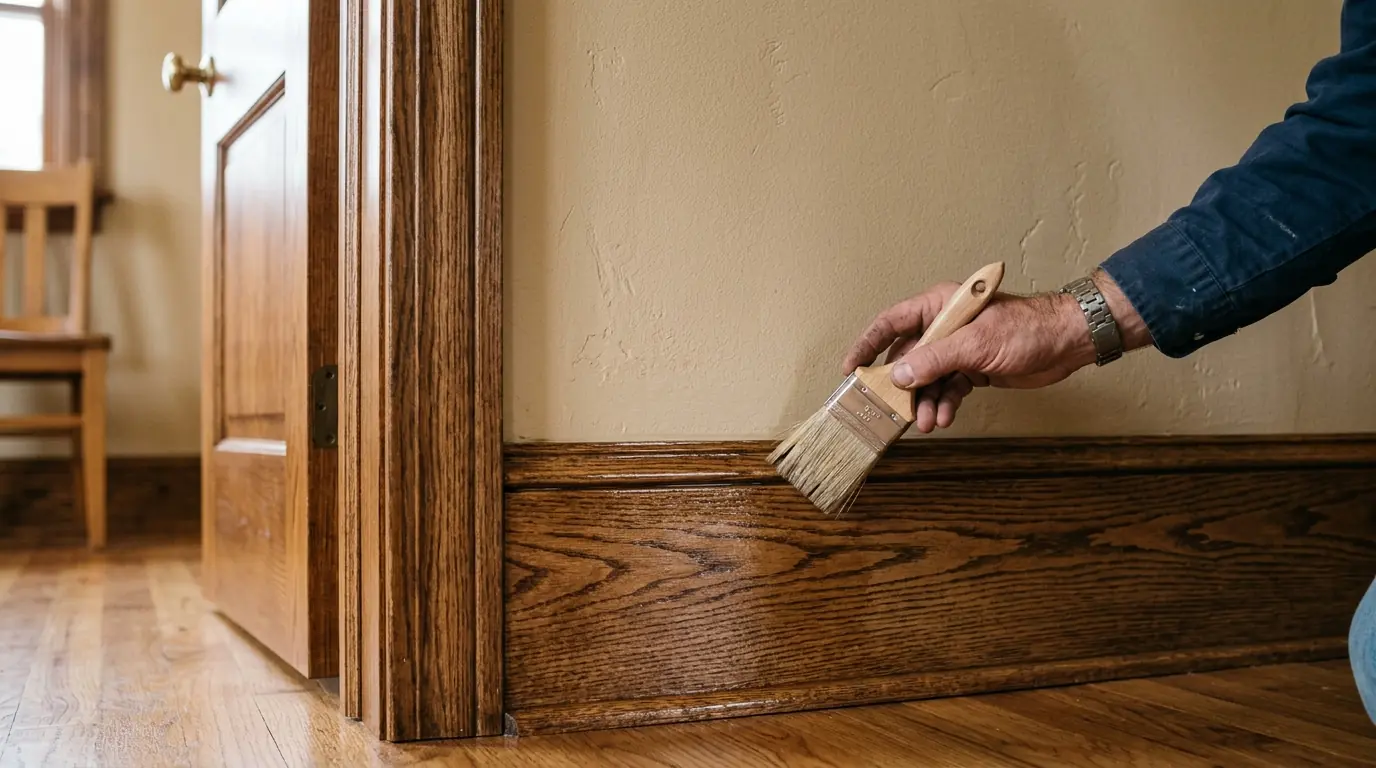
Stained trim shows the grain of the wood, so it only works when the wood is good: oak, cherry, walnut, fir and quality pine casings, doors and built-ins. The work is slower than painting because stain shows every sanding mark, blotch and glue spot, and the color has to match from room to room. We sand carefully, use a pre-stain conditioner on woods that blotch, and test the stain before any visible piece is touched.
We use wood stains and clear finishes from Sherwin-Williams, Benjamin Moore and PPG lines. Painted trim follows our trim and door painting process instead, and stained cabinets are covered under cabinet refinishing.
What is included
What a trim staining job includes
- Wood species identified and finish tested
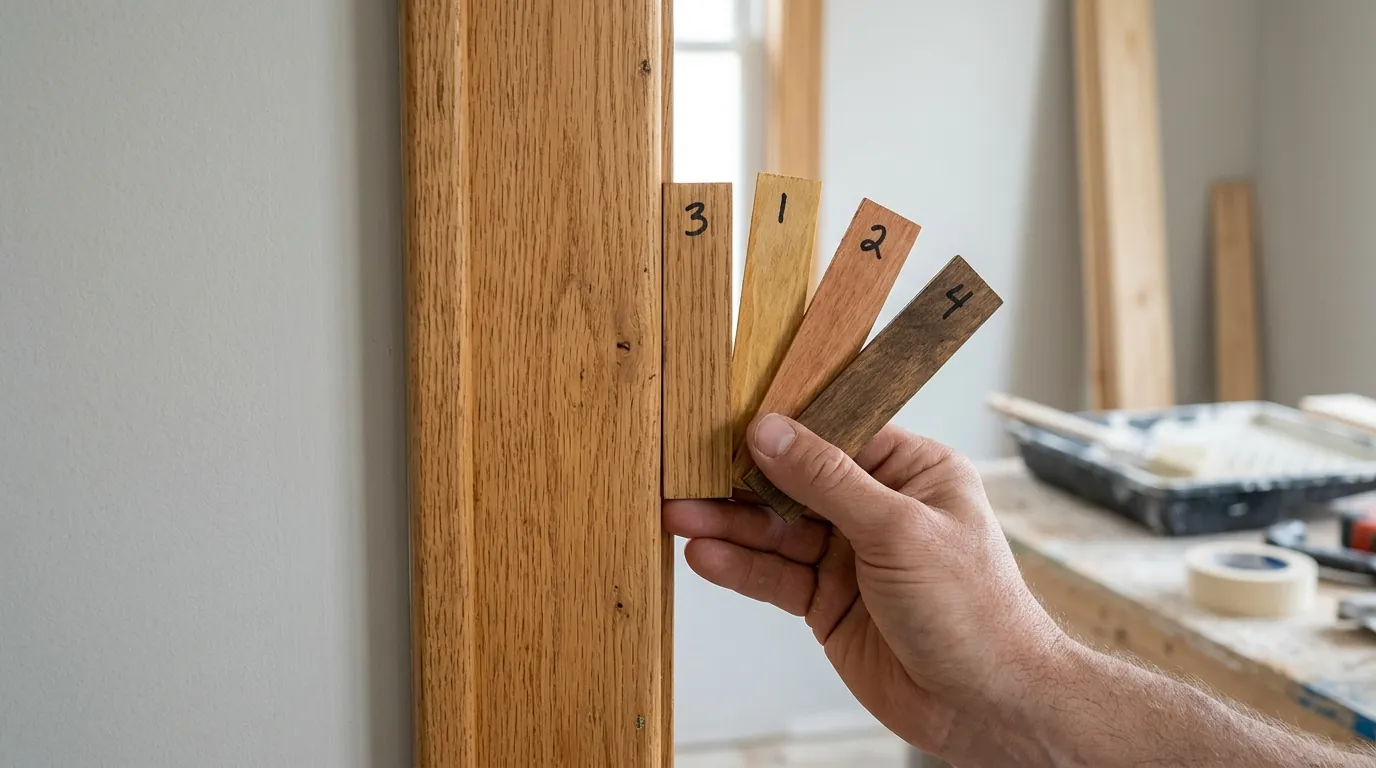
- Stain matched on a hidden spot before visible work
- Pre-stain conditioner on blotch-prone woods
- Doors stained off the hinges on both faces and edges
- Nail holes filled with color-matched filler after staining
- Two or three coats of durable clear finish
- Lead-safe containment when stripping paint in pre-1978 homes
What moves the price
What moves the price of trim and door staining
No sourced figure is quoted here; staining is priced by the linear foot and the door, adjusted for what the wood needs.
- Linear footage Casings, baseboards and crown are measured by the foot.
- Door count Each door is stained on both faces and all edges.
- New stain, refresh or strip Stripping painted trim is by far the slowest option.
- Wood species Blotch-prone woods need a conditioner and extra care.
- Color matching Matching aged original stain takes testing.
- Profile detail Ornate casings and panel doors take more hand work.
- Clear finish Two or three coats of clear protect the stain.
Variations of this job
The wood trim & door staining jobs we get called for
Stained interior trim
New or bare trim is sanded smooth, conditioned if the species tends to blotch, stained to the approved color and finished in two or three coats of clear. On existing stained trim that has worn, we match the original color at an inconspicuous spot, since old stain has usually aged and shifted. Nail holes are filled with a colored wood filler after staining rather than before, so the fill matches. Caulk is kept off stained joints, where it would show as a white line.
Stained wood doors
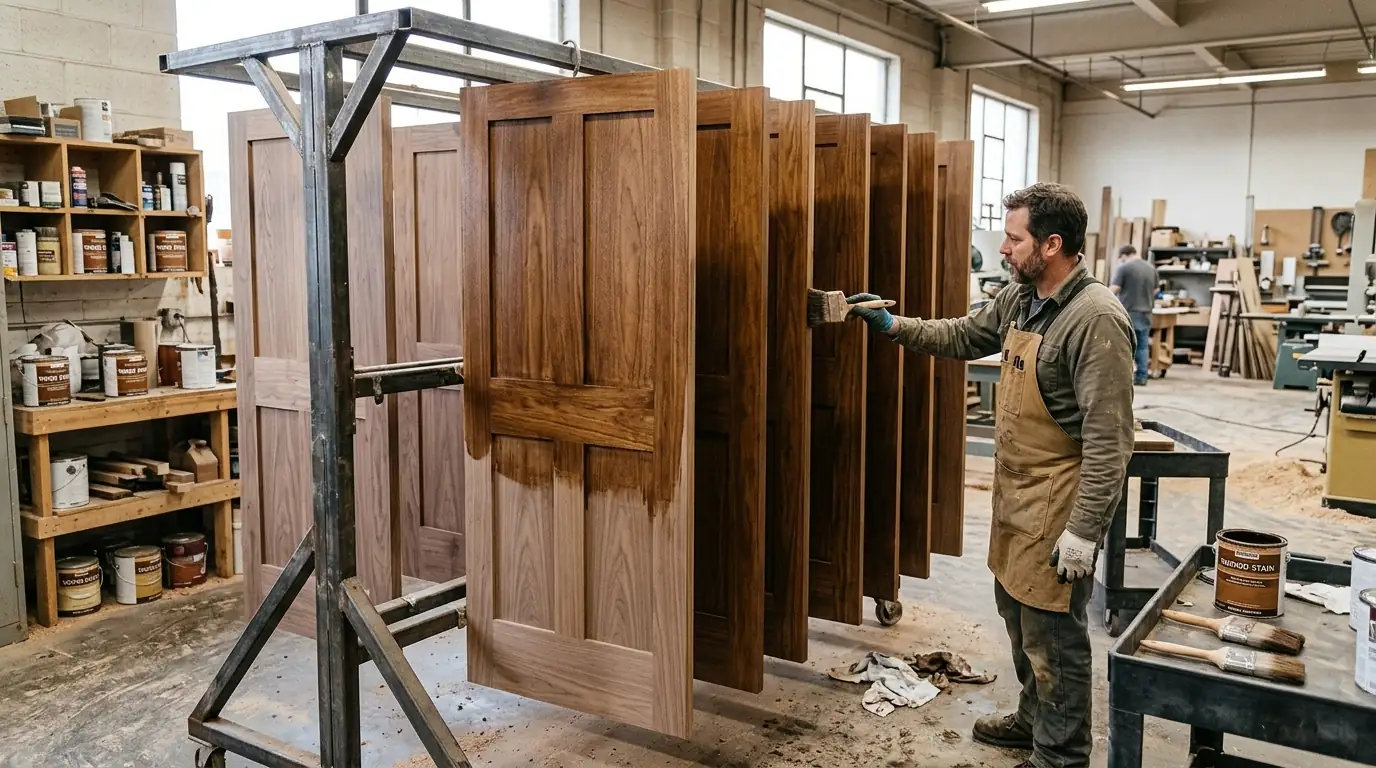
Solid and veneered wood doors are stained off the hinges on a rack, both faces and all edges, so the door is sealed evenly and does not warp. Panel doors are stained in the correct order, panels then rails and stiles, so there are no lap marks. Veneer doors get light sanding only, because sanding through a thin veneer cannot be repaired invisibly. Doors are finished in the same clear sheen as the trim around them so the room reads as one piece of work.
Stripping painted trim to wood
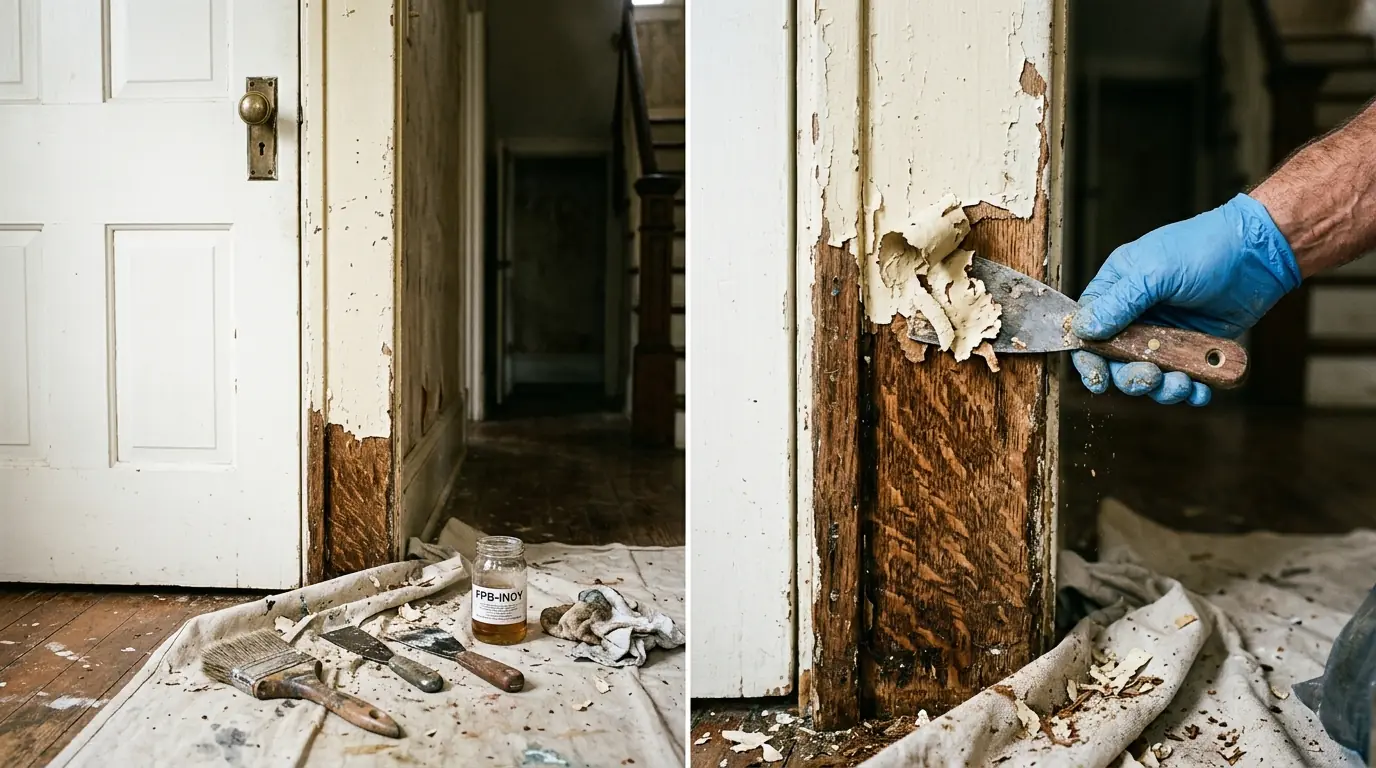
Many older houses had their woodwork painted over decades ago. Where the original is quality hardwood and the profiles are worth saving, we strip the paint with a chemical stripper, clean the profiles by hand, neutralize and sand, then stain and finish. It is slow, careful work, and we test a section first to see what is underneath, since some trim was never meant to be stained. In houses built before 1978, old paint may contain lead, so stripping is done with containment and careful cleanup.
Clear-coat refresh on stained woodwork
Stained woodwork that is worn but still the right color often needs only a refresh: a thorough cleaning to remove grime and wax, a light scuff-sand to dull the old finish without cutting into the stain, touch-up toner where edges have worn through, and one or two new clear coats. It brings back depth and protection in a fraction of the time of a strip. It works only when the existing finish is still sound; flaking or crackled finish needs stripping.
Local context
How this work runs around Indianapolis
Herron-Morton Place near downtown is one of the city's clearest examples of why trim is worth restoring: most of its houses went up between 1870 and 1891, many with extensive detailing and fine woodwork, and restoration there has been under way since the 1970s. Farther north, Meridian-Kessler's bungalows and period revivals from the 1920s and 1930s often keep original stained casings and doors that need a refresh more than a repaint.
From your call to the final walk-through
How a staining job runs
- 01
Call and describe the woodwork
Rooms, doors, and whether the trim is stained, bare or painted.
- 02
Visit and test
We identify the wood, test the finish and stain a hidden spot.
- 03
Written scope
New stain, refresh or strip, color and clear finish.
- 04
Protect
Floors, walls and furniture covered; doors taken down.
- 05
Prep
Sand, strip or clean, then condition where needed.
- 06
Stain and fill
Approved color applied, holes filled with matching filler.
- 07
Clear coats
Two or three coats of clear, doors rehung.
Doing it yourself vs. calling us
Staining trim yourself versus calling us
| Step | Doing it yourself | When we do it |
|---|---|---|
| Color match | Stain on the front of the trim | Tested on hidden wood first |
| Blotching | Uneven color on pine or maple | Conditioner and controlled application |
| Stripping | Stripper everywhere, damaged profiles | Tested, contained and cleaned by hand |
Refreshing one stained door is fair DIY. Whole rooms, color matching and stripping painted trim are where it goes wrong.
FAQ
Questions we hear on this job
Often, if it is quality wood. We test a section first.
Yes, by testing stain on a hidden spot until it matches.
Pine absorbs stain unevenly; a conditioner before staining controls it.
A durable clear in the sheen you choose, usually satin.
Yes, if the finish is sound: clean, scuff, and recoat.
In pre-1978 homes it is done with containment and careful cleanup.
Related services
Other interior painting work we handle
Ceiling Painting
Flat white ceiling repaint, textured ceiling painting and more.
learn about ceiling paintingTrim, Baseboard & Door Painting
Baseboards and casings, window sashes and sills and more.
see our trim, baseboard & door painting pageInterior House Painting
Whole-home repaint, open-concept and two-story walls and more.
see our interior house painting pagePopcorn Ceiling Removal
Scrape and skim to smooth, cover with a new drywall layer and more.
Popcorn Ceiling RemovalReady when you are
Describe the woodwork and we will set the visit
Tell us the rooms and whether the trim is stained, bare or painted, and we will book the visit on the call, any hour.
Faber Paint & Blinds service office
3053 Stillcrest Ln, Indianapolis, IN 46217