
Decks, Fences & Coatings in Indianapolis
Deck staining and sealing in Indianapolis
A deck gone gray, stain peeling in patches, or new pressure-treated boards that have never been sealed. Stain only lasts on wood that was cleaned properly and dried out first.
- Phones answered 24/7
- Cleaned and brightened first
- Railings and balusters included
Paint lines and window treatment brands we work with
Quick answer
Deck staining in Indianapolis is a three-part job: the wood is cleaned and brightened to remove gray fibers and old failing stain, left to dry, then stained with a penetrating semi-transparent, a solid stain or a clear sealer. Most decks take two to three days including drying time, and the finish is renewed every few years depending on sun and traffic.
What the job involves
Why stain peels and how we stop it
Updated September 2026
Stain fails for three reasons: it went on over gray, dead wood fibers; it went on over a film of old stain that was already letting go; or it went on too thick and sat on the surface instead of soaking in. We clean every board, strip failing finish where needed, brighten the wood, let it dry to the right moisture level, and apply stain in thin coats that penetrate.
We work with deck stains from Sherwin-Williams, Behr and Benjamin Moore and pick the line for your wood and exposure. Heavily worn or peeling decks may need full restoration and stripping first, and the wash step is the same as our deck and fence washing.
Choosing between the options
Semi-transparent, solid or clear
| Consider | Semi-transparent | Solid stain | Clear sealer |
|---|---|---|---|
| Grain | Visible, tinted | Hidden | Fully visible |
| Peeling risk | Low, it soaks in | Higher on floors | Low |
| UV protection | Good | Best | Little |
| Best for | Sound cedar and treated decks | Older, mismatched boards and railings | New or covered decks |
Many decks look best with a semi-transparent floor and solid railings.
What moves the price
What moves the price of deck staining
No sourced figure is quoted here; decks are priced by area, railings and condition.
- Deck floor area Measured square footage of boards and stairs.
- Railing and balusters Priced by linear foot; often as much work as the floor.
- Condition Gray wood needs cleaning and brightening; peeling stain needs stripping.
- Stain type Semi-transparent, solid and clear differ in coats and labor.
- Height and access Second-story decks and lattice skirts need ladders and more time.
- Board repairs Loose or split boards replaced before finishing.
- Weather Staining waits for dry wood and a dry forecast.
Variations of this job
The deck staining & sealing jobs we get called for
Semi-transparent stain
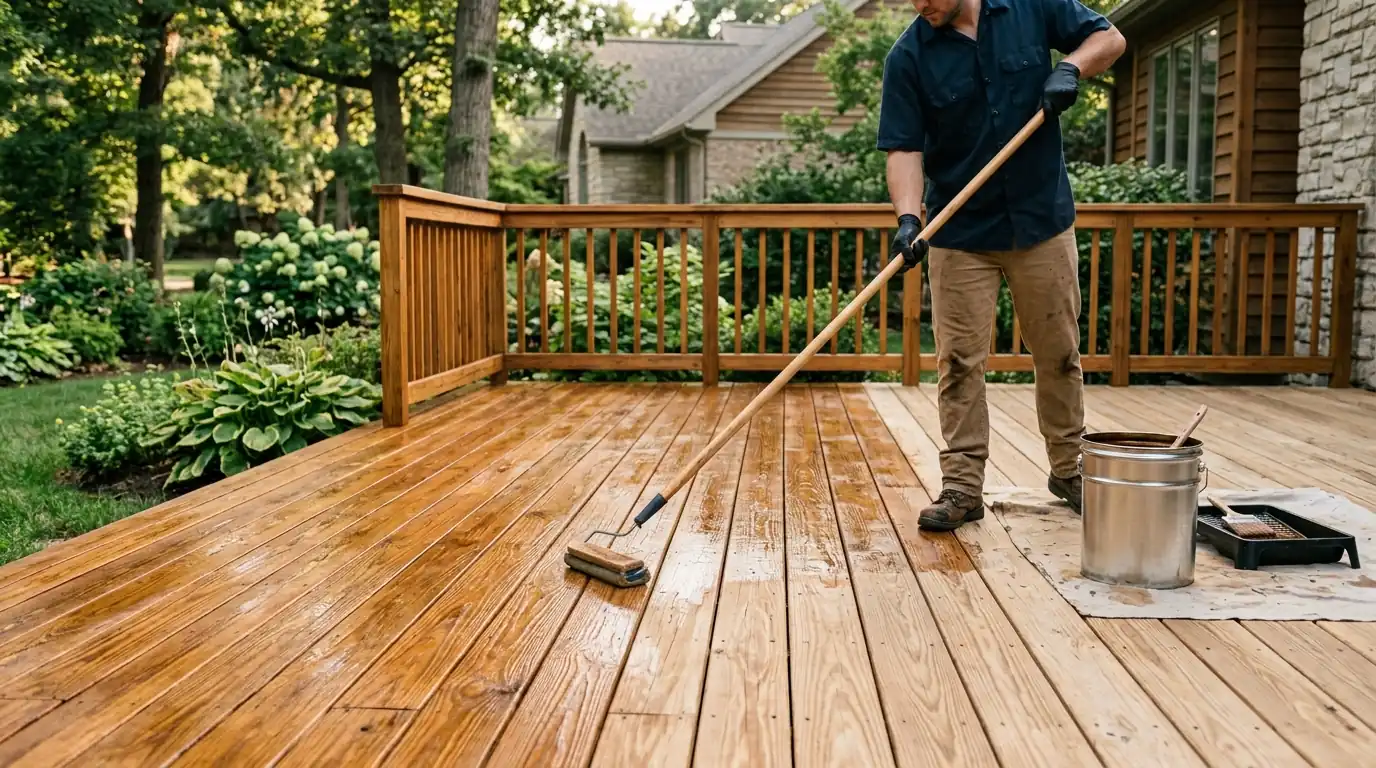
Semi-transparent stain soaks into the wood and tints it while the grain shows through. It is the right choice for cedar and good pressure-treated decks with sound boards, because it does not form a film that can peel. It wears gradually on the most walked areas and is refreshed with a clean and a single maintenance coat rather than a strip. We back-brush after spraying or padding so the stain works into the grain and the ends of every board, which absorb the most water.
Solid stain
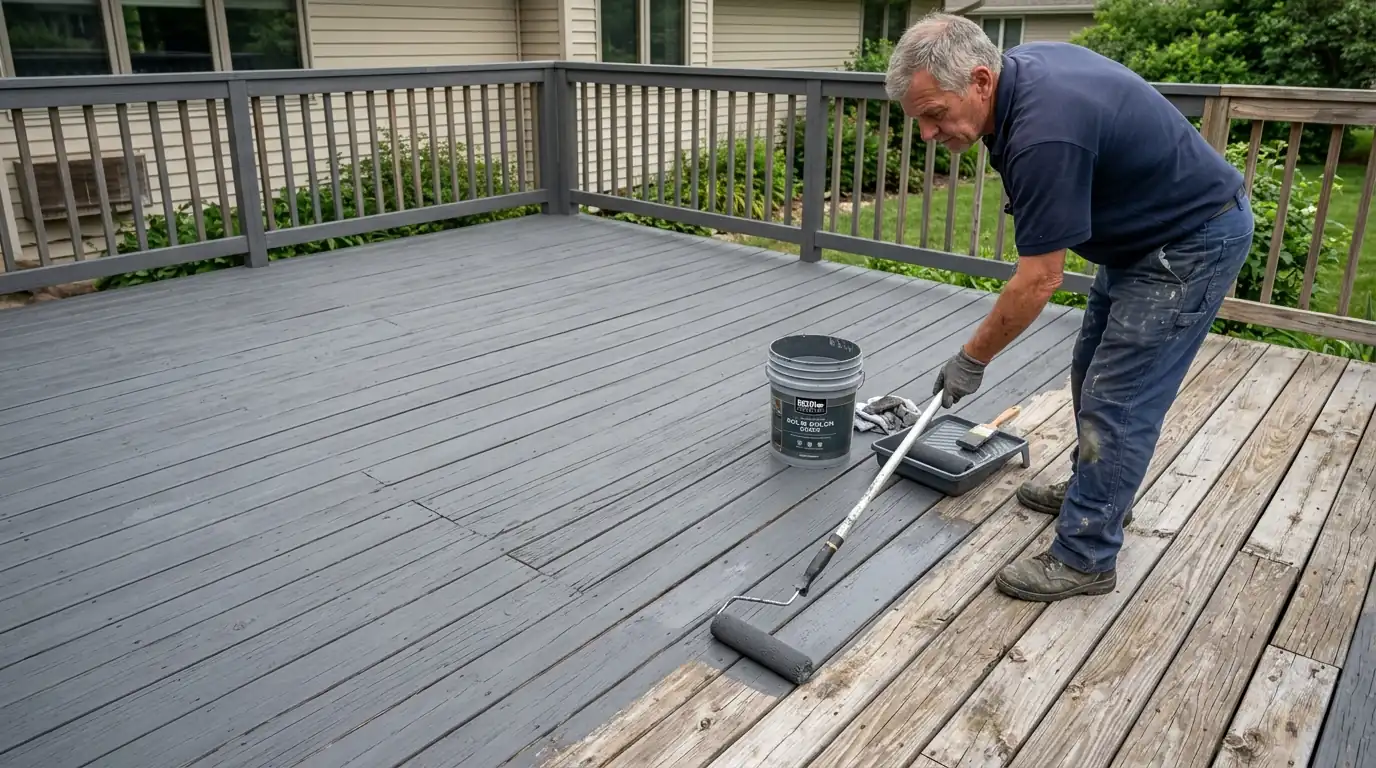
Solid stain looks like paint and hides the grain completely, which makes it the answer for older decks with mismatched replacement boards, stains or heavy weathering. Because it forms a film, it can peel if water gets under it, so we use it on vertical surfaces and railings more often than on floor boards, where foot traffic wears it through. When it is used on a deck floor, we apply two thin coats rather than one heavy one and keep it off the board ends until they are sealed.
Clear sealer
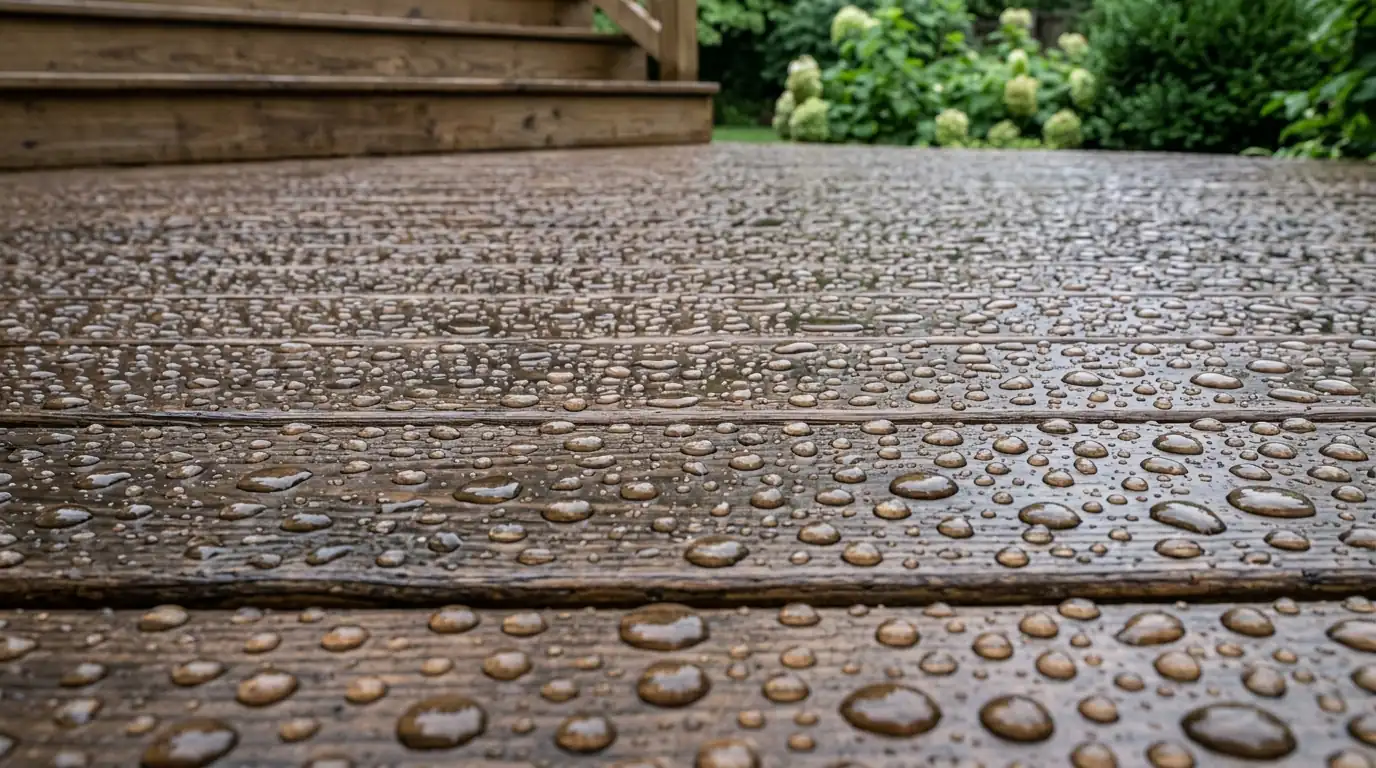
Clear sealers protect new or recently restored wood from water while keeping its natural color, and they are the lightest option. They carry little or no UV protection, so wood under a clear sealer still grays in full sun within a season or two. We use them mostly on new pressure-treated decks that need to dry before stain, on covered decks out of direct sun, and on cedar where the owner wants the natural color and accepts more frequent recoats.
Railings and balusters
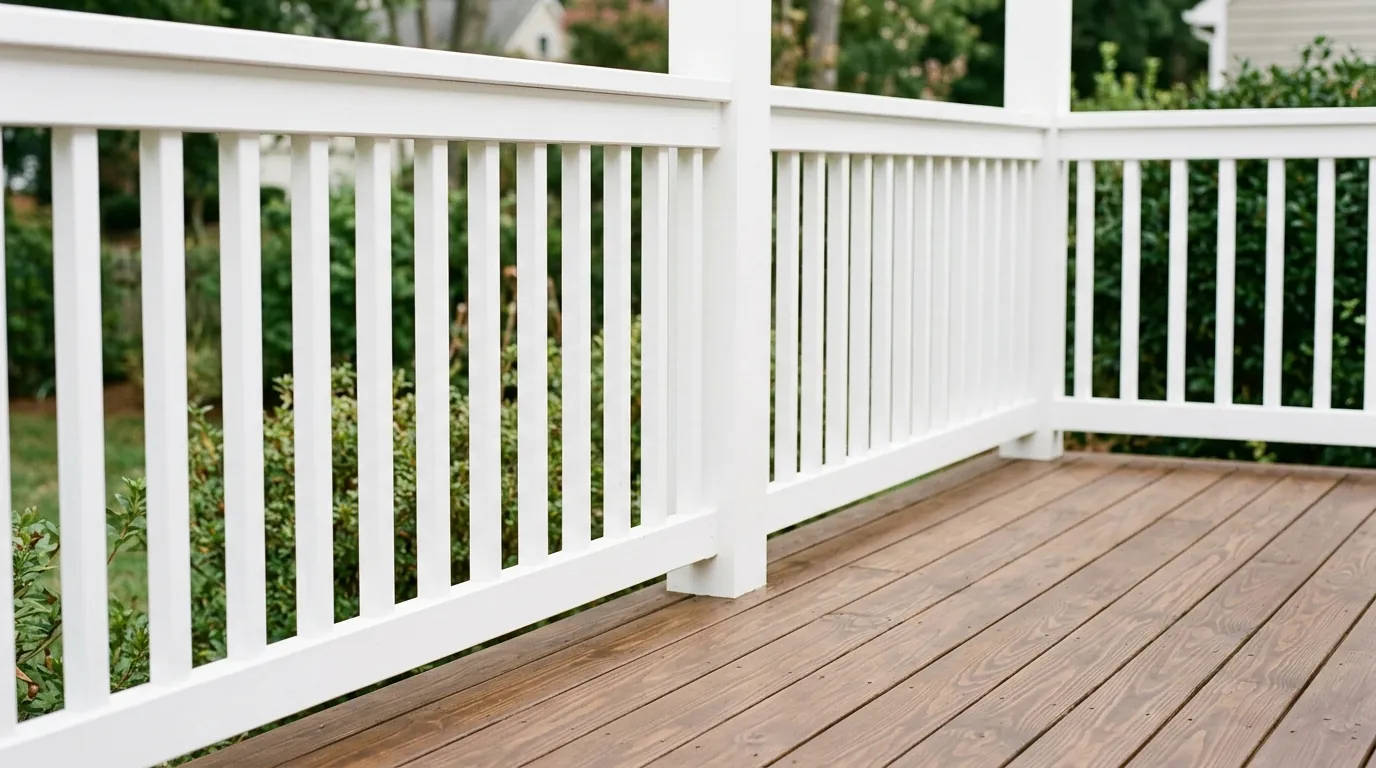
Railings take more time than the deck floor: dozens of balusters with four faces each, top rails that collect water, and posts that crack at the base. We clean them with the floor, sand the top rail where it has raised fibers, and brush or spray and back-brush every baluster. Many owners choose a solid stain on railings and a semi-transparent on the floor, which hides wear on the rails and keeps the floor from peeling. Loose balusters are re-fastened before finishing.
Local context
How this work runs around Indianapolis
A normal Indianapolis year brings about a hundred days with highs of 80 degrees or warmer, and that summer sun is what breaks down deck stain on the sunny side of the house years before the shaded side. Spring here is the wettest season and June usually the wettest month, so we time staining for drier stretches of late spring or early fall, when boards can dry out fully before the stain goes on.
Timeline
How long the deck is out of use
Plan on two to three days: a cleaning day, drying time, and a staining day. Light foot traffic is usually fine the day after staining, and furniture and grills go back once the product has cured. A rain forecast pushes the stain day rather than risking a wet finish.
From your call to the final walk-through
How a deck staining job runs
- 01
Call and describe the deck
Size, age, wood type and what the current finish looks like.
- 02
Visit and moisture check
We check boards, railings and whether the old stain is failing.
- 03
Written scope
Clean, strip or brighten, stain type and color.
- 04
Clean and brighten
Deck cleaner, rinse, brightener to restore color.
- 05
Dry
Wood dries to the right moisture level, usually a couple of days.
- 06
Stain
Thin coats, back-brushed into the grain and board ends.
- 07
Cure
Light foot traffic after a day; furniture after the product's cure time.
FAQ
Questions we hear on this job
Every two to four years for semi-transparent, depending on sun and traffic.
After it has dried out, often several months. A clear sealer can go on first.
Usually stain over gray fibers or old failing finish, or too heavy a coat.
Yes, often in a solid stain while the floor gets semi-transparent.
Darker is easy; lighter usually needs stripping first.
Composite is cleaned rather than stained in most cases.
Related services
Other decks, fences & coatings work we handle
Deck Restoration & Stripping
Chemical strip and brighten, sanding and re-coat and more.
Deck Restoration & Stripping in IndianapolisGarage Floor Epoxy
Full-flake epoxy, basement floor coating and more.
Garage Floor EpoxyShed, Barn & Outbuilding Painting
Backyard sheds and garden buildings, playhouses, pergolas and pool houses and more.
shed, barn & outbuilding painting serviceConcrete Staining & Sealing
Patio and walkway sealing, porch steps and stoops and more.
learn about concrete staining & sealingReady when you are
Describe the deck and we will set the visit
Tell us the size and the current finish, and we will book the visit on the call, any hour.
Faber Paint & Blinds service office
3053 Stillcrest Ln, Indianapolis, IN 46217