Commercial & Property Painting in Indianapolis
New construction painting in Indianapolis
Fresh drywall, bare trim and a move-in date. New construction painting is about the right primer on new surfaces, a clean sequence with the other trades, and a punch list that actually gets closed.
- Phones answered 24/7
- Builders, contractors and owners
- Primer made for new drywall
Paint lines and window treatment brands we work with
Quick answer
New construction painting in Indianapolis starts with a primer made for fresh drywall, then sprayed ceilings, two coats on walls and enamel on trim and doors, scheduled around the other trades. We work for builders, remodelers and owners finishing custom homes, additions and basements, and we return for the punch-list touch-ups before closing or move-in.
What the job involves
Why new surfaces need their own approach
Updated September 2026
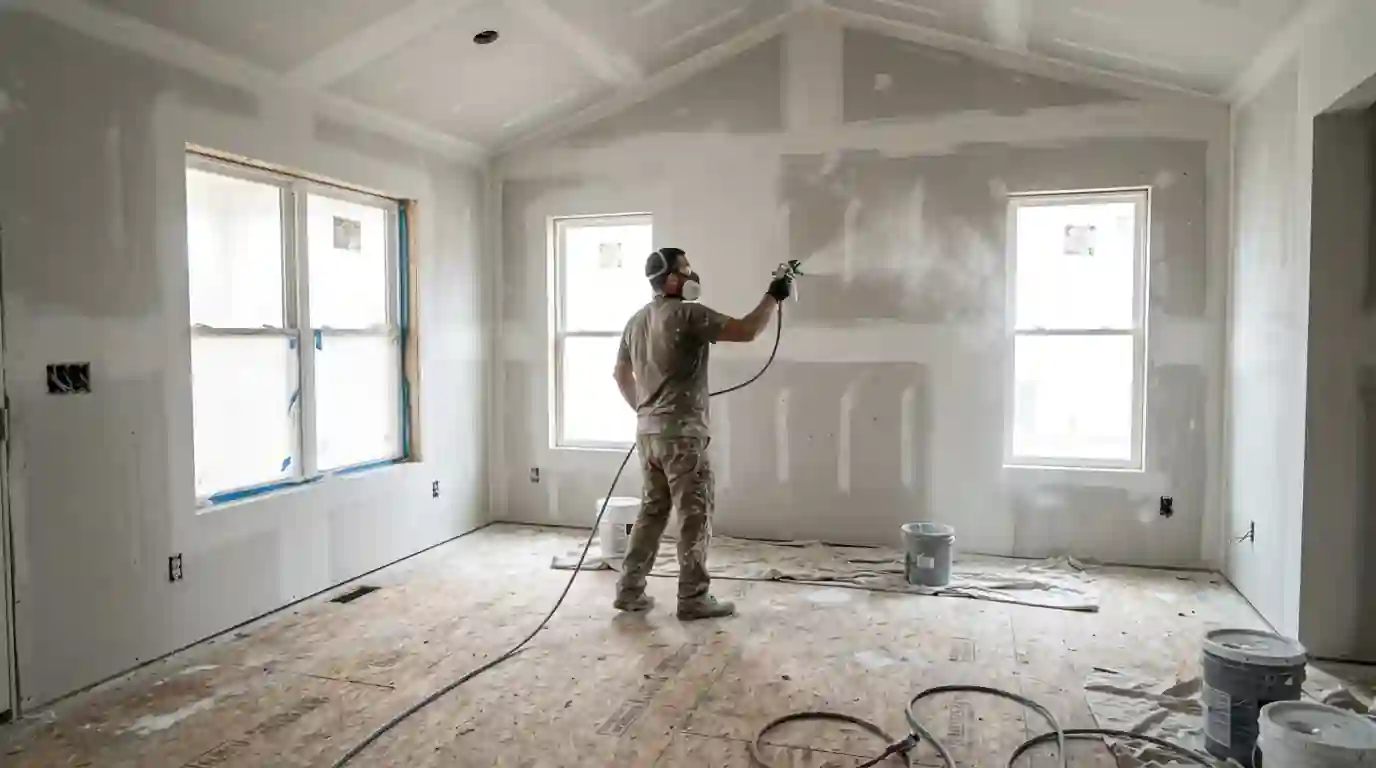
New drywall and joint compound absorb paint unevenly; without the right primer, the seams flash through the finish coat. Bare trim and doors need sanding and caulking before enamel. We prime new drywall with a primer made for it, spray or roll ceilings, cut and roll walls, and finish trim and doors in a hard enamel, using Sherwin-Williams, Benjamin Moore and PPG lines specified to the builder's schedule.
Window treatments usually follow once the paint is done; see custom blinds. Basements finished as living space follow our basement painting approach, and trim that should stay natural wood follows trim and door staining.
What is included
What a new construction job includes
- Primer made for new drywall on every wall and ceiling
- Flat ceilings sprayed or rolled evenly
- Two finish coats on walls in the chosen sheens
- Trim and doors caulked, sanded and enameled
- Colors and products recorded for the builder or owner
- Coordination with flooring, trim and cabinet installers
- A punch-list round with the original paint
What moves the price
What moves the price of new construction painting
No sourced figure is quoted here; new construction is priced from plans or a walk-through of the finished drywall.
- Square footage Wall and ceiling area from plans or measurement.
- Ceiling height Two-story rooms and vaulted ceilings need staging.
- Number of colors Each color change adds cutting and setup.
- Trim and doors Enamel on millwork is detailed, slower work.
- Stain or paint millwork Stained trim and stair parts take more steps.
- Schedule Phased work around other trades adds return visits.
- Punch-list rounds Touch-up visits before closing or after move-in.
Variations of this job
The new construction painting jobs we get called for
Builder and spec homes
For builders, the priority is a repeatable finish on schedule: primer and two coats on walls, flat ceilings, enamel trim and doors, in the builder's standard colors and sheens. We work from the builder's schedule, start after drywall is finished and sanded, and coordinate with flooring, trim and cabinet installers so nobody undoes anyone else's work. Colors and products are kept on file so later homes in the same neighborhood match. Model homes get the same finish as the homes sold from them, and every color is labeled by room for the closing binder.
Custom homes and additions
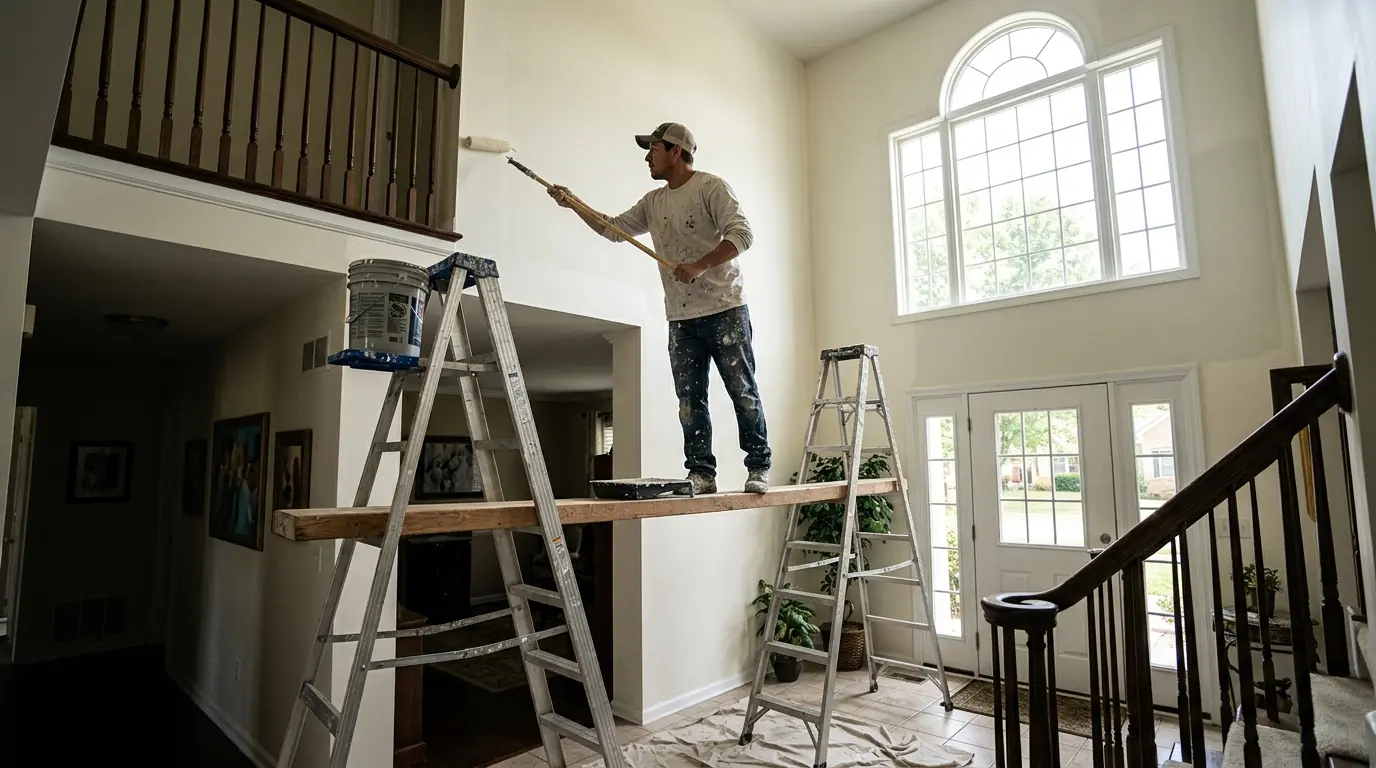
Custom homes and additions usually involve more colors, accent walls, stained or painted millwork and higher ceilings. We review the plans and finish schedule with the owner or contractor, sample colors on the actual walls, and stage two-story rooms safely. Additions are blended into the existing house so the new rooms and the old ones look like one job, matching existing trim colors and sheens where needed. Paint-grade and stain-grade millwork are kept separate so stained parts never see primer. Owners get a room-by-room color list at the end for future touch-ups.
Basement and bonus room finishes
Finished basements and bonus rooms are often the last part of a new house to be completed, sometimes years later. Fresh drywall is primed, ceilings painted or sprayed, and any exposed beams, ducts and joists coated in a dryfall or flat finish if the ceiling is left open. Basement walls next to concrete are checked for moisture before painting. We schedule these rooms around the household when the rest of the house is already lived in. Low-odor products are used where the family is already living upstairs.
Punch-list and touch-up rounds
Every new house collects dings from movers, other trades and the final cleaning. We return for punch-list rounds before closing or after move-in, touching up walls and trim with the exact paint used originally so the repairs blend. Larger damage is patched and the wall repainted corner to corner. Builders can schedule a standard round per house; owners can call for one when they are ready. Touch-up paint is labeled and left on site so the owner has it after we leave. A short walk-through with the builder or owner closes the list before we go.
Local context
How this work runs around Indianapolis
Westfield alone went from 17,548 housing units at the 2020 census to 26,020 in a 2025 special census, and Hamilton County grew 26.5 percent in the decade before that, with Boone and Hendricks close behind. That pace of building across the counties around Indianapolis is why new construction work is a steady part of our calendar, from spec homes to basements finished years after move-in.
Timeline
How long painting takes in a new house
Painting a typical new house takes about a week or two once drywall is finished, depending on size, colors and how the other trades are sequenced. Punch-list rounds are short visits scheduled before closing or after move-in.
From your call to the final walk-through
How a new construction job runs
- 01
Call with plans and dates
Size, finish schedule and when drywall will be ready.
- 02
Walk the house or review plans
Surfaces, heights, colors and the trade sequence.
- 03
Written scope and schedule
Products, colors, phases and punch-list rounds.
- 04
Prime
New drywall primed with a primer made for it.
- 05
Ceilings and walls
Ceilings sprayed or rolled, walls in two coats.
- 06
Trim and doors
Caulked, sanded and finished in enamel.
- 07
Punch list
Touch-ups with the original paint before closing.
FAQ
Questions we hear on this job
Yes, on their schedule, with colors and products kept on file.
Fresh drywall and joint compound absorb paint unevenly; the right primer stops seams showing.
Yes, scheduled around the household.
Yes, with the original paint so the repairs blend.
Usually before final flooring and trim, as the builder's sequence allows.
Yes; stained treads and rails with painted risers and balusters are common.
Related services
Other commercial & property painting work we handle
Commercial Exterior Painting
Concrete block (CMU) walls, parking bollards and striping and more.
learn about commercial exterior paintingRental Turnover Painting
Full-unit repaint between tenants, cabinet and door refresh and more.
Rental Turnover PaintingCommercial Interior Painting
Offices and suites, after-hours and weekend scheduling and more.
Commercial Interior Painting in IndianapolisPre-Listing & Real Estate Painting
Pre-listing interior refresh, vacant home repaint after a sale and more.
Pre-Listing & Real Estate PaintingReady when you are
Send us the plans and the dates
Call any hour with the project size and when drywall will be ready, and we will book the walk-through or plan review on the call.
Faber Paint & Blinds service office
3053 Stillcrest Ln, Indianapolis, IN 46217