Blinds & Shades in Indianapolis
Cellular honeycomb shades in Indianapolis
A bedroom that is too bright at dawn, a cold front room in January, or a window you want to open at the top for privacy. Cellular shades are the most insulating soft window treatment, and they can do all three.
- Phones answered 24/7
- Insulating honeycomb cells
- Top-down bottom-up option
Paint lines and window treatment brands we work with
Quick answer
Cellular shades in Indianapolis are measured in your home, ordered in single or double cell, light-filtering or blackout fabric, and installed inside or outside the frame. The honeycomb traps air, which is why they are the usual choice for bedrooms and drafty windows. Market figures put cellular shades around $120 to $350 per window.
What the job involves
Why the cell structure matters
Updated September 2026
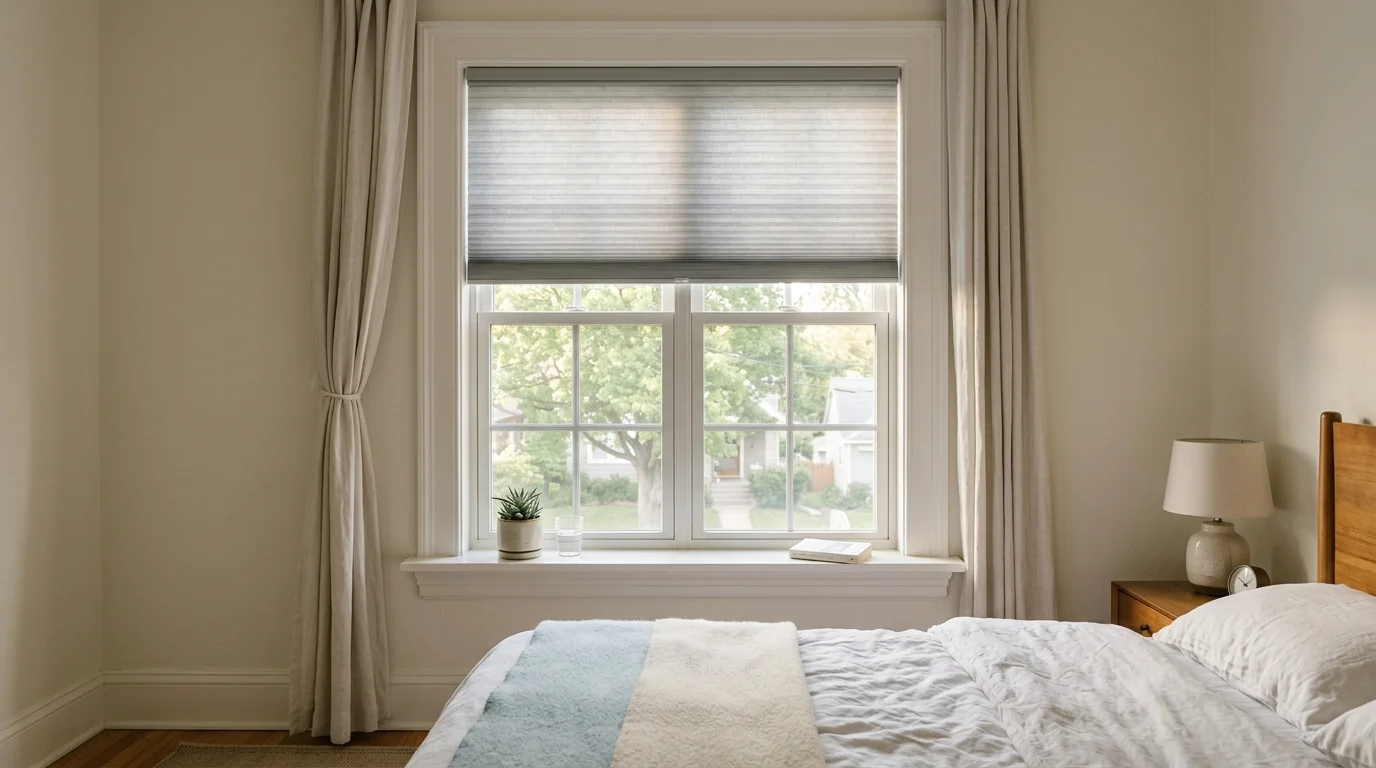
A cellular shade is two or more layers of fabric bonded into hexagonal cells. The air trapped in those cells slows heat moving through the window, in both directions, so a lowered shade makes a noticeable difference in a room next to a single-pane or drafty window. Double-cell shades trap more air than single cell; blackout versions add an opaque liner inside the cell.
We measure and install cellular shades from Hunter Douglas, Graber, Levolor and Bali, and we motorize them on hard-to-reach windows through our motorized shades work. For a simpler flat look, compare roller shades.
What is included
What a cellular shade installation includes
- In-home measure of every window at three points
- Inside or outside mount chosen window by window
- Single or double cell and opacity chosen from samples
- Lift system chosen per window, cordless where practical
- Brackets set into solid framing and leveled
- Each shade run through its full travel and adjusted
- Old window treatments removed if you want
What moves the price
What moves the price of cellular shades
Market figures put cellular shades around $120 to $350 per window, depending mostly on size and features.
- Window size Larger windows need more fabric and stronger rails.
- Cell type Double cell costs more than single cell.
- Opacity Blackout fabric costs more than light-filtering.
- Top-down bottom-up Adds a second rail and a modest upcharge.
- Lift system Cordless, continuous cord and motorized differ in cost.
- Mount and side channels Outside mounts and light-blocking channels add material.
- Brand and fabric line Premium fabric collections cost more than standard ones.
Ranges are published market figures for planning only, not a quote from us; your price depends on the factors above.
Variations of this job
The cellular shades jobs we get called for
Single and double cell
Single-cell shades have one row of cells and a slimmer stack when raised, which suits smaller windows and shallow frames. Double-cell shades have two rows, trap more air and block more sound and light, and they make the most difference on large windows and in rooms that run cold in winter or hot in summer. The difference is visible from the side: double cell is thicker. We bring both to the measure so you can see the stack height on your own window.
Top-down bottom-up
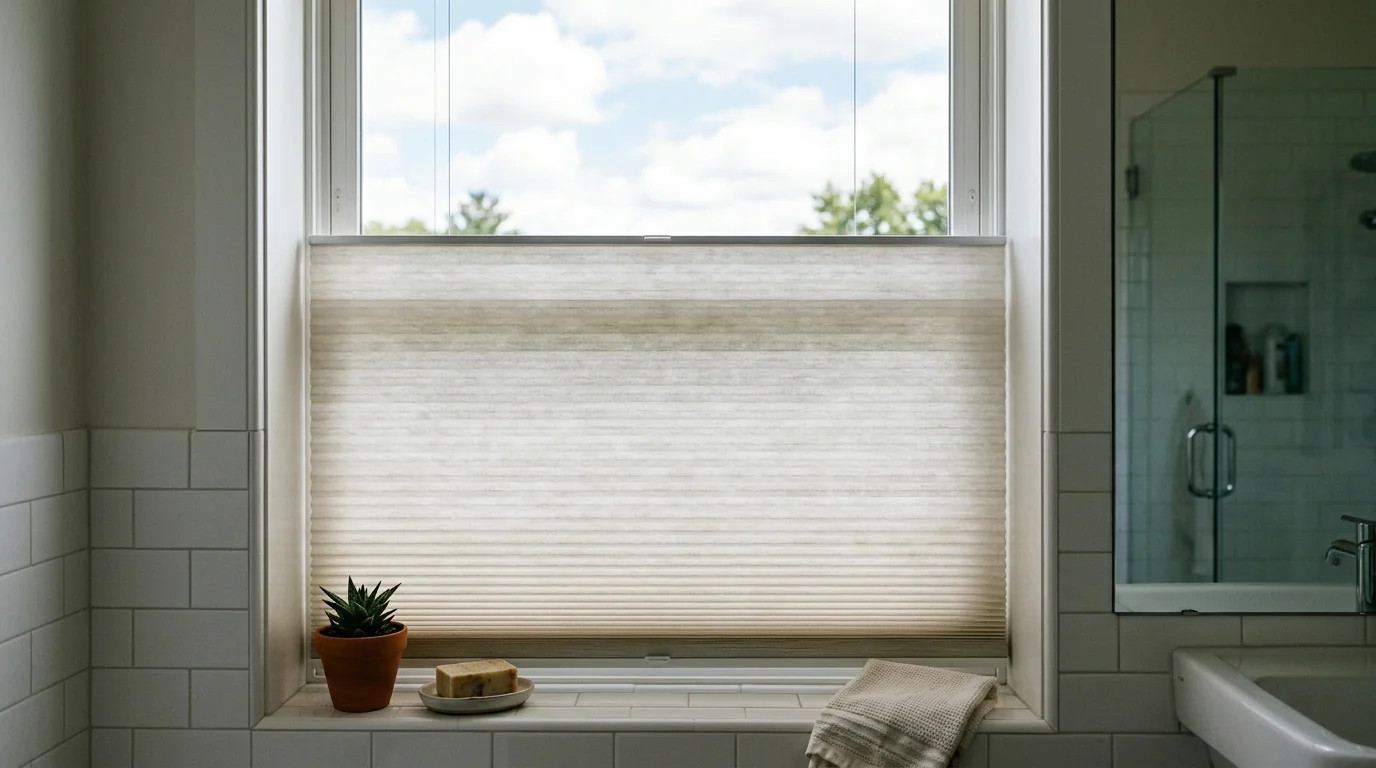
Top-down bottom-up shades can be lowered from the top as well as raised from the bottom. That lets daylight in over the top of the window while the lower half stays covered for privacy, which is why they are popular in bathrooms, street-facing bedrooms and home offices. The shade has two rails and can sit anywhere in the frame. Cordless and motorized versions are available, and the feature adds a modest cost over a standard shade. Both rails are checked for level at every height before we leave.
Blackout cellular
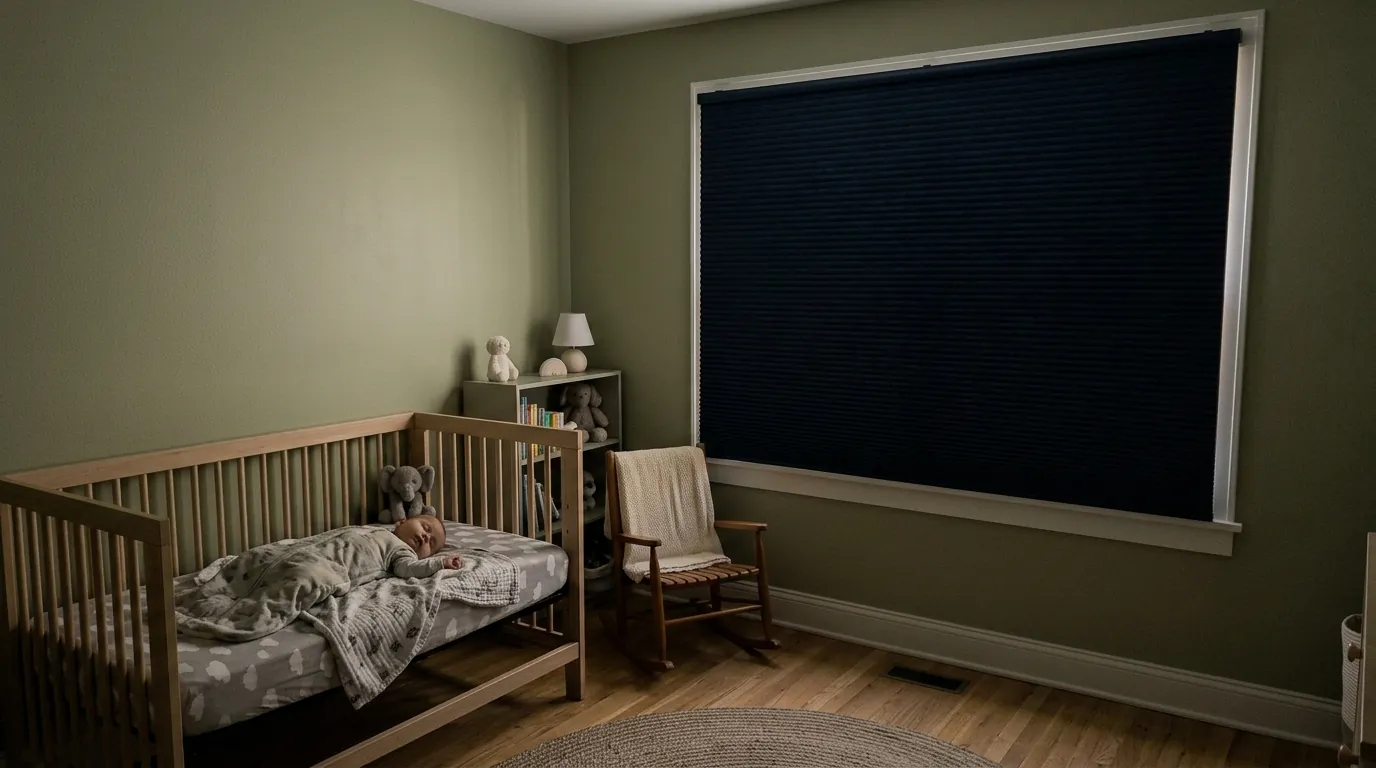
Blackout cellular shades have an opaque liner inside each cell, so they block nearly all light through the fabric. Light can still leak around the edges of an inside-mounted shade, so for nurseries, shift workers and media rooms we often recommend an outside mount that overlaps the frame, or side channels that close the gap. Blackout cells are also the most insulating option because the liner adds another layer. Blackout fabrics come in a narrower color range, so we bring samples to the measure.
Cordless and continuous cord
Cordless cellular shades raise and lower by hand at the bottom rail and are the safest option around children and pets. On large or high windows, a continuous cord loop anchored to the wall makes lifting easier and keeps the cord taut and out of reach. Where neither works, such as a window above a tub or a transom, motorized control is the practical choice. We recommend the lift system window by window rather than one system for the whole house.
Local context
How this work runs around Indianapolis
Indianapolis winters are short but very cold, and the summers are long, warm and humid, so the same window loses heat for part of the year and lets it in for the rest. A double-cell shade lowered on a north window in January and on a west window on a July afternoon does real work in both seasons. That is why we suggest double cell for bedrooms and front rooms and single cell where stack height matters more.
From your call to the final walk-through
How a cellular shade order runs
- 01
Call and describe the windows
Rooms, window count, and whether light, privacy or heat is the problem.
- 02
In-home measure
Each window measured, mount and cell type chosen.
- 03
Fabric samples
Colors and opacities seen against your walls and light.
- 04
Written order
Sizes, options and lead time confirmed.
- 05
Manufacturing
Shades made to size.
- 06
Install
Brackets set level, shades tested through full travel.
- 07
Walk-through
Every shade operated with you.
Doing it yourself vs. calling us
Ordering shades online versus calling us
| Step | Doing it yourself | When we do it |
|---|---|---|
| Measuring | Your measurements, your risk | Measured by us, remade if we get it wrong |
| Choosing | Tiny swatches on a screen | Samples held in your own window |
| Installing | Brackets into drywall | Brackets into framing, leveled and tested |
A single shade in a spare room is a fair DIY order. Whole rooms and tall or wide windows are where measuring errors cost the most.
FAQ
Questions we hear on this job
They are the most insulating soft window treatment, especially double cell.
Double cell for large or cold windows; single cell where stack height matters.
The fabric does; light can leak at the edges unless mounted outside or with side channels.
A shade that lowers from the top for daylight and privacy at the same time.
Yes, especially useful on high and hard-to-reach windows.
Dust with a soft brush or low vacuum; spot-clean fabric gently.
Related services
Other blinds & shades work we handle
Vertical Blinds & Sliding Door Shades
Vertical blinds, vertical cellular shades and more.
vertical blinds & sliding door shades serviceCustom Blinds Installation
Faux wood blinds, cordless lift and more.
see our custom blinds installation pageRoman Shades
Flat fold, lined and blackout and more.
see our roman shades pageRoller & Solar Shades
Light-filtering roller, dual roller and more.
Roller & Solar ShadesReady when you are
Tell us which rooms and we will set the measure
Describe the windows and whether light, privacy or temperature is the problem, and we will book the measure on the call, any hour.
Faber Paint & Blinds service office
3053 Stillcrest Ln, Indianapolis, IN 46217