Exterior Painting in Indianapolis
Wood rot repair before painting in Indianapolis
A sill that gives under your thumb, a fascia corner crumbling behind the gutter, or trim at the bottom of a door gone dark and soft. Rot does not stop under paint; it has to be cut out.
- Phones answered 24/7
- Rot cut to sound wood
- New wood primed on all six sides
Quick answer
Wood rot repair in Indianapolis means finding the full extent of the soft wood with a probe, cutting back to sound material, and replacing it with new primed stock or, for small areas, consolidating with epoxy. New wood is primed on every face before it goes up, joints are sealed, and the repair is painted to match so it disappears.
What the job involves
Why filler over rot fails
Updated September 2026
Rot is fungus feeding on wood that stays wet. Filling over it traps moisture against the soft wood, and the rot keeps spreading under a patch that looks fine for a season. The fix is to remove every soft section, find out why it stayed wet, and put back wood that is sealed on all sides so it cannot absorb water the same way.
Small, stable rot in a detailed piece, like a carved sill end, can be consolidated with a two-part epoxy and shaped. Anything larger gets new wood. Repairs are then painted as part of an exterior repaint or a trim-only job.
Warning signs
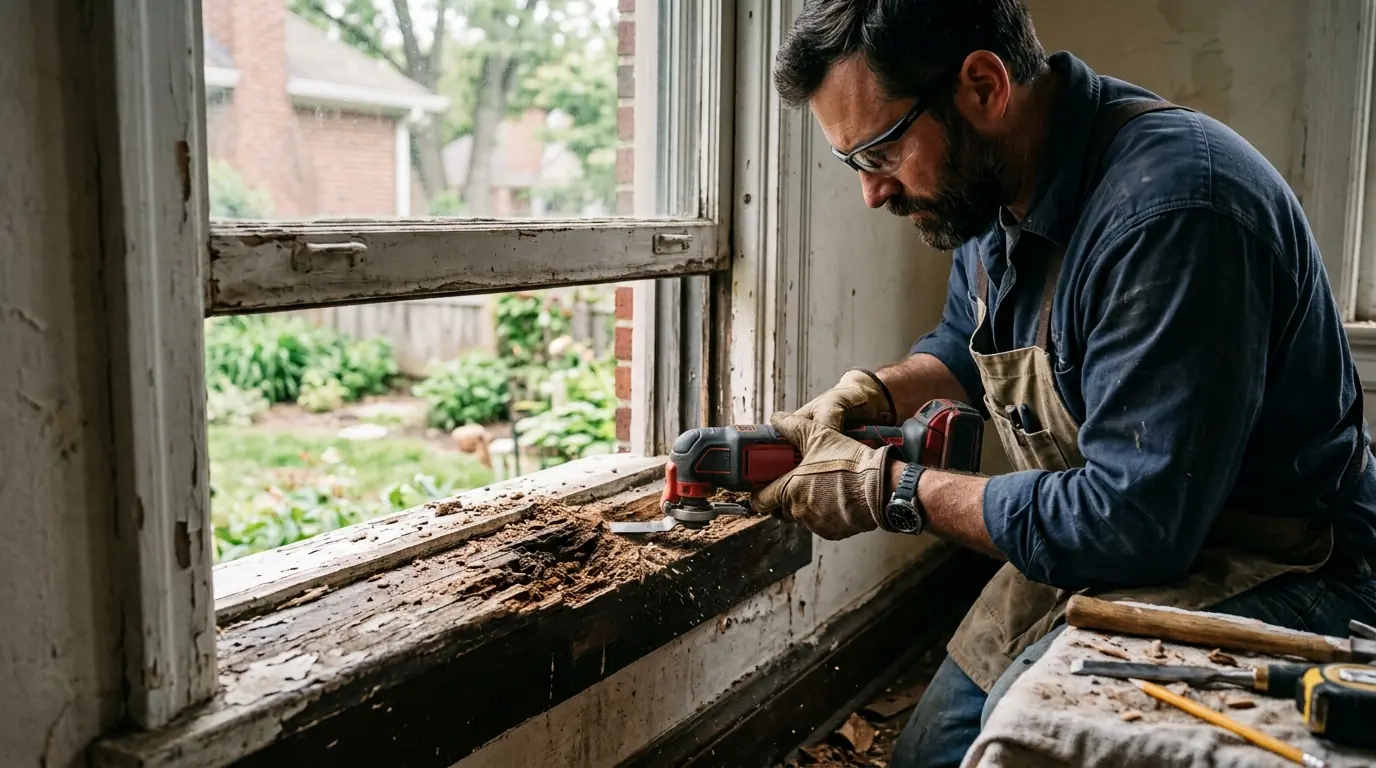
Signs of rot to check for
Soft under a screwdriver
Wood that dents or crumbles under light pressure is rotted.
Dark staining at ends
Gray or black wood at sill ends and trim bottoms holds water.
Paint bubbling in one spot
Blisters on trim often sit over wet, softening wood.
Gaps opening at joints
Swelling and shrinking wood pulls joints apart and lets water in.
Mushrooms or insects
Fungus growth or ants in trim are signs of long-term moisture.
From your call to the final walk-through
How a rot repair runs
- 01
Call and describe the damage
Where the soft wood is and how long it has been soft.
- 02
Probe and find the cause
We map the rot and look for the water source.
- 03
Written scope
Pieces to replace or consolidate, materials and paint.
- 04
Cut out
Soft wood removed back to sound material with backing.
- 05
Replace or consolidate
New primed wood fitted, or epoxy for small detailed areas.
- 06
Seal and prime
Joints sealed where designed to be, repairs primed.
- 07
Paint to match
Two coats so the repair disappears into the house.
Variations of this job
The wood rot repair before painting jobs we get called for
Window sill replacement
Sills catch rain and hold it against the end grain, so they rot first on most houses. We probe the sill along its length, cut out the soft section or remove the full sill if the rot runs under the casings, and fit a new sill with the proper slope so water runs off. The new wood is primed on every face, including the ends and underside, before installation. Joints to the casing and siding are sealed where they are meant to be, and the drip edge underneath is left open.
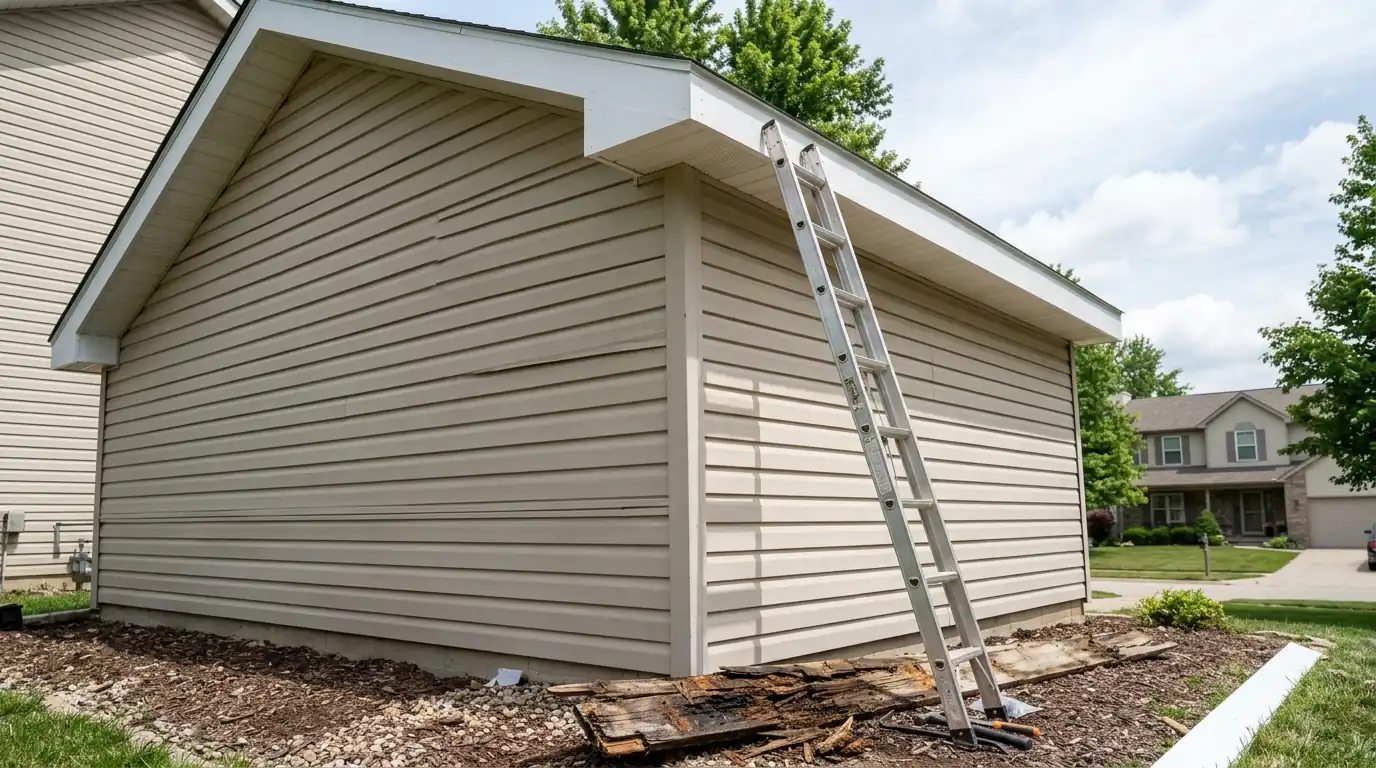
Fascia and rake board replacement
Fascia rots behind gutters and at the lower corners where the rake board meets it. We take down the gutter section, probe the fascia, cut back to sound wood at a rafter tail so the joint has backing, and install new primed fascia, often in a rot-resistant material like PVC or engineered trim where it will be painted anyway. The drip edge and gutter go back on, and the gutter is checked for the leak or overflow that caused the rot in the first place.
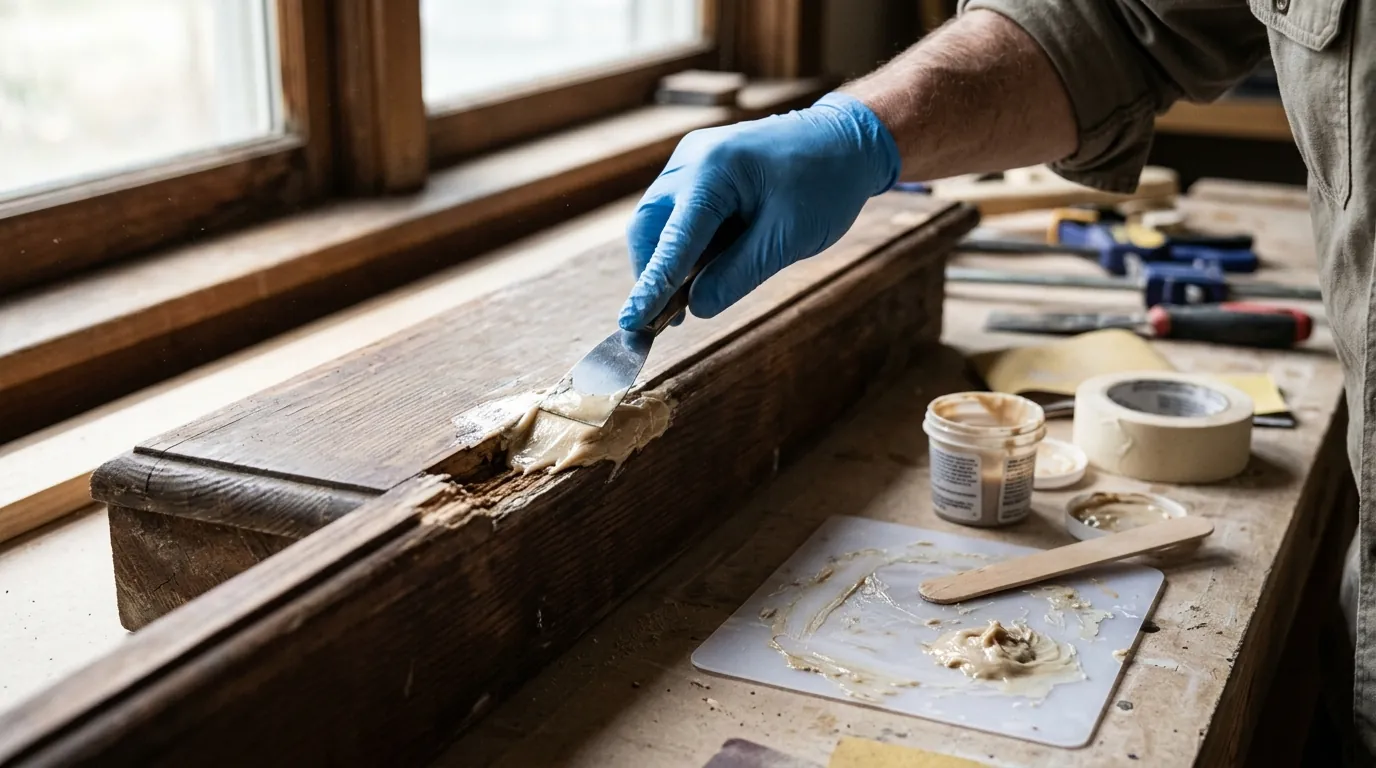
Epoxy consolidation
Epoxy consolidation is for small areas of rot in pieces worth saving: a carved corbel, an original sill end, the profile of a historic door casing. We dig out the soft wood, dry the area, saturate the remaining fibers with a liquid consolidant that hardens them, then fill and shape with an epoxy filler that can be sanded and painted like wood. It keeps original material in place and works well on older houses, but it is not a substitute for replacement on large or structural sections.
Trim board replacement
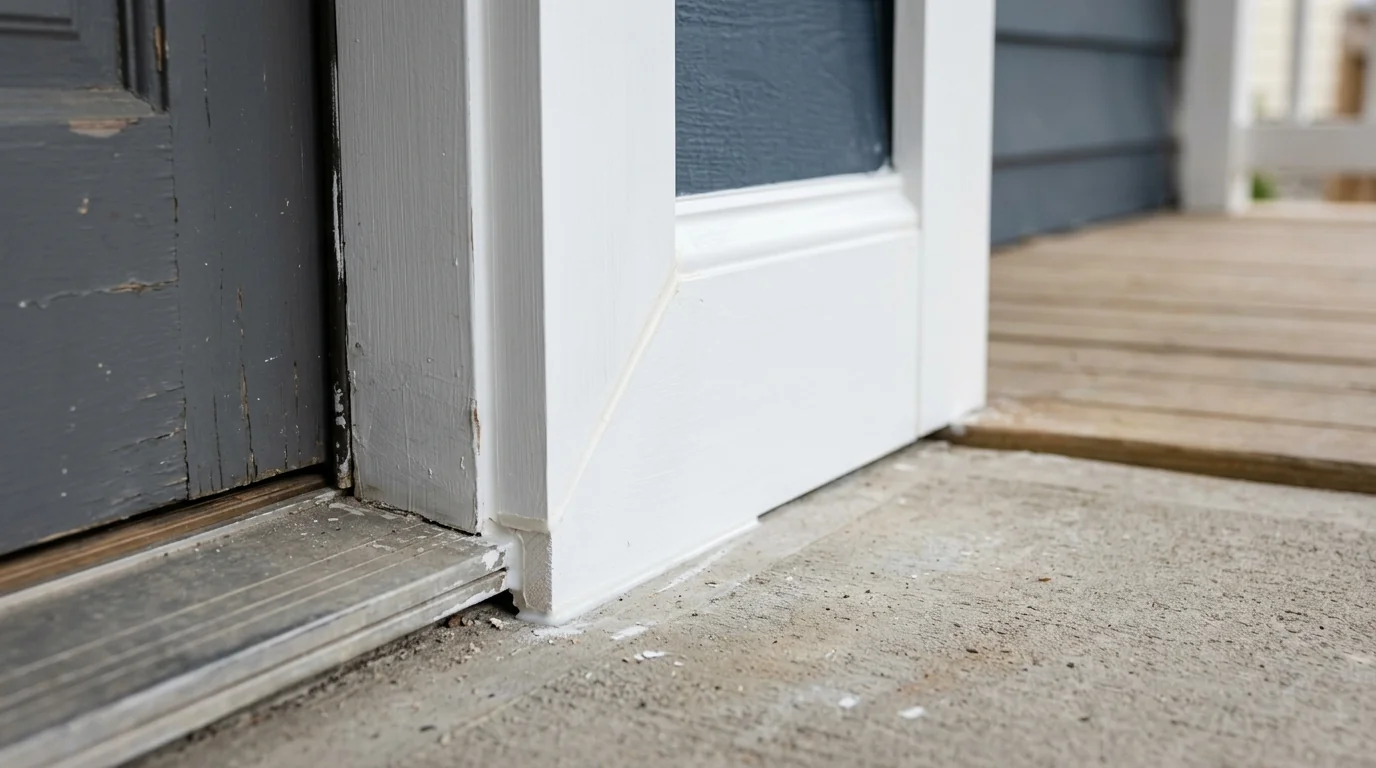
Corner boards, door casings and the bottom trim along siding rot where they meet the ground, the porch floor or a roofline. We remove the soft length, check the sheathing behind it for moisture damage, and replace it with new primed trim cut to match the profile. On houses where the same trim has failed more than once, we suggest a cellular PVC replacement at the bottom few inches where splashback hits, which takes paint well and does not rot no matter how often it gets wet.
Local context
How this work runs around Indianapolis
Rain and snowmelt come to Indianapolis in every month of the year, so wood that stays damp at sills and trim ends never gets a long dry season to recover. Local painting crews here list carpentry repair of rotted sills and trim as a routine pre-paint step, and that matches what we find: on most houses we walk, at least one sill or fascia corner has to be replaced before paint is worth putting on.
Doing it yourself vs. calling us
Patching rot yourself versus calling us
| Step | Doing it yourself | When we do it |
|---|---|---|
| Small soft spots | Wood filler over the area | Cut to sound wood or consolidated with epoxy |
| New wood | Installed bare and painted on the face | Primed on all six sides before installation |
| The cause | Not addressed | Leak, overflow or splashback found and fixed |
A small patch on a ground-floor sill is fair DIY with epoxy. Fascia, anything above the first floor, and rot that has come back are where it goes wrong.
What moves the price
What moves the price of rot repair
No sourced figure is quoted here; carpentry is priced by the piece and the extent of the rot.
- Extent of rot The probe decides whether a section or the whole board comes out.
- Location Second-story fascia needs ladders or staging; ground-level trim does not.
- Material Primed pine, cedar and PVC trim differ in cost and longevity.
- Profile matching Custom or historic profiles take more fitting time.
- Sheathing damage Wet sheathing behind trim is replaced before the trim goes back.
- Gutter removal Fascia work usually means taking a gutter section down and back up.
- Painting Repairs are primed and painted to match the house.
FAQ
Questions we hear on this job
Only very small, stable spots, and with epoxy after the soft wood is removed.
Wood that stays wet: overflowing gutters, missing caulk, splashback and failed paint.
In spots that keep getting wet, yes. It takes paint and does not rot.
Yes. Repairs are primed and painted to match.
With a probe along the whole board, not just the visible spot.
Often, with epoxy consolidation on smaller damaged areas.
Related services
Other exterior painting work we handle
Porch Painting
Porch floor paint, steps and lattice and more.
Porch Painting in IndianapolisExterior House Painting
Wood siding, fiber cement siding and more.
learn about exterior house paintingPower Washing
Soft wash for siding, mildew and algae removal and more.
learn about power washingWrought Iron & Metal Railing Painting
Wrought iron porch and stair railings, rusted railings and bases and more.
learn about wrought iron & metal railing paintingReady when you are
Tell us where the wood is soft and we will set the visit
Describe the sills, fascia or trim and we will book the probe-and-quote visit on the call, any hour.
Faber Paint & Blinds service office
3053 Stillcrest Ln, Indianapolis, IN 46217