
Drywall & Wallpaper in Indianapolis
Drywall repair and patching in Indianapolis
A doorknob hole, a crack that comes back every winter, or a soft spot under a bathroom. We cut, tape, fill and match the texture so the patch disappears once it is painted.
- Phones answered 24/7
- Texture matched to the wall
- Patched and painted in one visit set
Quick answer
Drywall repair in Indianapolis means cutting back damaged board to solid material, setting new drywall or a backed patch, taping and filling in thin coats, then matching the surrounding texture and painting the patch to blend. Small patches take two short visits because compound needs to dry between coats; water-damaged sections are dried and replaced.
What the job involves
Why a good patch is invisible and a bad one is not
Updated September 2026
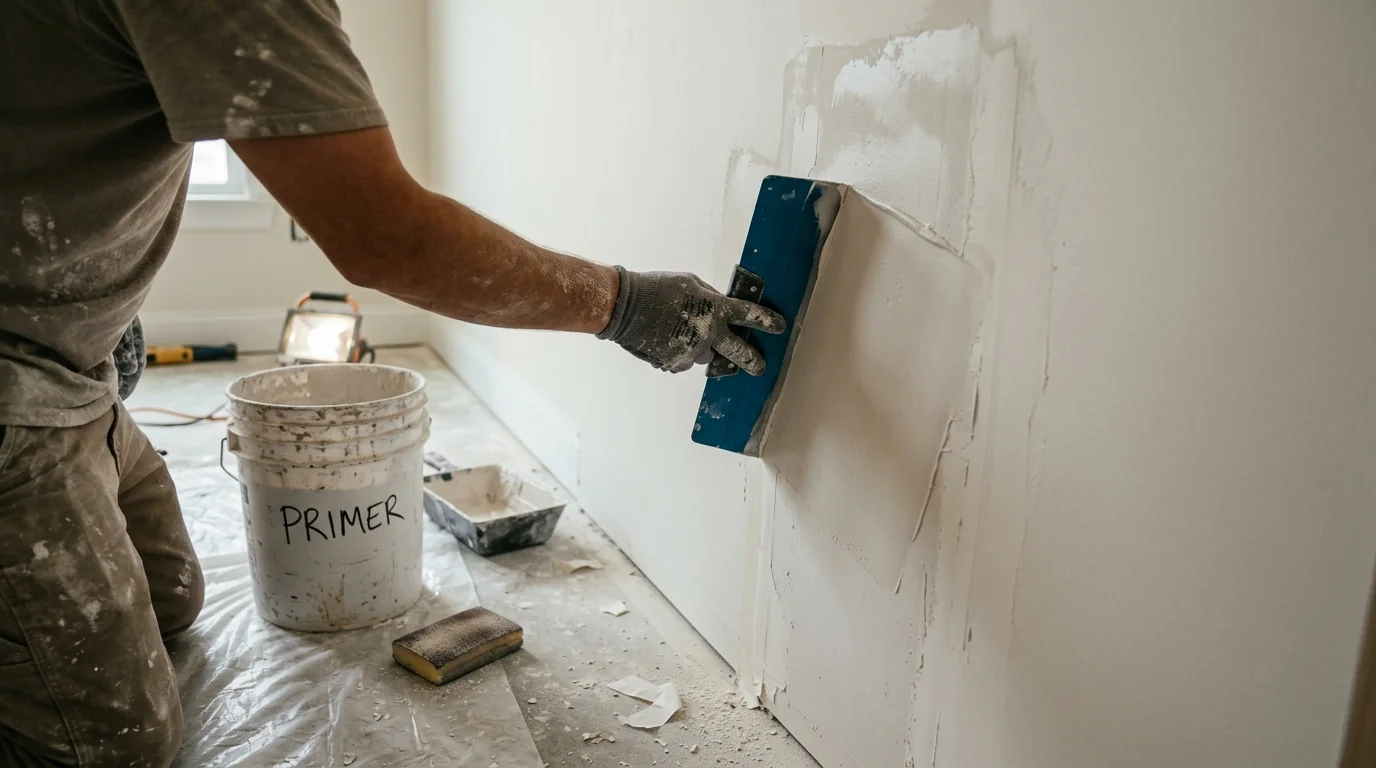
A patch shows for three reasons: it sits proud of the wall, its texture does not match, or the paint over it is a different sheen. We feather compound out wide and thin so there is no hump, match the texture by hand or spray, and repaint the whole wall section rather than just dabbing the repair.
Cracks that return get the cause fixed, not just more mud. Straight cracks along a seam are loose tape; diagonal cracks off door corners are framing movement and get mesh tape and a flexible compound. For the painting afterward, see interior house painting; for walls that need a full skim, skim coating and texture.
Warning signs
Signs a wall needs more than filler
A crack that keeps returning
Recurring cracks are movement or loose tape, fixed with mesh and setting compound.
Bubbled or lifting tape
Tape that lifts along a seam was never embedded and has to be cut out.
Soft or stained drywall
Softness under a stain means water got in; the board comes out.
Rows of bumps
Lines of nail pops along studs mean the board is pulling away from framing.
Rust showing at a corner
Orange lines at outside corners are rusting bead that needs replacing.
From your call to the final walk-through
How a drywall repair runs
- 01
Call and describe the damage
Size, location, and whether water was involved.
- 02
Visit and diagnosis
We find the cause, check for moisture and look at the texture.
- 03
Written scope
Repairs, texture match, and how much wall gets repainted.
- 04
Cut and back
Damaged board cut to solid material, backing set, new drywall fitted.
- 05
Tape and fill
Tape embedded, then thin coats feathered wide with drying time between.
- 06
Sand, texture, prime
Dust-controlled sanding, texture matched, primer on the patch.
- 07
Paint to blend
The wall section repainted so the repair and sheen disappear.
Variations of this job
The drywall repair & patching jobs we get called for
Nail pops and cracked seams
Nail pops are the round bumps that show up along ceiling lines and stud lines as framing dries and moves. We drive a drywall screw beside the popped nail to pull the board tight, set the nail, fill both in two thin coats, sand and spot-prime. Cracked seams get the loose tape cut out, new tape embedded in compound, and two finish coats feathered wide. Cracks that run diagonally from the corner of a door or window are movement cracks; they get mesh tape and a setting compound that holds better than premixed mud.
Hole and door-knob patches
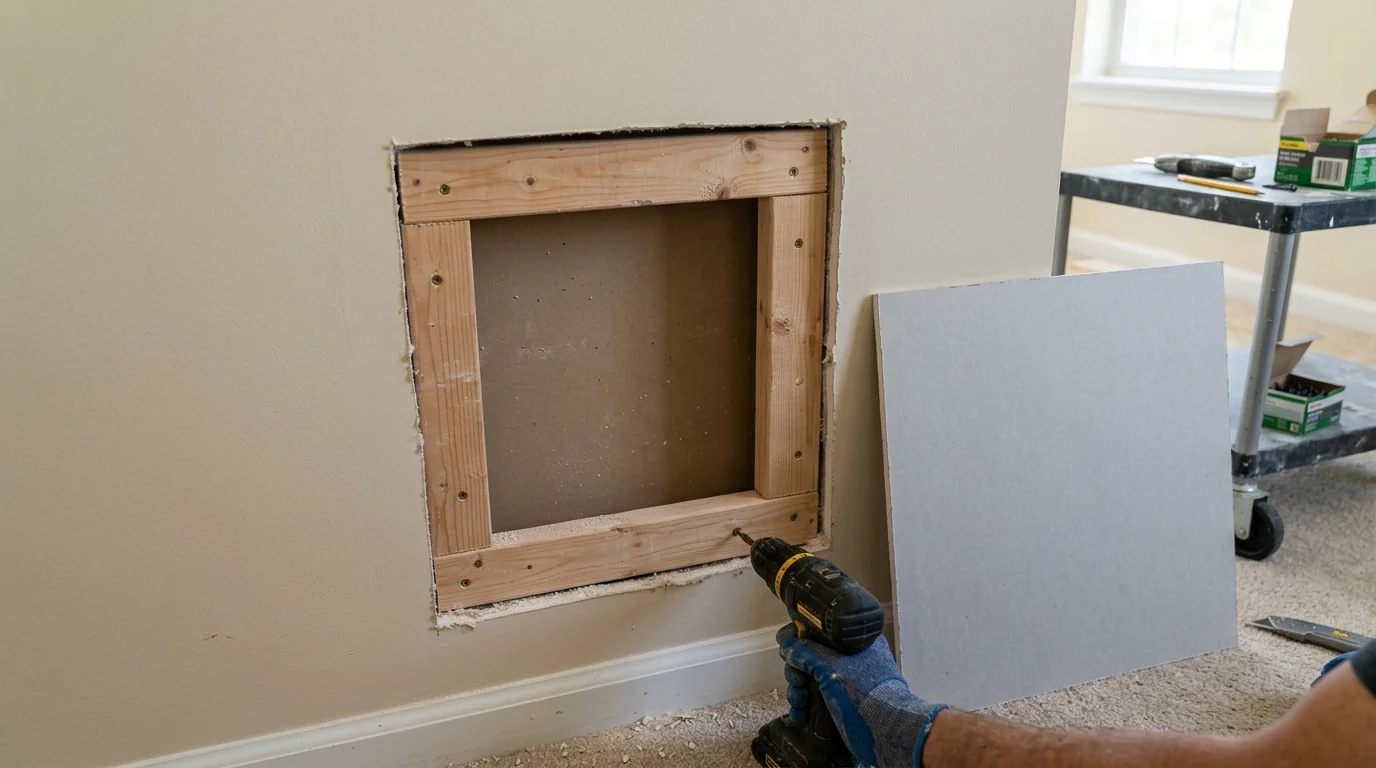
Small holes under a few inches get a self-adhesive mesh patch or a California patch with the paper face as the tape. Bigger holes are cut back to a clean square, backed with wood cleats screwed inside the cavity, and filled with a piece of new drywall. Every patch is taped, filled in at least two coats with drying time between them, sanded, and primed so the paint does not flash. A door that keeps hitting the same spot also gets a door stop, because the patch alone will not survive the next slam.
Water-damage patch and seal
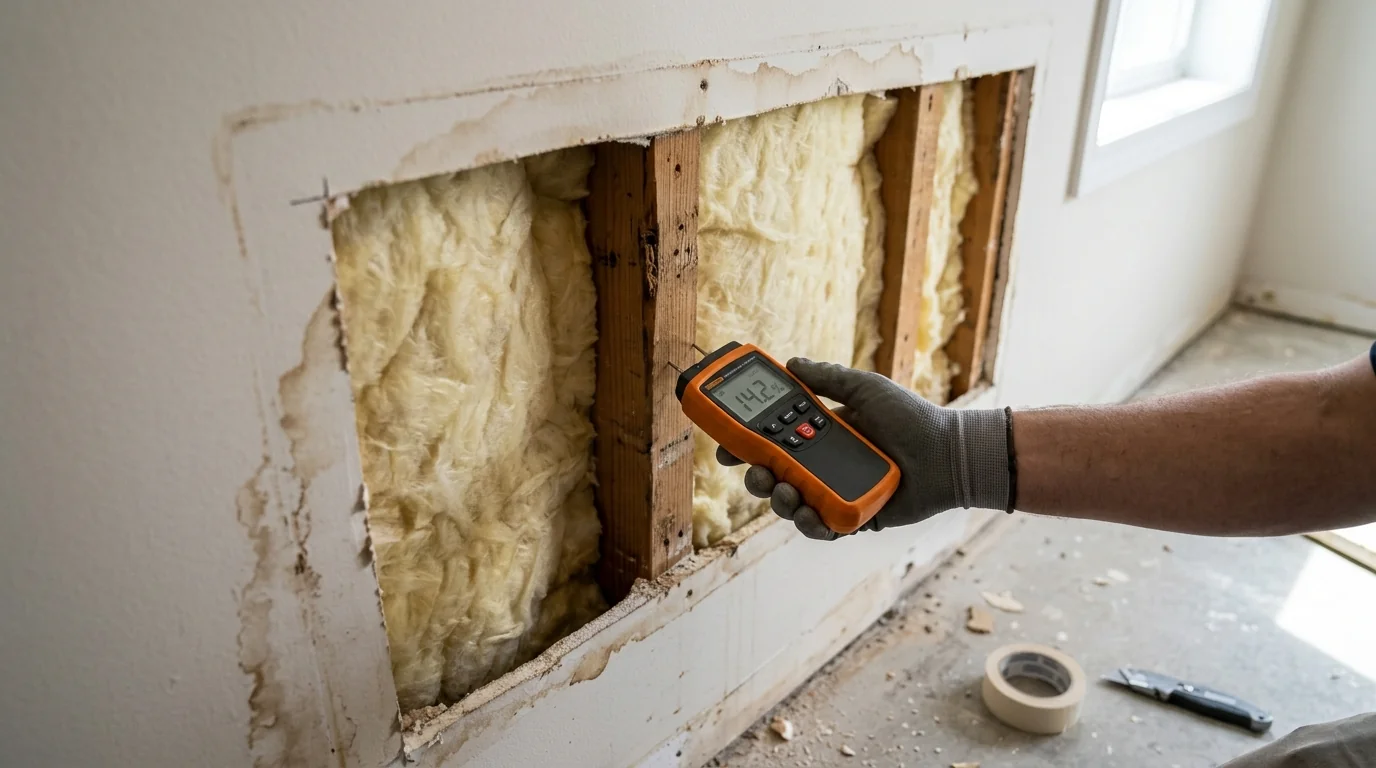
Drywall that got wet swells, stains and loses strength. We check that the leak is fixed and the cavity is dry, cut out the board to a line past the soft area, and look at the insulation and framing behind it before closing it up. New drywall goes in, the joints are taped and finished, and any surrounding stain gets a shellac stain blocker. If the damage is on a ceiling, the texture is matched across the whole plane so the repair does not show as a smooth square in a textured ceiling.
Corner bead repair
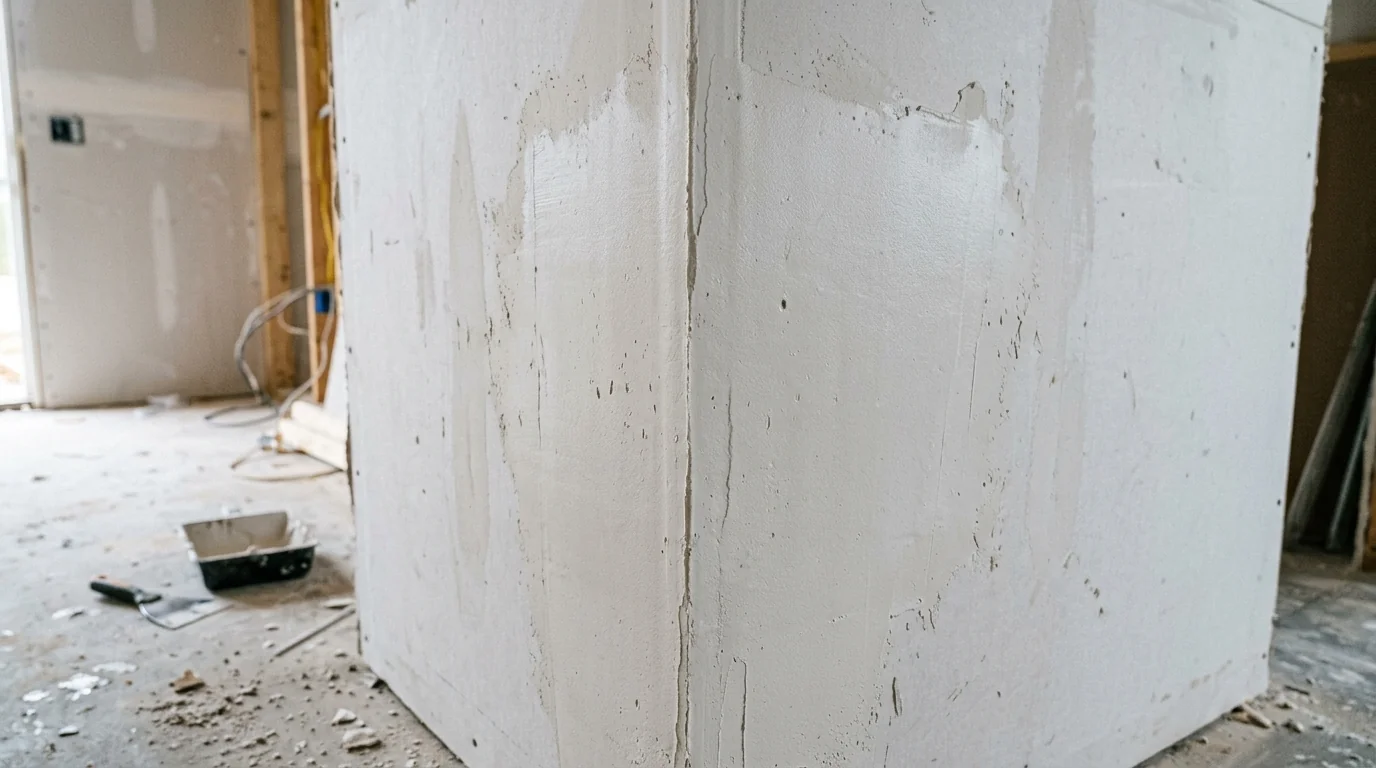
Outside corners take hits from furniture, strollers and vacuums, and metal corner bead dents while paper-faced bead tears. We cut out the damaged section, fasten a new length of bead to the framing, and fill it in three thin coats so the corner reads straight from floor to ceiling. Where an old metal bead has rusted and is showing through the paint, it gets cut back and replaced rather than painted over, because the rust stain returns through any coating.
Local context
How this work runs around Indianapolis
Indianapolis has no dry season, and the swing from humid summers to winters with more than a hundred nights below freezing moves framing and drywall a little every year, so the same seam can crack in January and look fine in July. With the median house here built around 1974, many walls carry fifty years of that movement, which is why we use setting compound and mesh tape on recurring cracks rather than another skim of premixed mud.
Doing it yourself vs. calling us
Patching yourself versus calling us
| Step | Doing it yourself | When we do it |
|---|---|---|
| Small nail holes | Spackle and a putty knife | Filled, sanded and spot-primed as part of a repaint |
| Holes and cracks | One thick coat of mud | Backing, tape and thin feathered coats |
| Blending | Touch-up paint on the patch | Texture matched and the wall section repainted |
Nail holes are a fine DIY job. Anything larger than a fist, any crack that has come back, and any water damage is where a patch starts to show.
What moves the price
What sets the price of a drywall repair
No sourced market figure is quoted here; repair jobs vary too much by size and finish. These are the factors that decide the number.
- Size and number of repairs Several small patches in one room cost less each than separate visits.
- Cause Cosmetic dings are quick; water damage adds cutting, drying checks and new board.
- Texture match Smooth walls are simplest; knockdown and orange peel need matching.
- Location Ceilings and stairwells need staging; outside corners need new bead.
- Painting afterward Repainting the full wall section is what makes the patch disappear.
- Drying time Compound coats need to dry between visits, so most repairs take two trips.
- Access Furniture, built-ins and fixtures around the repair add setup time.
FAQ
Questions we hear on this job
It is usually movement. Premixed mud over a moving joint cracks again; mesh tape and setting compound hold.
Yes. Orange peel, knockdown and hand textures are matched by spray or by hand and checked before painting.
Not when the patch is feathered flat and the wall section is repainted rather than spot-touched.
Most need two short visits because compound has to dry between coats.
Yes, once the leak is fixed. Wet board is cut out and replaced after we confirm the cavity is dry.
Yes, and it is the most common combination; see interior painting.
Related services
Other drywall & wallpaper work we handle
Wallpaper Removal
Steam removal of vinyl and paper, border removal and more.
learn about wallpaper removalWallpaper Installation
Accent wall paper, peel-and-stick paper and more.
Wallpaper Installation in IndianapolisSkim Coating & Wall Texture
Level-5 smooth skim, texture removal and more.
learn about skim coating & wall textureFaux Finishes & Venetian Plaster
Venetian plaster, metallic and accent finishes and more.
Faux Finishes & Venetian Plaster in IndianapolisReady when you are
Describe the damage and we will set the visit
Tell us the size of the hole or crack and whether water was involved, and we will book the visit on the call, any hour.
Faber Paint & Blinds service office
3053 Stillcrest Ln, Indianapolis, IN 46217