
Decks, Fences & Coatings in Indianapolis
Deck restoration and stripping in Indianapolis
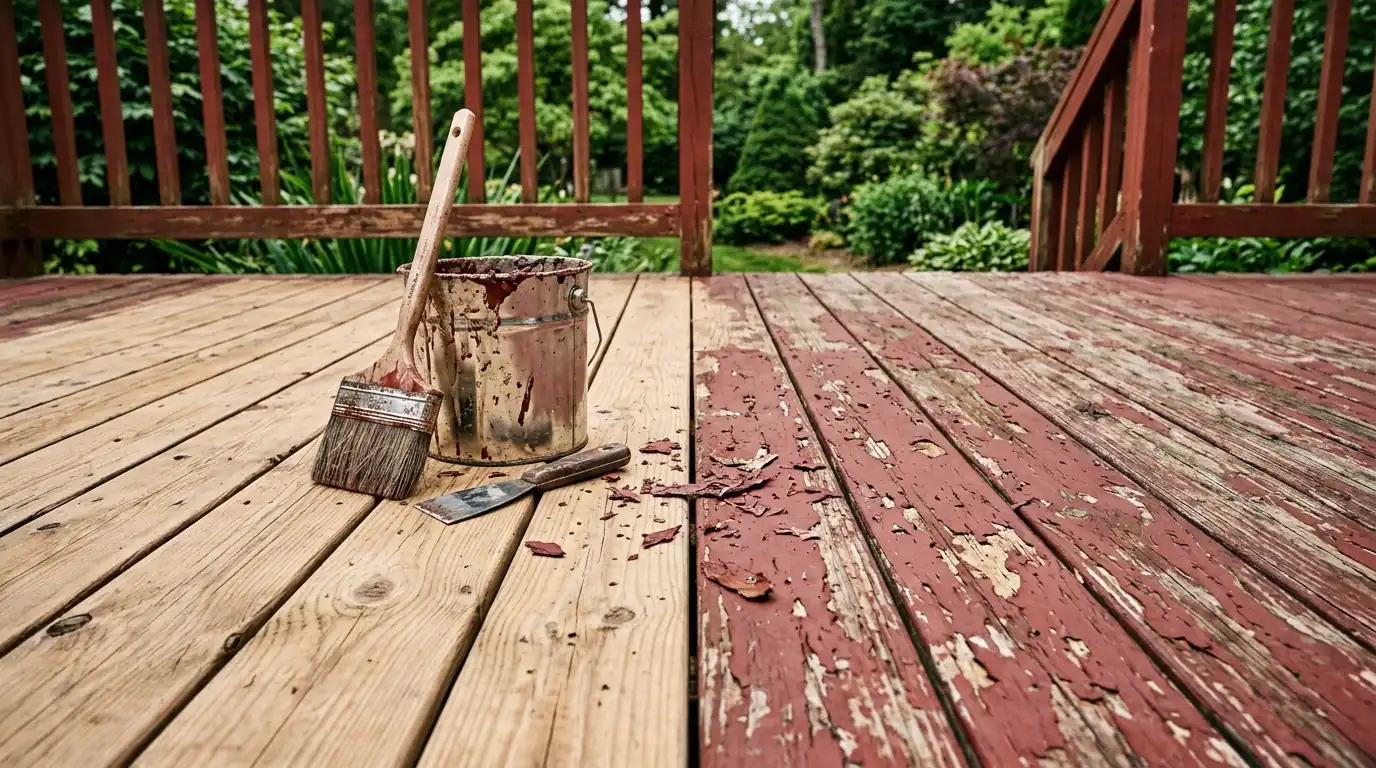
A deck with peeling solid stain, black mildew, splintering boards and nail heads lifting. When a maintenance coat will not fix it, the deck needs to go back to bare wood first.
- Phones answered 24/7
- Stripped to bare wood
- Damaged boards replaced
Quick answer
Deck restoration in Indianapolis takes a deck back to bare wood: failing stain is chemically stripped, damaged and split boards are replaced, raised fasteners are reset, the surface is sanded smooth, brightened and refinished. It is the step between a maintenance coat and a full deck replacement, and it usually saves the structure underneath.
What the job involves
When stain alone will not do it
Updated September 2026
A deck that has had several coats of solid stain, some peeling and some stuck, cannot take another coat evenly; it will peel again where the old film lets go. Restoration removes all of it so the new finish bonds to one consistent surface. It is also the time to deal with the boards themselves: splits, cupping, popped nails and soft spots.
After restoration the deck is refinished as described on our deck staining page, and the same approach applies to fences with failing finish.
What is included
What a deck restoration includes
- Old stain or paint chemically stripped
- Wood brightened and neutralized after stripping
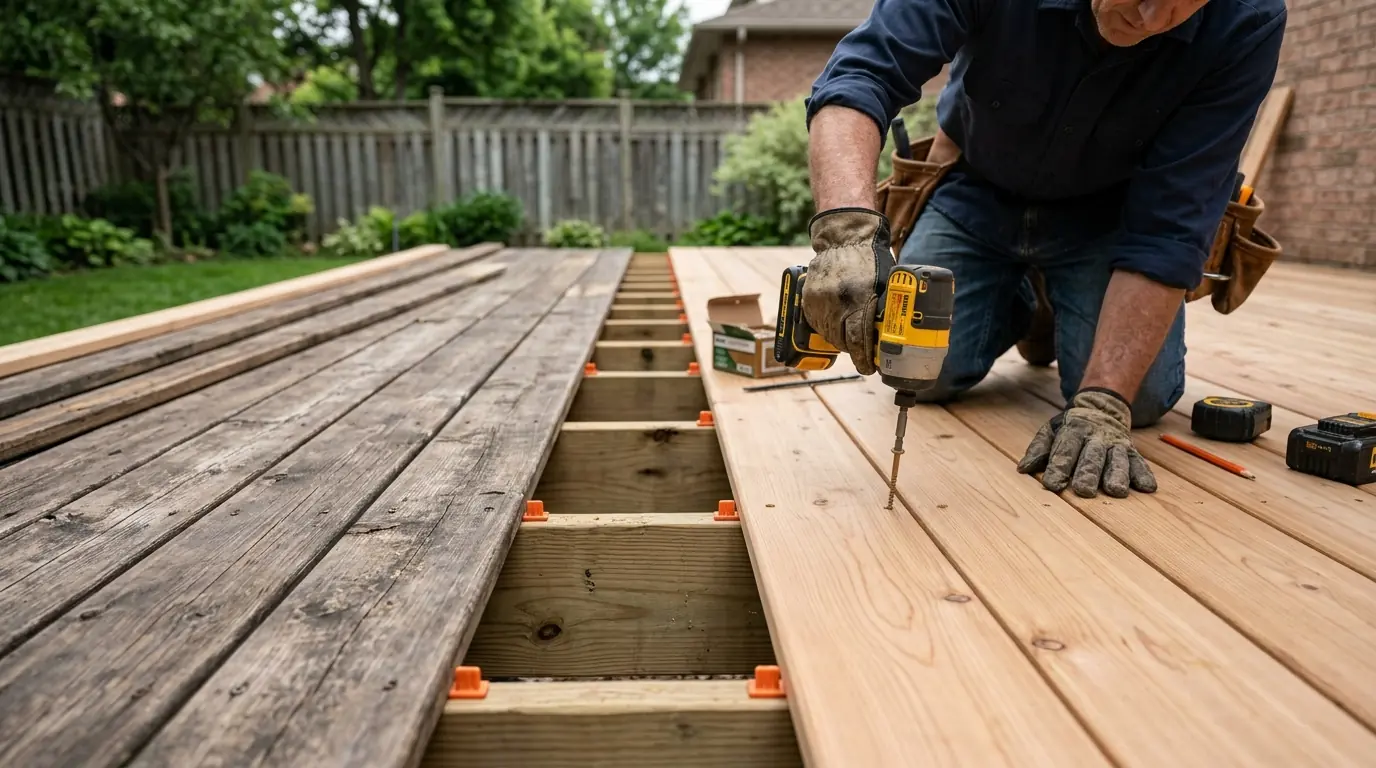
- Split, cupped and soft boards replaced
- Raised nails reset or replaced with deck screws
- Floor and top rails sanded smooth
- Joists under replaced boards inspected
- New stain applied in thin coats once the wood is dry
What moves the price
What moves the price of deck restoration
No sourced figure is quoted here; restoration is priced by area and the work the boards need.
- Deck area Every board is stripped, sanded and refinished.
- Layers of old finish Solid stain and paint may need two strip applications.
- Board replacement Split, cupped or soft boards replaced by the piece.
- Fasteners Raised nails reset or swapped for deck screws.
- Railings Stripping balusters is slower than stripping floor boards.
- Structure Joists found soft under decking are flagged and priced separately.
- New finish Stain type and coats for the restored wood.
Variations of this job
The deck restoration & stripping jobs we get called for
Chemical strip and brighten
Stripper is applied to a section at a time, left to soften the old finish, scrubbed, and rinsed off with a wide fan tip at moderate pressure. Solid stain and paint may need two applications. After stripping, the wood is dark and alkaline from the stripper, so a brightener goes on next to neutralize it and bring back the wood's natural color. Plants and siding next to the deck are wetted and protected throughout, and runoff is directed away from beds and lawns as the site allows.
Board replacement
Boards that are split, cupped past sanding, soft or rotted are replaced with new boards of the same size and species where possible. We check the joists under any soft board, since rot on top often means the joist below is wet too, and we point out any structural issue rather than covering it with new decking. New boards weather differently from old ones, which is one reason restored decks often get a solid or darker semi-transparent stain that blends the two.
Sanding and re-coat
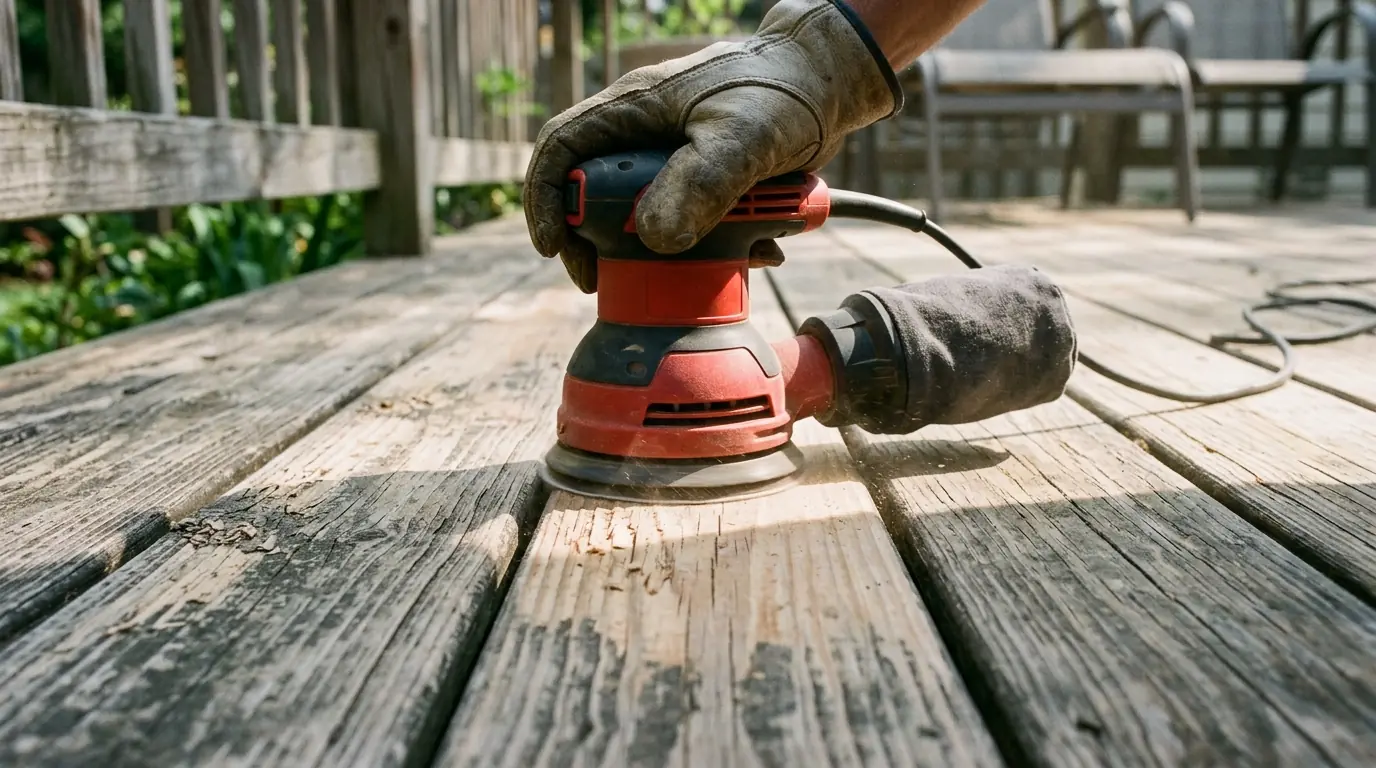
After stripping and drying, the deck is sanded with a floor sander or a rotary sander to remove raised grain, splinters and any finish left in the pores. Nails that have worked up are reset or replaced with deck screws, and the edges of boards are eased so they do not splinter. The deck is vacuumed and left to dry to the right moisture level before a fresh stain, chosen for the wood that is left, goes on in thin coats.
Local context
How this work runs around Indianapolis
Indianapolis winters are short but very cold and snowy, and the summers that follow are long, warm and humid. A deck here spends months under snow and then months in humid heat, which is exactly the cycle that grows mildew in old stain, cups boards and loosens fasteners. Restoration is usually due after a few of those cycles have gone by with only maintenance coats on top.
From your call to the final walk-through
How a restoration runs
- 01
Call and describe the deck
Age, finish history and what is failing.
- 02
Visit and probe
Boards and joists checked, old finish tested.
- 03
Written scope
Strip, replace, sand and refinish, with a board count.
- 04
Strip and brighten
Old finish removed, wood neutralized and brightened.
- 05
Repair
Boards replaced, fasteners reset, edges eased.
- 06
Sand and dry
Surface sanded smooth, wood dried to the right moisture.
- 07
Refinish
New stain in thin coats, railings included.
FAQ
Questions we hear on this job
Much, as long as the joists and posts are sound.
Yes, with a chemical stripper, sometimes in two applications.
Not at first; a solid or darker stain blends them.
We look at joists under any soft board and flag problems.
Usually several days including drying time between steps.
Yes, if the owner accepts the wood will gray without UV protection.
Related services
Other decks, fences & coatings work we handle
Deck Staining & Sealing
Semi-transparent stain, railings and balusters and more.
Deck Staining & Sealing in IndianapolisShed, Barn & Outbuilding Painting
Backyard sheds and garden buildings, playhouses, pergolas and pool houses and more.
shed, barn & outbuilding painting serviceGarage Floor Epoxy
Full-flake epoxy, basement floor coating and more.
Garage Floor EpoxyFence Staining & Painting
Cedar privacy fence, sprayed stain on long runs and more.
learn about fence staining & paintingReady when you are
Describe the deck and we will set the visit
Tell us what is peeling or failing and we will book the probe-and-quote visit on the call, any hour.
Faber Paint & Blinds service office
3053 Stillcrest Ln, Indianapolis, IN 46217