Choosing paint
Which paint sheen goes where, room by room
Sheen changes how a color looks, how well a wall hides flaws and how easily it cleans. Picking it room by room matters as much as picking the color.
- Written for Indianapolis homes
- Updated September 2026
Quick answer
Use flat or matte on ceilings and low-traffic walls because it hides flaws, eggshell in living and dining rooms, satin in kitchens, baths, halls and children's rooms where walls get washed, and semi-gloss on trim and doors. Gloss is for cabinets, railings and accents. Higher sheens clean more easily but show every bump and patch.
By Opal Waverly, Painting and Window Treatment Guides Editor. Updated September 2026
What sheen actually changes
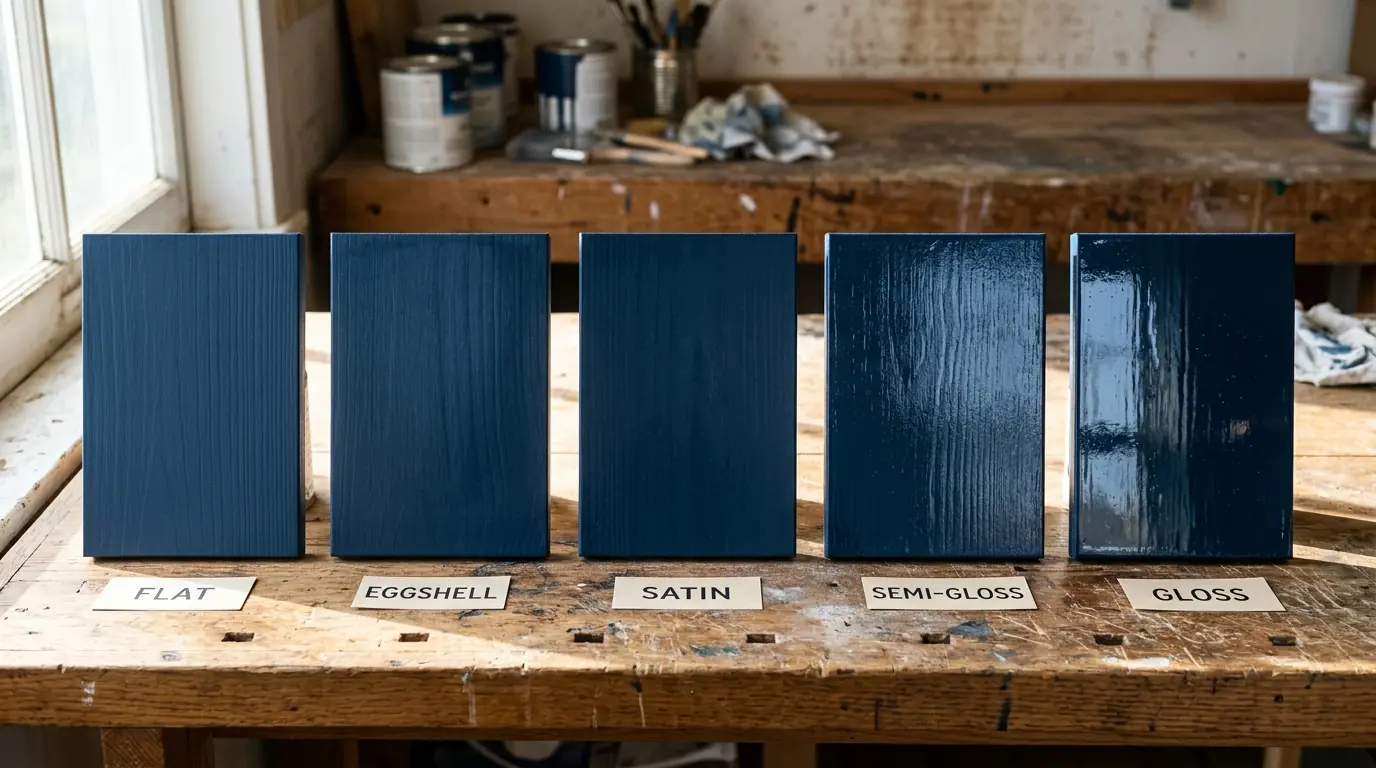
Sheen is how much light the dried paint reflects. Flat reflects almost none, so it hides texture, patches and roller marks and makes colors look deeper. As sheen rises through eggshell, satin, semi-gloss and gloss, the surface gets smoother, tougher and easier to wipe, and it also shows every imperfection underneath.
The same color also looks lighter and a little brighter in a higher sheen. That is why paint chips can mislead: they are usually printed in one finish, and the wall will be another.
Ceilings and low-traffic walls
Ceilings are almost always flat. Light hits them at low angles from windows and fixtures, and any sheen would show roller laps and patches. Flat also hides the slight waviness most ceilings have.
Flat or matte also suits formal living and dining rooms, bedrooms for adults and any wall with texture or old repairs. Modern washable mattes clean far better than older flats did. See ceiling painting for how ceilings are rolled without laps.
Living spaces, halls and children's rooms
Eggshell is the usual choice for living rooms and family rooms: a soft low sheen that wipes clean better than flat but still hides minor flaws. Hallways, stairwells and children's rooms take the most handprints and scuffs, so satin is often worth it there for washability.
Where walls are patched or uneven, eggshell is a better compromise than satin, since satin will highlight the patches under side light from a window.
Not sure which sheen your rooms need? We will put samples on the walls.
Call (317) 680-1946Kitchens and bathrooms
Kitchens and bathrooms need walls that tolerate moisture and cleaning, so satin is the standard, and some owners choose a mildew-resistant bath paint in rooms with weak exhaust fans. Semi-gloss on bathroom walls is common in older houses but shows every flaw, and modern satin products clean nearly as well.
Cabinets are a separate case: they need a cabinet enamel, usually satin or semi-gloss, not wall paint of any sheen. See cabinet painting.
Trim, doors and railings
Trim, baseboards and doors are traditionally semi-gloss, which is hard, washable and gives a crisp contrast against eggshell walls. Satin trim is a softer, more modern look that suits Craftsman and contemporary houses. Gloss is reserved for front doors, railings and accent pieces where a high shine is part of the design.
Oil-painted trim in older houses needs a bonding primer before any latex enamel; see trim and door painting.
Exterior sheens
Outside, siding usually takes a satin or low-lustre finish, which sheds dirt and water better than flat and hides the texture of wood and fiber cement. Trim takes satin or semi-gloss, and front doors often go gloss. Flat exterior paint is used on some masonry and on rough or uneven siding where hiding flaws matters most.
Our exterior painting page covers how sheen is chosen by siding material.
FAQ
Questions this guide gets asked
Eggshell for living spaces, satin for kitchens, baths and halls.
Modern washable mattes clean much better than older flats, but satin is tougher.
Touch-ups or patches in a different sheen, or paint applied over unprimed repairs.
Flat, almost always.
Semi-gloss for a classic look, satin for a softer one.
Related
Services this guide relates to
Interior House Painting
Whole-home repaint and more.
learn about interior house paintingTrim, Baseboard & Door Painting
Baseboards and casings and more.
trim, baseboard & door painting serviceBasement Painting
Concrete block walls and more.
Basement PaintingMore guides
Ready when you are
Have sheens chosen with the colors
Call and tell us the rooms, and we will bring samples in the sheens you are considering, any hour.
Faber Paint & Blinds service office
3053 Stillcrest Ln, Indianapolis, IN 46217