
Historic homes
Painting a house in an Indianapolis historic district: what the IHPC reviews
Repainting in the same colors usually needs no paperwork at all. Changing the colors, painting bare brick or replacing siding is where the commission comes in.
- Written for Indianapolis homes
- Updated September 2026
Quick answer
In Indianapolis's locally designated historic districts, the Indianapolis Historic Preservation Commission does not require a certificate for repainting in the same color scheme, for scraping, sanding and caulking, or for sample patches up to 25 square feet. Changing a color scheme needs a Certificate of Appropriateness from IHPC staff, and painting previously unpainted brick or stone goes to a hearing officer.
By Opal Waverly, Painting and Window Treatment Guides Editor. Updated September 2026
Which neighborhoods the commission reviews
The Indianapolis Historic Preservation Commission, or IHPC, reviews exterior work in the city's locally designated historic districts, including Lockerbie Square, the Old Northside, Fletcher Place, Chatham Arch, Fountain Square, Herron-Morton Place, St. Joseph, Woodruff Place and Irvington, along with a number of conservation districts. Each district has its own historic area plan, and some plans add or remove items from review.
A National Register listing on its own is a different thing. It recognizes a neighborhood's history but does not, by itself, require owners to get approval for paint. The review requirement comes from local designation through the IHPC, so the first step is confirming whether your address is inside a local district and which plan applies.
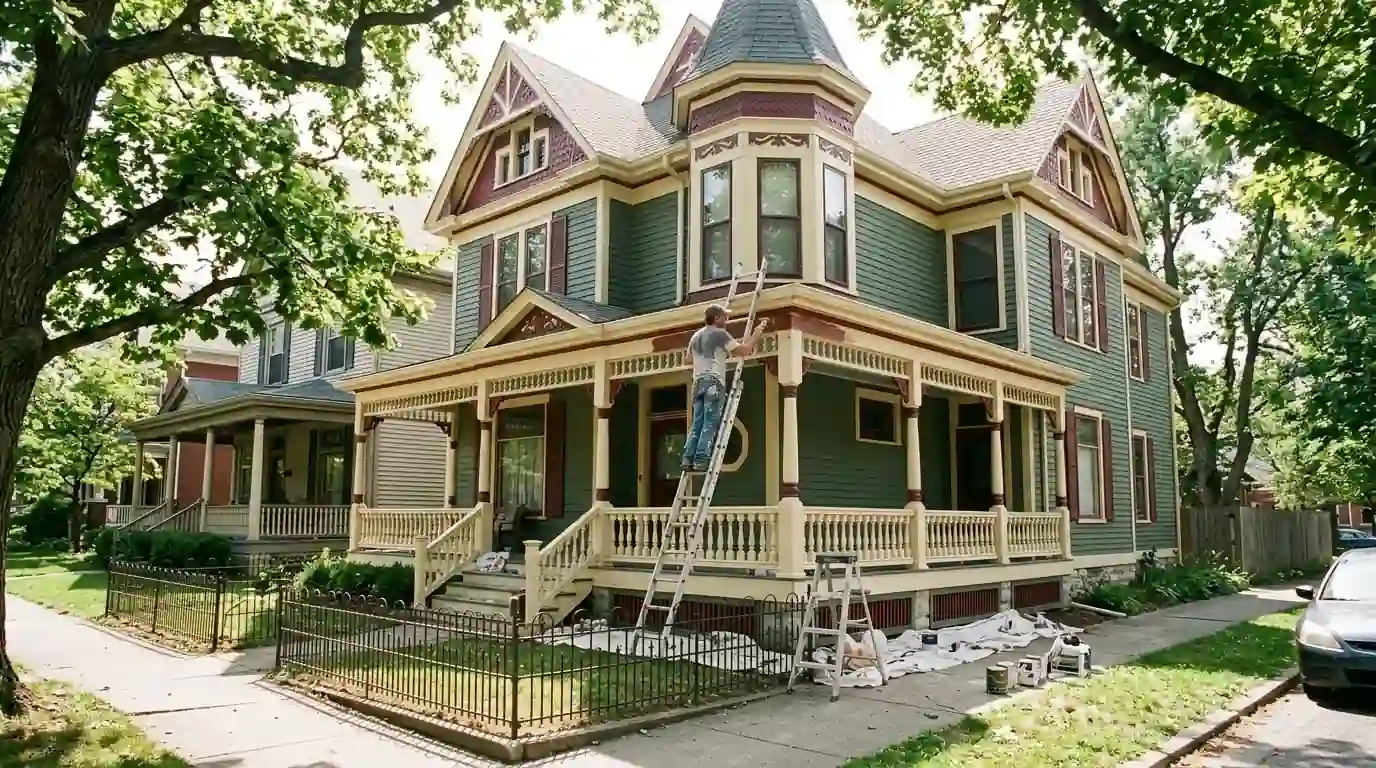
Painting that needs no certificate
Under the commission's 2025 policies, repainting with no change in color scheme needs no certificate. Neither does the prep that goes with it: scraping, sanding, caulking, re-nailing and puttying wood. That covers most routine exterior repaints, where the goal is to renew the existing colors.
You can also put up sample patches on wood siding, wood trim and previously painted masonry without a certificate, as long as each sample color scheme is no larger than 25 square feet. Once you decide to go further with a new scheme, a certificate is required before the rest of the painting goes ahead. Some district plans exclude paint color review altogether, but painting unpainted masonry is never exempt.
Changing your colors
A change in color scheme needs a Certificate of Appropriateness, and under the current policies it is a staff approval: you file an application with the IHPC office, and staff can approve it without a public hearing. Color schemes for new construction in a district go through the same route. In the Old Northside, for example, the commission approves paint colors as part of its review.
The practical advice is to settle colors early. Put up samples, photograph them in daylight, and include body, trim, accent and door colors in the application. Approval needs to be in hand before the new colors go on, so plan the paperwork into the schedule rather than waiting until the crew is booked.
Painting a house in a historic district?
Call (317) 680-1946Brick, stone and other masonry
Masonry is treated more strictly. Painting, staining or otherwise coating brick, stone, stucco or block that has never been painted requires hearing officer approval, which involves an application, public notice and a hearing that is usually scheduled weekly. The commission's definition of painting includes paints, stains and sealants, so limewash and clear coatings count too.
Coatings that do not breathe, and new materials applied over an existing surface, such as stucco or a parge coat over brick, go to the full commission, which usually meets monthly. If you are thinking about painting or limewashing brick in a district, expect the longest approval path and plan the work for the following season.
Repairs that come with a paint job
Most repaints involve some carpentry. Repairing deteriorated wood siding, trim or ornament needs no certificate when less than 5 percent of any facade is replaced and the new material matches the original in material, dimension and shape. Replacing more than that, still matching, is a staff approval. Changing the profile or shape of siding or trim goes to a hearing officer.
Porches follow similar rules: small repairs that match the original, plus scraping, sanding, caulking and puttying, need no certificate. Installing vinyl, fiber cement or other synthetic siding on a historic building is a commission matter except in conservation districts that allow it. For the repair work itself, see wood rot repair and porch painting.
How we plan a job in a district
On a historic-district house we start by confirming the district and which category the work falls in. If the colors are staying the same, we schedule like any other exterior job. If they are changing, we put up samples within the 25-square-foot limit, give you the product and color details for your application, and book the painting once your certificate is approved.
When there is any doubt about whether a certificate is needed, the commission's own guidance is to contact the IHPC office, and we suggest doing that before work starts. Older houses in these districts almost always predate 1978, so the scraping is planned with lead-safe containment and cleanup as well. Our exterior painting page covers the prep in detail.
FAQ
Questions this guide gets asked
No. Repainting with no change in color scheme needs no certificate.
Yes. Sample patches up to 25 square feet per scheme need no certificate.
IHPC staff, through a Certificate of Appropriateness, without a public hearing.
Only with hearing officer approval, and masonry painting is never exempt.
Not by itself; the requirement comes from local designation through the IHPC.
Related
Services this guide relates to
Exterior House Painting
Wood siding and more.
Exterior House Painting in IndianapolisPorch Painting
Porch floor paint and more.
Porch Painting in IndianapolisBrick Painting & Limewash
Limewash finish and more.
brick painting & limewash serviceMore guides
Ready when you are
Plan a historic-district repaint
Tell us the address and whether the colors are changing, and we will plan the samples and schedule around the approval, any hour.
Faber Paint & Blinds service office
3053 Stillcrest Ln, Indianapolis, IN 46217