Maintenance
How long exterior paint lasts in Indiana, surface by surface
Paint on a south-facing wood wall and paint on shaded fiber cement can be a decade apart in lifespan. The surface, the sun and the prep under it set the clock.
- Written for Indianapolis homes
- Updated September 2026
Quick answer
Published repaint schedules for Great Lakes climates put wood siding at about every 5 to 7 years, aluminum siding at 5 to 10, stucco at 7 to 10, fiber cement at 10 to 15 and painted brick at 12 to 20, with trim and doors every 4 to 6 years. Indiana's freeze-thaw winters and sunny south walls push wood toward the shorter end.
By Opal Waverly, Painting and Window Treatment Guides Editor. Updated September 2026
Typical intervals by surface
Published repaint schedules written for Great Lakes winters give a useful guide. Wood siding usually needs repainting every 5 to 7 years. Aluminum siding lasts about 5 to 10 years before it fades or chalks enough to need paint. Stucco holds paint for about 7 to 10 years, fiber cement for 10 to 15, and painted brick for 12 to 20 years when it was prepared properly.
Trim, doors and porch floors wear faster than the walls, often every 4 to 6 years for trim and doors and sooner for porch floors that take foot traffic. That is why many homeowners repaint trim and the front door between full repaints, which keeps the house looking fresh without a full job.
Why Indiana weather shortens the clock
Indianapolis has more than a hundred nights a year at or below freezing and about 43 inches of precipitation spread through every month. Wood soaks up water, freezes, thaws and dries dozens of times each winter, and every cycle stresses the paint film where it meets the wood.
Sun does the rest. South and west walls take the most ultraviolet light and heat, so they fade, chalk and crack years before the north side. It is common to see a house where the shaded walls still look fine and the sunny side is already peeling, which is one reason partial repaints can make sense.
Prep and product set the starting point
Paint lasts as long as its bond to the surface. A wall that was washed, scraped to sound paint, primed where bare and caulked at every joint will hold a finish years longer than one that was painted over chalk and loose flakes. Two finish coats of a good exterior acrylic last noticeably longer than one.
Product quality matters, but it matters less than prep. The best paint over failing paint underneath will peel with it. If the last job was rushed, expect a shorter life; our exterior painting page describes the prep that gives a new coat its full lifespan.
Not sure whether your house needs paint yet?
Call (317) 680-1946Signs it is time to repaint
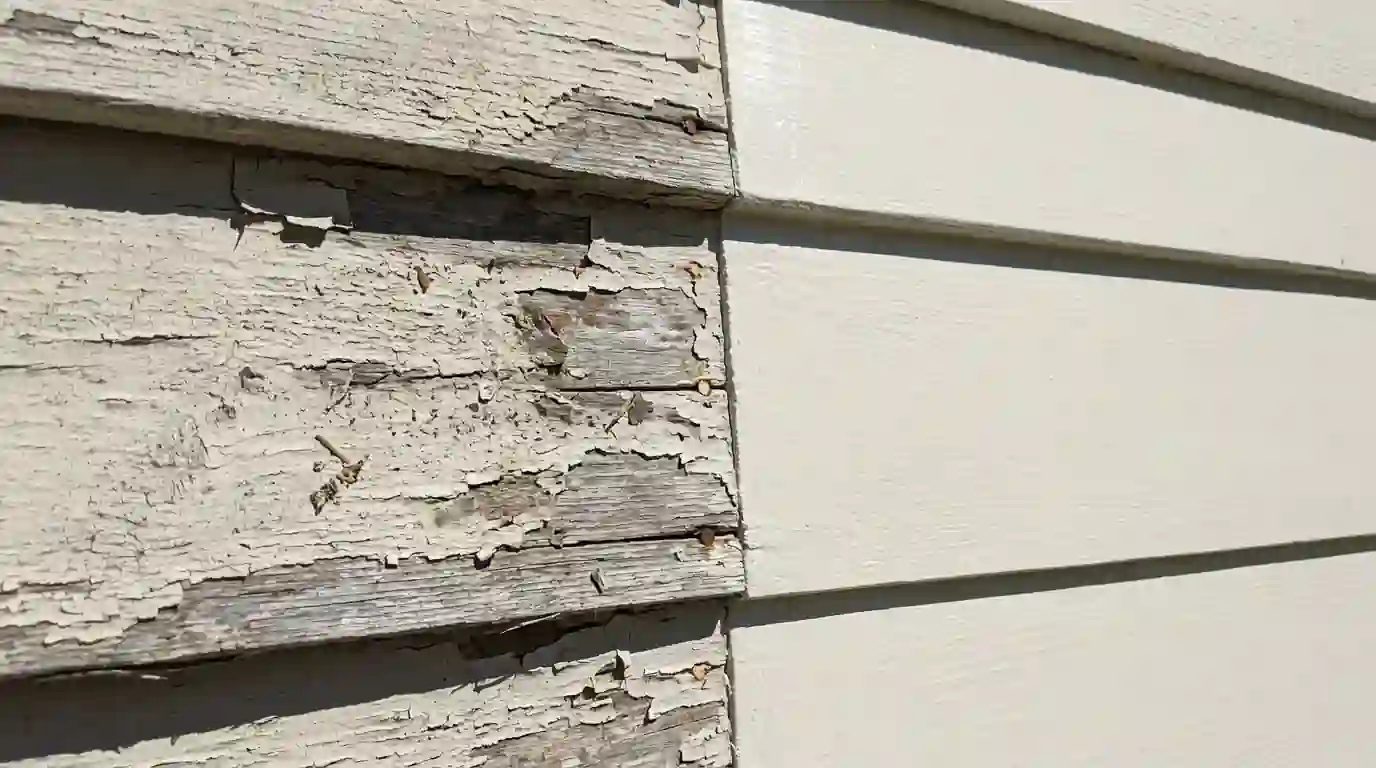
Chalking is the first sign: rub the siding and a powder comes off on your hand. Fading on the sunny walls follows, then hairline cracks, then peeling and bare wood. Caulk that has cracked or pulled away from the trim lets water in behind the paint and speeds everything up.
Bare wood is the point to act. Once water reaches wood directly, it swells and rots, and the job grows from painting into carpentry. Catching a house at the chalking or fading stage usually means a simpler, cheaper repaint than waiting for peeling.
Spot repairs or a full repaint
When only the sunny side or the trim is failing, a partial repaint can buy several years. The catch is color matching: older paint fades, so new paint on one wall may not match the others exactly. Repainting whole walls or the full trim package, rather than patches, hides the difference.
When peeling is widespread, or several surfaces are failing at once, a full repaint is usually better value than repeated patching. Our guide to peeling exterior paint explains how to read the pattern, and trim and fascia painting covers the trim-only option.
Making the next paint job last
Keep water off the walls: clean gutters, make sure downspouts carry water away, and keep sprinklers from hitting the siding. Trim shrubs back a foot or two from the house so walls dry after rain. Wash the siding every year or two to remove dirt and mildew before they break down the paint.
Check caulk around windows and trim each spring, and touch up nicks on the front door and porch before they reach bare wood. Small maintenance stretches a 5-year wood repaint toward the long end of its range. If the surface is masonry, see brick painting and limewash.
FAQ
Questions this guide gets asked
About every 5 to 7 years, sooner on sunny south and west walls.
About 10 to 15 years when it was primed and painted properly.
About 12 to 20 years with proper masonry prep and paint.
A powdery residue as the paint breaks down; it is the first sign a repaint is coming.
Yes, though faded paint elsewhere may not match exactly; whole walls hide the difference.
Related
Services this guide relates to
Exterior House Painting
Wood siding and more.
Exterior House PaintingStucco Painting
Traditional cement stucco and more.
learn about stucco paintingBrick Painting & Limewash
Limewash finish and more.
Brick Painting & LimewashMore guides
Ready when you are
Have us look at your paint
Tell us what the siding looks like and how old the paint is, and we will book the walk-around on the call, any hour.
Faber Paint & Blinds service office
3053 Stillcrest Ln, Indianapolis, IN 46217