Older homes
Lead paint in older homes: what to know before painting
Most houses in Indianapolis were built before 1978, so the old layers under today's paint may contain lead. Painting over it is not the risk; the dust from scraping and sanding is.
- Written for Indianapolis homes
- Updated September 2026
Quick answer
Houses built before 1978 may contain lead-based paint, usually on trim, windows, doors and porches. Since April 22, 2010, federal rules have required paid renovation, repair and painting work in pre-1978 homes to follow lead-safe practices when it disturbs more than 6 square feet per room inside or 20 square feet outside, using certified firms and renovators.
By Opal Waverly, Painting and Window Treatment Guides Editor. Updated September 2026
Why it matters here
The typical Indianapolis house was built around 1974, which means a large share of the city's homes predate 1978, the year lead-based paint was banned for residential use. Older neighborhoods near the center of the city, with houses from the early 1900s, are almost certain to have lead somewhere in their paint history.
Lead paint that is intact and covered by newer paint is not an immediate hazard. The risk comes when it is disturbed: scraped, sanded, heat-stripped or chipped by doors and windows rubbing. That creates fine dust that settles on floors and sills, where children and pets pick it up.
Where it is usually found
In older houses, lead paint is most common on surfaces that were painted with durable enamels: window sashes and sills, door frames and doors, trim and baseboards, porch floors and railings, and exterior siding. Walls were sometimes painted with lead paint too, especially in houses built before the 1950s.
Friction and impact surfaces are the ones to watch. A window that rubs as it opens, a door that sticks, or a porch floor that wears through grinds old paint into dust every day. Those are often the first places to address when planning work in an older house.
The federal rule for paid work
The EPA's Renovation, Repair and Painting rule took effect on April 22, 2010. It applies to anyone paid to do renovation, repair or painting in housing or child-occupied facilities built before 1978 when the work disturbs more than 6 square feet of painted surface per room inside, or more than 20 square feet outside. Window replacement and demolition are covered regardless of size.
Covered work must be done by firms certified by the EPA, with a certified renovator assigned to the job and lead-safe work practices followed. Before the work starts, the occupants are supposed to receive an information pamphlet about lead hazards during renovation. Small jobs under the size thresholds are treated as minor repair and maintenance.
Painting a house built before 1978?
Call (317) 680-1946What lead-safe work looks like
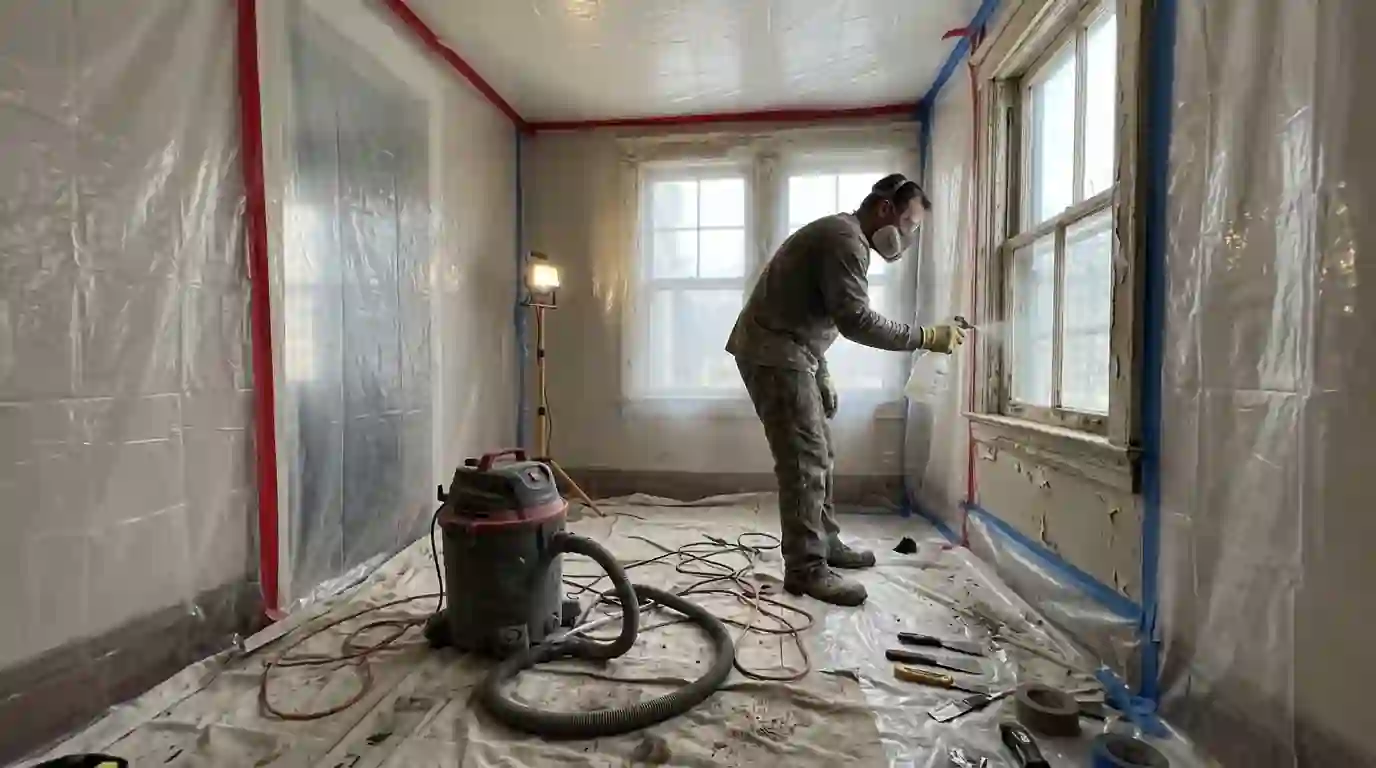
Lead-safe practices are about controlling dust. The work area is closed off with plastic sheeting, floors are covered, and surfaces are misted before scraping so dust stays down. Methods that throw dust into the air, such as open-flame burning, high-speed sanding without a dust-collecting vacuum attachment and very hot heat guns, are not allowed.
Cleanup is as important as containment. Debris is wrapped and removed, surfaces are vacuumed with HEPA vacuums and wiped wet, and the area is checked before the plastic comes down. On an exterior, ground sheeting catches paint chips so they do not end up in the soil around the house.
What you can do as a homeowner
If your house was built before 1978, assume the older layers may contain lead unless testing shows otherwise. Lead test kits and professional inspections are available. Avoid dry scraping or power sanding old paint yourself, and keep children and pets away from areas where old paint is chipping.
When hiring someone for paid work that will disturb old paint, you can ask how they will contain and clean up the dust, and whether the firm is certified under the federal rule. A clear answer about containment, cleanup and who on the crew is trained is a good sign.
How it changes a paint job
Lead-safe prep takes longer than ordinary prep, so painting an older house costs more and takes more days. Most painting is not lead removal: the goal is to stabilize loose paint, contain the dust, and seal the surface under new paint. Full lead abatement, meant to eliminate the hazard permanently, is a separate, specialized service.
On houses built before 1978, we plan containment and cleanup into the scope for any scraping and sanding. Our exterior painting and trim and door painting pages describe the prep, and older interiors are covered under interior painting.
FAQ
Questions this guide gets asked
If it was built before 1978, assume it may; test kits and inspections can confirm.
Painting over intact, sound paint is generally fine; the hazard is dust from scraping and sanding.
The EPA's Renovation, Repair and Painting rule for paid work in pre-1978 homes.
Usually, with the work area sealed off; children and pets should stay away from it.
No. Painting stabilizes and seals; abatement permanently removes the hazard and is a separate service.
Related
Services this guide relates to
Interior House Painting
Whole-home repaint and more.
learn about interior house paintingExterior House Painting
Wood siding and more.
exterior house painting serviceTrim, Baseboard & Door Painting
Baseboards and casings and more.
Trim, Baseboard & Door Painting in IndianapolisMore guides
Ready when you are
Plan the prep on an older house
Tell us when the house was built and what needs painting, and we will plan containment and cleanup into the visit, any hour.
Faber Paint & Blinds service office
3053 Stillcrest Ln, Indianapolis, IN 46217